


Traditional Sunday Roast Ingredients Linked to More Than 100 Pesticides, Greenpeace Report Warns
A traditional Sunday roast is often seen as a symbol of the British countryside, featuring locally grown vegetables and seasonal produce. However, a new report from Greenpeace UK has raised concerns about the number of pesticides used in growing some of the ingredients found on a typical roast dinner plate.
Published on Thursday, the report analysed data from the Fera pesticide usage survey for 2024 and found that more than 100 different pesticides were used across seven vegetable and soft fruit categories commonly consumed in the UK.
The findings have reignited debate about pesticide use in agriculture, its impact on biodiversity, and potential risks to human and environmental health.
More Than 100 Pesticides Found in Common Crops
According to Greenpeace, 102 pesticides were used on seven common crop categories, including carrots, peas, potatoes, onions and strawberries. The report found that seven of these chemicals are currently banned within the European Union.
Some of the pesticides identified include benthiavalicarb, a fungicide used on potatoes that has been banned in the EU due to concerns over its cancer-causing potential. Potatoes may also be treated with metribuzin, a herbicide prohibited in the EU because it is considered an endocrine disruptor.
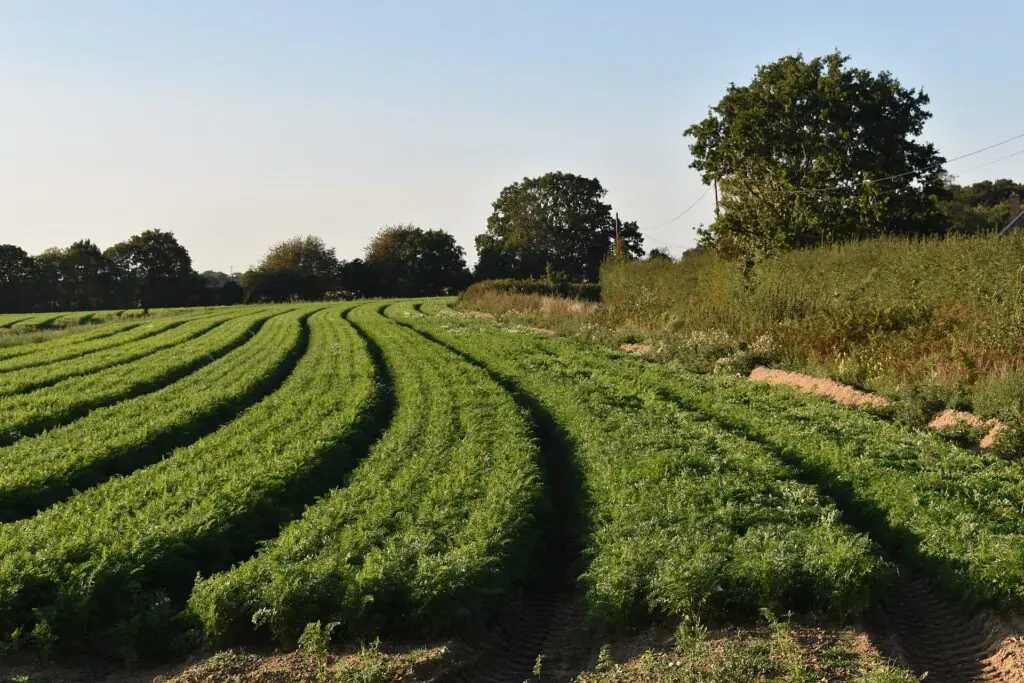
Carrots were found to be treated with spirotetramat, an insecticide whose EU approval has expired and which can be harmful to bees and fish. Peas are frequently sprayed with S-metolachlor, a herbicide associated with risks to mammals and groundwater contamination.
Strawberries were found to be among the crops treated with clofentezine, dimethomorph and mepanipyrim, chemicals banned in the EU after being identified as endocrine disruptors that may affect hormone systems in humans and animals.
Repeated Applications Raise Environmental Concerns
Greenpeace reported that many crops were not only treated with multiple pesticides but were often sprayed repeatedly throughout the growing season.
“Our countryside is being drenched in pesticides, with devastating consequences for bees, birds, butterflies, rivers and the soil,” said Nina Schrank, a senior campaigner at Greenpeace UK.
“Fields that once hummed with wildlife are falling silent while agrochemical giants rake in enormous profits and farmers are trapped in a costly cycle of chemical dependency.”
The report argues that widespread pesticide use is contributing to ongoing declines in biodiversity across the UK countryside.
Impact of Pesticides on Wildlife and Ecosystems
Greenpeace says the extensive use of pesticides is having serious consequences for nature, highlighting population declines among birds, butterflies and hedgehogs.
Since the end of the Second World War, pesticides have become a routine part of agricultural production, helping farmers control weeds, insects and fungal diseases that affect crop yields.
However, Greenpeace argues that the wider ecological effects are often overlooked.
“However, what we might think of as a weed may also be a wildflower that is shelter or food for a host of creatures,” the report said. “The insects that eat crops are themselves food for other animals, and share the fields with a multitude of species who are not the target, but are nevertheless impacted.
“As a result, our dependence on pesticides is a tale of terrible, unintended consequences for entire ecosystems.”
Environmental groups have long warned that reducing insect populations can create ripple effects throughout food chains, affecting birds, mammals and other wildlife that rely on them for survival.
Calls for Stronger Pesticide Reduction Targets
The UK government’s National Action Plan for pesticides aims to reduce pesticide use by 10% by 2030.
Greenpeace has called for a more ambitious target, advocating for a 50% reduction in pesticide use, impact and toxicity by the same deadline.
The organisation is also urging the UK to align more closely with EU pesticide regulations, ban imports of food produced using unlicensed pesticides, and increase organic farming so that it accounts for at least 10% of agricultural land.
Farmers Defend the Use of Plant Protection Products
The National Farmers’ Union (NFU) defended the use of pesticides, which it prefers to describe as plant protection products.
The organisation stated that these substances are only used when necessary and remain among the most strictly regulated chemical products globally. The NFU also warned that crop yields could decline by as much as 50% without effective pest and disease control measures.
The debate highlights the challenge of balancing food production with environmental protection, particularly as farmers face increasing pressures from climate change, pests and rising production costs.
Organic Farming Advocate Warns of a “Chemical Treadmill”
Guy Singh-Watson, founder of organic vegetable box company Riverford, criticised the agricultural sector’s reliance on pesticides, describing it as a “chemical treadmill” driven by dependency on agrochemicals.
He argued that pesticides are frequently approved before later being banned and suggested that current safety assessments fail to consider the cumulative effects of long-term exposure to multiple chemicals.
“There is no such thing as a safe chemical pesticide. They are designed to kill,” he said.
Government Defends Current Food Safety Standards
The Department for Environment, Food and Rural Affairs (Defra) said strict controls remain in place to ensure pesticide residues in food stay within safe limits.
A spokesperson for the department said: “We place strict limits on pesticide residue levels in food, which are set after rigorous risk assessments to make sure levels are safe for consumers. These limits apply to both food produced domestically and imported from other countries.
“Our UK national action plan, published last year, sets out how we will support farmers, growers and other land managers to increase their use of sustainable practices to reduce potential harm from pesticides, while controlling pests and pesticide resistance effectively and protecting food security.”
Growing Debate Over the Future of UK Farming
The Greenpeace report has intensified discussions around pesticide use, biodiversity loss and the future of sustainable agriculture in the UK.
While farming organisations argue pesticides remain essential for maintaining crop yields and food security, environmental groups believe stronger restrictions and greater support for organic and nature-friendly farming are needed to protect wildlife, pollinators and ecosystems.
As policymakers consider future agricultural reforms, the balance between productive farming and environmental protection is likely to remain a key issue for both farmers and conservationists.
Support UK Environmental Conservation Efforts
At Natural World Fund, we support efforts to protect biodiversity by reducing harmful pressures on ecosystems, including intensive chemical use and practices that can disrupt natural food chains. The issues highlighted in this report underline how widespread pesticide exposure can affect pollinators, birds and wider wildlife populations, compounding the challenges already faced by vulnerable species. Strengthening environmental protections, promoting sustainable farming and restoring nature-friendly habitats are essential steps in safeguarding native wildlife and building resilient ecosystems for the future.
If you care about restoring native wildlife, support the work of Natural World Fund today.
Image sources
- Field_of_carrots,_Holly_Farm,_Stutton_-_geograph.org.uk_-_6624412 by Simon Mortimer. Cropped and resized from original: Wikipedia Commons
- VG_Beetroot_Wellington_-_T_@_The_Prince_George_2023-10-15 by Andy Li. Cropped and resized from original: Wikipedia Commons