

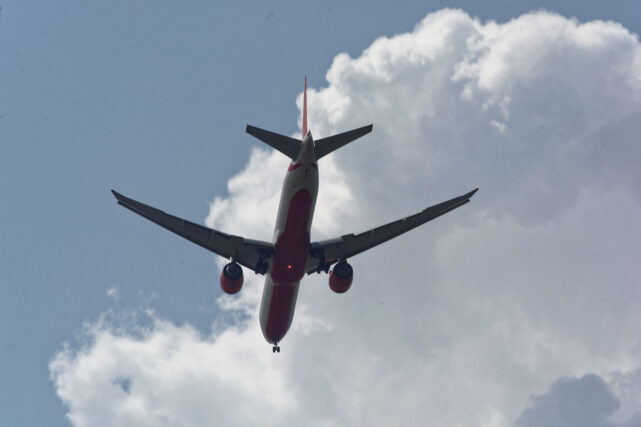
Airlines Warn Global Climate Goals Are Slipping Out of Reach
The global aviation industry’s ambition to achieve net zero carbon emissions by 2050 is now unlikely to be met, according to senior airline leaders who say progress has fallen significantly behind schedule.
The commitment was adopted by airlines in 2021, following similar pledges from governments and national aviation bodies, including those in the UK. The strategy was intended to eliminate net carbon emissions through cleaner fuels, more efficient aircraft and international carbon reduction measures.
However, industry leaders now acknowledge that the transition is not happening quickly enough.
Iata Chief Says “Hope Was Fading Fast”
Speaking at the annual International Air Transport Association (Iata) summit in Rio de Janeiro, the organisation’s director general, Willie Walsh, warned that the industry needs to reassess its expectations.
He said “hope was fading fast” and called for a new “realistic timeline” for reaching net zero emissions.
Walsh, the former chief executive of British Airways owner IAG, argued that airlines alone cannot deliver the transformation required. He placed much of the responsibility on fuel suppliers, governments and aircraft manufacturers for failing to keep pace with commitments.
Sustainable Aviation Fuel Production Remains Far Below Requirements
A cornerstone of aviation’s decarbonisation strategy has been the development of sustainable aviation fuels (SAF), with more than half of expected emissions reductions relying on their widespread adoption.
However, Walsh revealed that SAF production is expected to reach only 2.4 million tonnes this year—equivalent to just 0.8% of airline fuel demand.
“The goal is 65% or 500m tonnes by 2050. The gap is wide and not closing fast enough,” he said.
Governments working through the International Civil Aviation Organization (ICAO) had also aimed for a 5% emissions reduction by 2030 through the use of SAF.
Walsh cautioned: “To be blunt, there is no path to meet that outcome.”
Calls for an Urgent Review of the 2050 Target
Despite the setbacks, Walsh stopped short of abandoning the long-term objective entirely.
“There is still hope for 2050 – but that’s fading fast … We need an urgent dialogue to determine a realistic timeline given the current state of affairs.”
He suggested that while the original target remains possible, a revised deadline may prove more achievable.
“the more likely outcome, however, is a new timeline that hits a sweet spot – realistic within the broader context of the global energy transition and sufficiently near-term to meet the urgencies of climate change and energy security.”
Airlines Say They Cannot Deliver Net Zero Alone
In comments following his speech, Walsh insisted airlines remain committed to reducing emissions but cannot succeed without broader industry support.
He said airlines were “continuing to do everything we said we would do, but we can’t achieve net zero in 2050 on our own”.
He added that the sector was “very disappointed” with delays to more fuel-efficient aircraft and that “we’ve not seen reform of air traffic management systems around the world, which would significantly reduce our gross emissions.
“And we’re disappointed that fuel companies who committed to making the fuel available to us are not delivering on the promises that they’ve made.“
Environmental Campaigners Question Aviation’s Climate Promises
The acknowledgement that the 2050 target may be missed is unlikely to surprise many environmental organisations, some of which have long argued that aviation’s climate commitments rely too heavily on technologies and fuels that are not yet available at scale.
The development also raises questions for governments considering airport expansion projects, including in the UK, where future growth has been linked to meeting climate objectives.
Concerns Grow Over Sustainable Aviation Fuel Mandates
Several governments have introduced mandates requiring airlines to blend sustainable aviation fuels into conventional jet fuel supplies.
The UK met its 2025 target of sourcing 2% of jet fuel from SAF, much of it produced from recycled cooking oil imported from Asia. However, future targets depend increasingly on advanced alternatives such as e-SAF, a fuel created using renewable electricity.
Production of these next-generation fuels remains extremely limited.
Iata’s sustainability vice-president and chief economist, Marie Owens Thomsen, criticised current policy ambitions, saying the UK and EU e-SAF targets for 2030 were “beyond unrealistic – they are utterly detached from reality. It is a reckless energy market creation strategy to impose mandates before production is enabled. Such a strategy will only drive up the price.”
“We are calling on governments to create fully protected ocean sanctuaries that will close vast areas of the ocean off from extractive human activities. Governments have promised to protect 30% of the world’s ocean by 2030 – the minimum scientists say we need for the ocean to be able to recover.”
Supporting the Transition to Lower-Carbon Transport
At Natural World Fund, we recognise the importance of reducing greenhouse gas emissions across every sector, including aviation. Achieving meaningful climate progress will require innovation, investment and transparent policies that encourage cleaner technologies while protecting ecosystems and communities from the growing impacts of climate change.
If you care about restoring native wildlife, support the work of Natural World Fund today.
Image sources
- Wind_indicator,_Frankfurt_am_Main_(P1090461) by Matti Blume. Resized from original: Wikipedia Commons
- An_aeroplane_above_Mehrauli,_Delhi by Slyronit. Resized from original: Wikipedia Commons