

Ancient Nesting Trees Lost as Fires Threaten Pink Cockatoo Survival
A population of endangered pink cockatoos in Victoria is facing an uncertain future after catastrophic bushfires destroyed much of their critical habitat in Wyperfeld National Park.
At the entrance to the park in north-west Victoria, more than a dozen pink cockatoos can still be seen perched among rows of Aleppo pines, feeding on pine cones and providing a striking display against the landscape. However, these introduced trees are no substitute for the native slender cypress pines that the birds depend on for food and nesting.
Inside the national park, the picture is far more concerning. Around 70% of the cockatoo’s core habitat, known as the “pine plains”, was scorched by the devastating January bushfires, leaving behind charred landscapes where mature trees once stood.
Ancient Slender Cypress Pines Are Essential for Breeding
The endangered species, Lophochroa leadbeateri, formerly known as the Major Mitchell’s cockatoo, relies heavily on old-growth slender cypress pines (Callitris gracilis) to breed successfully.
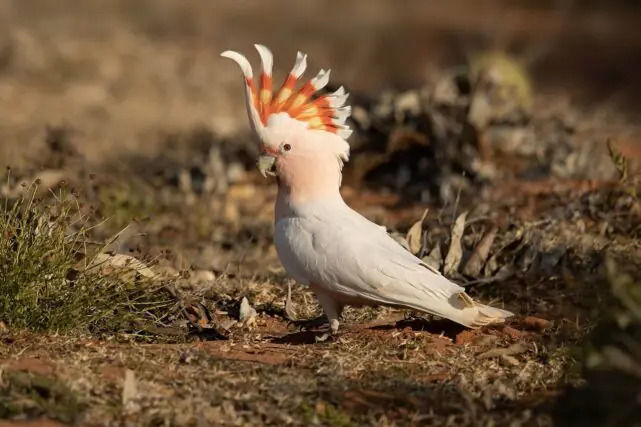
Ecologist Dr Victor Hurley, who has monitored the birds for decades, affectionately refers to them as “flame-crested” or “flamin’ cockatoos” because of their vivid red and yellow crests and salmon-pink wings.
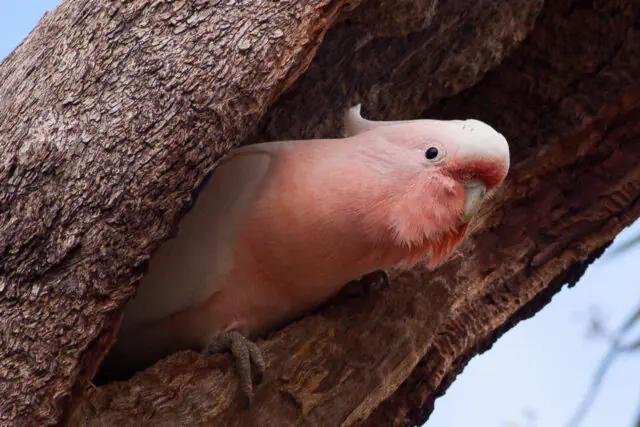
Hurley explains that breeding hollows only develop in exceptionally old trees.
“The flame-cresteds seem to be the wimpier kid in the school yard,” Hurley says, often losing out to more assertive galahs, or feral European honeybees that fill the space with honeycomb.
The mature trees required for nesting must generally be at least 85 years old and ideally exceed 125 years of age, making them irreplaceable in the short term.
Repeated Bushfires Have Destroyed Critical Habitat
Large, cavity-bearing pines were already scarce following extensive land clearing and major fires in 2014, which burned through 60% of the pine plains and destroyed 97% of known nesting trees within the affected area.
The 2025–26 bushfire season compounded those losses, burning approximately 440,000 hectares across Victoria according to the state government, including 59,000 hectares within Wyperfeld National Park.
According to Hurley, the park previously contained 178 large native pines within the area affected by fire. Today, only a handful remain.
Other Threatened Bird Species Also Impacted
The fires have affected numerous threatened species across south-eastern Australia.
Eastern bristlebirds lost 82% of their habitat at Howe Flat near Mallacoota, with surveys recording a 30% population decline after the fires. In South Australia, fires in Deep Creek national park damaged around half of the available habitat for the western beautiful firetail and Mt Lofty Ranges southern emu-wren.
Artificial Nest Hollows Offer Hope
Conservationists are attempting to offset the loss of ancient nesting trees by constructing artificial hollows.
Back in 2009, Dr Hurley created an early prototype by attaching a hollowed-out log to a repurposed power pole. More recent designs involve carefully carving cavities into standing dead trees, including fire-damaged trunks.
The process involves removing a section of timber, hollowing out an internal chamber at least 20 centimetres wide, and replacing the outer bark to create a weatherproof nesting site that blends naturally into the environment.
Together with Parks Victoria, volunteers have installed around 150 artificial hollows throughout the park.
Rangers and Volunteers Work to Support Recovery
Will Trimble, an area chief ranger for the southern Mallee at Parks Victoria, says the organisation is encouraged by signs that cockatoos are already inspecting the new nesting sites.
“Parks Victoria rangers are doing our best to help native animals and plants recover from the fires,” he says. “Pink cockatoos are one of the highlights of Wyperfeld national park and we want to see them thrive.”
Alongside installing nesting hollows, Parks Victoria is planting more slender cypress pines to help restore future habitat.
Cultural Importance to Traditional Owners
The destruction of habitat has also raised concerns among Traditional Owners.
Barengi Gadjin Land Council’s on Country manager, Colin Gorton, says the species holds cultural significance.
“The pink cockatoo features in our stories and is an important species for us,” says Colin Gorton, the council’s on Country manager.
While supporting both immediate and long-term recovery efforts, Gorton adds:
“it will be many years before the trees, lost to the fires, will be able to support the pink cockatoo population in the region”.
Birdwatching and Local Tourism at Risk
Local wildlife guide Michael Gooch says the birds attract visitors from across Australia and overseas, with many coming specifically to see what enthusiasts call the “Mallee trinity”: pink cockatoos, regent parrots and malleefowl.
He describes the birds as a “massive drawcard” for tourism and notes that birdwatching continues to grow in popularity among younger generations.
Pink Cockatoos Help Sustain the Ecosystem
Beyond their own survival, pink cockatoos play an important ecological role.
Environmental scientist Jane White explains that they disperse the seeds of slender cypress pines, often transporting branches with seeds as they move across the landscape.
“You often see them carrying a Callitris branch with a seed across the landscape.”
She says the birds also create nesting cavities that benefit many other species.
“They’re invested in their community,” she says. “They’re helping with providing houses and food and shelter and all the other bird life.”
A Long Road to Recovery
Conservationist Fiona Murdoch has watched fires damage her own property and the surrounding habitat used by the birds.
“They fly over most days and they generally bring their young one back to show us,” she says.
The destruction of centuries-old trees has left her devastated.
“It’s been a pretty horrible few months. The trees are hundreds of years old, so they’re not coming back in my lifetime.”
Although artificial nesting hollows cannot replace ancient forests, Murdoch believes they offer the best available solution.
“We can’t magic up a tree, but you can build a habitat hollow.”
For the endangered pink cockatoos of Wyperfeld, those human-made refuges may prove vital while future generations of native pines slowly mature over the coming decades.
Supporting Wildlife Conservation
At Natural World Fund, we recognise that safeguarding endangered species such as the pink cockatoo requires long-term investment in habitat restoration, conservation research and community-led action. Protecting ancient woodlands, supporting ecosystem recovery after wildfires and creating safe nesting opportunities are all essential to ensuring these remarkable birds can thrive for generations to come.
If you care about restoring native wildlife, support the work of Natural World Fund today.
Image sources
- Major_Mitchell’s_Cockatoo_(Lophochroa_leadbeateri)_(8079595230) by Ron Knight. Corpped and resized from original: Wikipedia Commons
- Major_Mitchell’s_Cockatoo_1_-_Mt_Grenfell by JJ Harrison. Cropped and resized from original: Wikipedia Commons