

South Australia’s Toxic Algal Bloom Threatens Giant Cuttlefish as Scientists Warn of Growing Marine Crisis
South Australia’s famous giant cuttlefish migration is under threat as a harmful algal bloom continues to spread through coastal waters, raising concerns for marine wildlife, local businesses and one of the world’s most remarkable underwater spectacles.
Scientists say the bloom, which has already caused widespread marine deaths along South Australia’s coastline, has now reached the waters around Whyalla, where thousands of giant Australian cuttlefish gather each winter to breed.
Harmful Algal Bloom Reaches Whyalla
Each year, divers from around the world travel to Whyalla to witness the extraordinary gathering of giant Australian cuttlefish. The event is recognised as one of Australia’s most spectacular wildlife experiences, attracting tourists eager to observe the colourful marine animals as they compete for mates and lay eggs.
This year, however, concerns are mounting as the harmful algal bloom extends into the breeding area.
The bloom has already devastated marine ecosystems across large stretches of South Australia’s coastline, killing fish, rays, sharks, shellfish and many other sea creatures. Scientists fear that if conditions persist, the breeding success of giant cuttlefish could also be affected.
Scientists Monitor Impact on Giant Cuttlefish
Marine experts are closely monitoring the migration to determine whether the bloom is affecting the cuttlefish population or disrupting breeding behaviour.
One scientist explained the uncertainty surrounding the event:
“We’re watching very carefully because we simply don’t yet know what the long-term impacts will be.”
Researchers say there is still much to learn about how prolonged algal blooms influence marine species during critical breeding periods.
Scientists Link Poor Cuttlefish Numbers to Toxic Algal Bloom
Associate professor Zoe Doubleday, a marine ecologist at Adelaide University, says it’s “something we haven’t seen before”.
While it is difficult to know for certain the cause of such a meagre turnout, on “the balance of probabilities it is likely to do with the [algal] bloom”, Doubleday says. This could be due to direct exposure, or exacerbated by a decline in their food source.
Australia’s first bloom of toxic Karenia cristata algae, which began in March last year, is still present along the South Australian coastline, including parts of the Spencer Gulf. It is the largest and most destructive algal bloom in the nation’s history.
“We know the effect of Karenia on cephalopods is swift and fatal,” says Doubleday, who is researching the impact of the bloom on the group, which includes cuttlefish, squids, octopuses and nautiluses.
The latest testing results show elevated levels of Karenia algae at eight out of 32 testing sites on the southern Eyre Peninsula and in southern Spencer Gulf, with the highest concentrations of 432,899 cells-per-litre at Proper Bay. The government considers levels above 10,000 per litre as “elevated”, with higher counts suggesting a bloom could be under way.
Why Giant Australian Cuttlefish Are So Important
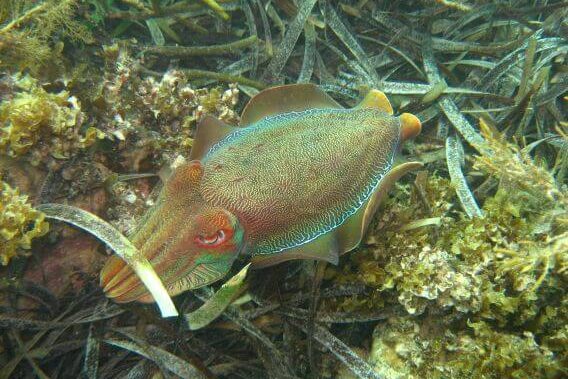
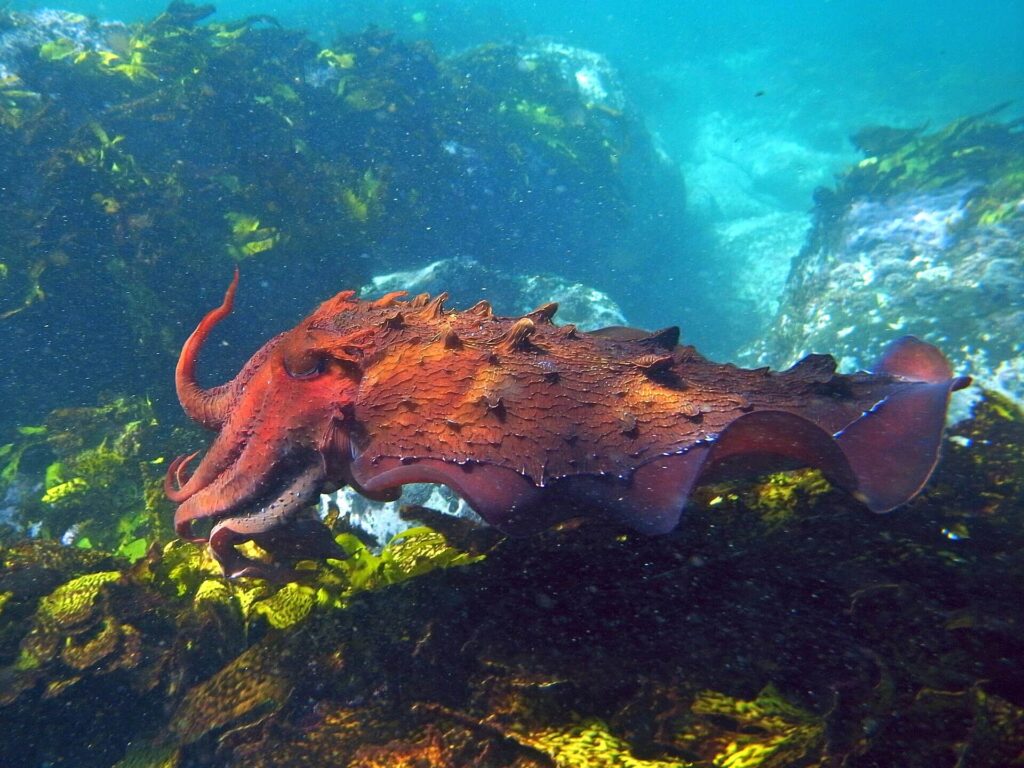
The giant Australian cuttlefish is found only in Australian waters and is famous for its remarkable ability to rapidly change colour and texture. During the annual breeding aggregation near Whyalla in the Cuttlefish Coast, tens of thousands of individuals gather on rocky reefs to mate.
Males display dramatic colour patterns to attract females while competing fiercely with rivals. Smaller males often adopt the appearance of females to sneak past dominant competitors and gain access to mates, making the annual gathering one of nature’s most fascinating breeding displays.
Because so many cuttlefish concentrate in one location, the population is particularly vulnerable to environmental disturbances such as pollution, habitat degradation and harmful algal blooms.
Marine Heatwaves Linked to Increasing Algal Blooms
Scientists believe warmer ocean temperatures have created favourable conditions for the bloom to develop and persist.
Marine heatwaves can increase water temperatures, reduce ocean mixing and encourage explosive growth of algae. Some blooms reduce oxygen levels in the water or produce toxins that affect fish and other marine animals.
Researchers stress that harmful algal blooms are complex natural events, but climate change is increasing the likelihood of the conditions that allow some blooms to become larger, longer-lasting and more destructive.
One expert said:
“It’s a perfect storm of environmental conditions.”
Communities Feel the Economic Impact
The algal bloom is not only threatening wildlife but also affecting coastal communities that depend on tourism and healthy marine ecosystems.
Whyalla’s annual cuttlefish migration attracts divers, underwater photographers and wildlife enthusiasts from around Australia and overseas, providing an important boost to the local economy.
Businesses are hoping visitors will continue to travel to the region while scientists work to better understand the bloom and its potential impacts on one of Australia’s most iconic marine wildlife events.
Scientists Investigate the Cause of the Algal Bloom
Researchers believe several environmental factors have combined to fuel the unprecedented bloom, including unusually warm ocean temperatures, calm sea conditions and an influx of nutrients into coastal waters.
While harmful algal blooms occur naturally, scientists say the scale and persistence of this event are highly unusual. As investigations continue, experts are working to determine exactly why the bloom has lasted for so long and whether climate change has made such events more likely.
One marine scientist said:
“This is unlike anything we’ve seen before.”
Researchers emphasise that continued monitoring is essential to understand both the immediate and long-term impacts on South Australia’s marine ecosystems.
Marine Wildlife Faces Widespread Losses
The bloom has already caused significant mortality among marine animals, with reports of dead fish, rays, sharks, octopuses and numerous invertebrate species washing ashore.
Scientists warn that the full ecological consequences may not become clear for months or even years, as the loss of key species can disrupt entire food webs and affect the health of coastal ecosystems.
If the bloom persists through the giant cuttlefish breeding season, researchers fear it could influence reproduction, egg survival and the future resilience of this unique population.
Climate Change Increases Pressure on Marine Ecosystems
Marine scientists say extreme ocean conditions are becoming more common as the climate warms. Rising sea temperatures, marine heatwaves and changing weather patterns are placing increasing pressure on coastal ecosystems around the world.
Although no single event can be attributed solely to climate change, experts say warming oceans are creating conditions that allow some harmful algal blooms to become more frequent, extensive and longer lasting.
Protecting marine habitats while reducing greenhouse gas emissions will be vital if vulnerable ecosystems are to withstand future environmental challenges.
Why Protecting Australia’s Marine Life Matters
The annual giant Australian cuttlefish aggregation is one of the world’s most extraordinary wildlife events and an important reminder of the richness of Australia’s marine biodiversity.
Safeguarding habitats from pollution, climate change and other human pressures will help protect not only giant cuttlefish but also the countless species that rely on healthy coastal waters.
Continued scientific research and long-term environmental monitoring will be essential for understanding how marine ecosystems respond to changing ocean conditions and for developing effective conservation strategies.
At Natural World Fund, we recognise that healthy oceans are essential for protecting biodiversity, supporting coastal communities and maintaining the planet’s natural balance. Events such as the harmful algal bloom in South Australia highlight how climate change and environmental pressures can rapidly affect fragile marine ecosystems and the wildlife that depends on them.
By supporting marine conservation, climate action and scientific research, we can help safeguard vulnerable species such as the giant Australian cuttlefish and protect the world’s oceans for future generations.
Protecting Marine Wildlife for Future Generations
At Natural World Fund, we recognise that healthy oceans are essential for protecting biodiversity, supporting coastal communities and maintaining the planet’s natural balance. Events such as the harmful algal bloom in South Australia highlight how climate change and environmental pressures can rapidly affect fragile marine ecosystems and the wildlife that depends on them. By supporting marine conservation, climate action and scientific research, we can help safeguard vulnerable species such as the giant Australian cuttlefish and protect the world’s oceans for future generations.
If you care about restoring native wildlife, support the work of Natural World Fund today.
Image sources
- Giant_Cuttlefish-sepia_apama_(8643345101) by Sylke Rohrlach. Cropped and resized from original: Wikipedia Commons
- Sepia_apama_2 by Yvonne. Cropped and resized from original: Wikipedia Commons