

Northern Ireland Must Triple Tree Planting to Reach 2050 Woodland Target
Northern Ireland must significantly increase the rate of tree planting over the coming years if it is to achieve its target of 12% woodland cover by 2050. A new government-backed Tree Planting Action Plan outlines the steps needed to expand forests, restore habitats, strengthen climate resilience, and support nature recovery across the country.
The announcement highlights the growing recognition that woodland creation is one of the most effective ways to tackle the the biodiversity crises while delivering long-term benefits for people and wildlife.
Northern Ireland Has One of Europe’s Lowest Woodland Cover Levels
Currently, woodland covers just 8.6% of Northern Ireland, making it one of the least wooded regions in Europe. This is considerably lower than neighbouring nations:
- Scotland – 19%
- Wales – 15%
- Republic of Ireland – 11%
- England – 10%
To reach the legally recognised goal of 12% woodland cover by 2050, tree planting will need to more than triple by 2032.
First Tree Planting Action Plan Sets Out a Roadmap
The first-ever Tree Planting Action Plan for Northern Ireland has been developed by the Department of Agriculture, Environment and Rural Affairs in partnership with organisations including the Woodland Trust, Confederation of Forest Industries (CONFOR), forestry businesses, environmental NGOs, the Ulster Farmers’ Union, NI Water and local councils.
The five-year strategy includes 10 strategic actions supported by 31 implementation measures, organised under four key themes:
- Governance and implementation
- Communication and knowledge transfer
- Education and capacity building
- Research and evidence
Together, these actions aim to remove barriers to woodland creation, improve public understanding of tree planting, and encourage greater participation from landowners and communities.
Woodland Creation Supports Climate, Nature and Communities
Environment Minister Andrew Muir described the plan as “ambitious” and highlighted the broad range of benefits that increased woodland cover can provide.
“Woodland cover delivers so many benefits, whether it’s in relation to carbon storage, but also in terms of nature recovery, in terms of better resilience, in terms of flooding – there’s multiple benefits associated with that, alongside the outdoor recreation opportunities that are created in so many venues across Northern Ireland.”
These benefits closely reflect the mission of Natural World Fund, where restoring native habitats not only captures carbon but also creates healthier ecosystems, improves water quality, reduces flood risk and connects people with nature.
Planting Targets Remain a Major Challenge
Northern Ireland’s first Carbon Budget (2023–2027) includes a commitment to establish 2,585 hectares of new woodland.
However, the new action plan identifies that an additional 1,205 hectares will still be needed to meet that short-term target. Looking further ahead, around 50,000 hectares of new woodland must be created to achieve the 2050 woodland cover goal.
Meeting these targets will require collaboration between government, conservation organisations, landowners, businesses and local communities.
Encouraging More Landowners to Plant Trees
One of the biggest challenges identified is encouraging greater participation from landowners.
John Martin, Chief Executive of the Woodland Trust in Northern Ireland, believes the new strategy provides an important starting point.
“This starts to take us in the right direction in terms of commitment towards planting trees in the wider countryside.
“There have been big challenges in terms of the appetite from landowners and others in terms of planting trees, but hopefully through the review of some of the things that are happening within the action plan, we’ll start to see that appetite improve as well.”
Improving access to information, funding and practical support will be essential if woodland creation is to accelerate over the next decade.
Sustainable Forestry Also Supports the Economy
Expanding woodland is not only important for wildlife and climate resilience but also for the future supply of sustainable timber.
Nigel Manley, Chair of the Confederation of Forest Industries, highlighted the UK’s growing reliance on imported wood.
“There’s a huge need for housing in Northern Ireland, UK wide, even in the Republic of Ireland.
“Where’s timber going to come from?
“If we get behind this Tree Planning Action Plan, which we will, put our shoulders to the wheel, so to speak, and give it the support and implement the actions and get them carried out, we can enjoy the sustainability that it brings – jobs, the investment, and importantly, it’s the sustainability of timber production and the products from those timber.”
A well-managed expansion of native and productive woodland can support both biodiversity and green economic growth.
Farmers Must Have the Freedom to Choose
The Ulster Farmers’ Union has welcomed measures designed to simplify access to grants and information but stressed that woodland creation should remain voluntary.
President John McLenaghan said:
“We’re not fixed on the 12% target at all.
“What matters to us is that farmers have the opportunity to engage in woodland if it makes sense for their own business, not because they’re being targeted and not because other payments are tied to it.
“Tree planting won’t suit every farm, and it should never be presented as though it does.
“At every stage of this process we have pushed for balanced messaging, so that the information coming out of this plan gives farmers a true, fair and accurate picture of both the opportunities and the challenges, rather than a sales pitch.”
Balancing productive farming with habitat restoration will be a key consideration as Northern Ireland works towards its long-term environmental goals.
Why This Matters
Increasing woodland cover is one of the most effective long-term investments in the natural environment. Native trees help store carbon, restore biodiversity, improve soil health, reduce flood risk and create healthier landscapes for wildlife and people alike.
At Natural World Fund, we believe that large-scale habitat restoration depends on partnerships between communities, landowners, businesses and conservation organisations. Every new woodland contributes towards a more resilient natural world for future generations.
Restoring woodlands and habitats in the UK
At Natural World Fund, we believe that large-scale habitat restoration depends on partnerships between communities, landowners, businesses and conservation organisations. Every new woodland contributes towards a more resilient natural world for future generations.
Image sources
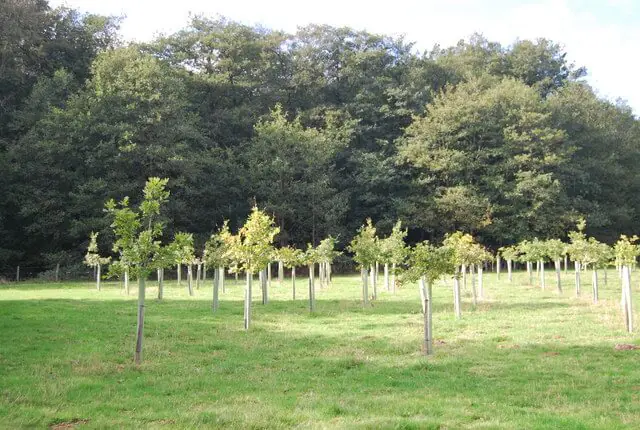
- Newly_planted_trees_-_geograph.org.uk_-_2182732 by N Chadwick. Cropped and resized from original: Wikipedia Commons
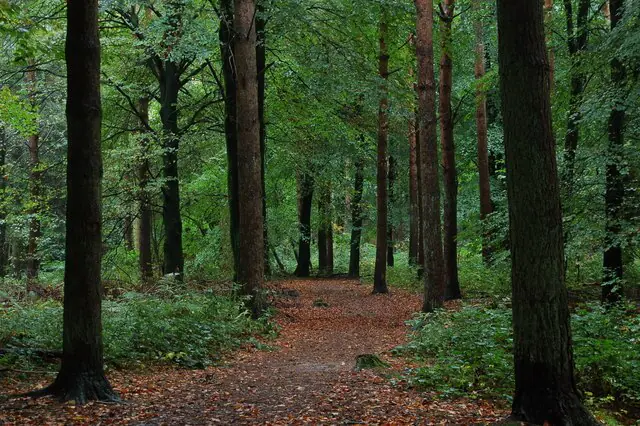
- Portglenone_forest_(1)_-_geograph.org.uk_-_263049 by Albert Bridge. Cropped and resized from original: Wikipedia Commons