

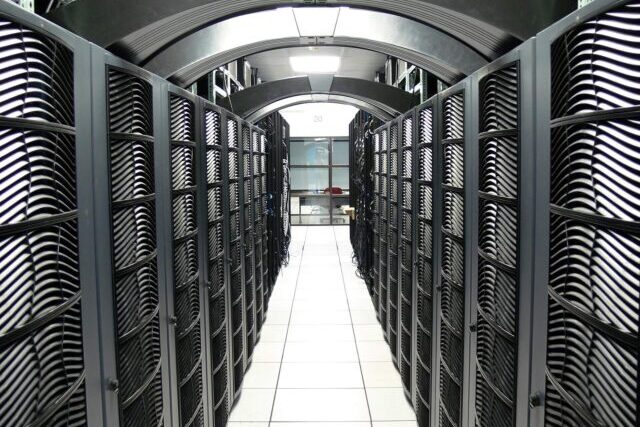
AI Datacentre Boom Drives Carbon Emissions from Microsoft, Amazon and Google
The rapid expansion of artificial intelligence infrastructure is driving a sharp increase in the carbon emissions of some of the world’s biggest technology companies.
Microsoft, Amazon and Google collectively produced 119 million metric tonnes of carbon dioxide equivalent (mTCO₂e) in the financial year ending March 2026, almost a fifth more than the previous year.
The combined emissions of the three technology giants are equivalent to around a third of France’s annual emissions.
Big Tech carbon emissions rise by almost 20%
The latest figures show how the growing demand for artificial intelligence, cloud computing and data storage is putting increasing pressure on the environmental commitments of major technology companies.
Microsoft, Amazon and Google emitted approximately 101 million mTCO₂e in the previous year, roughly equivalent to the 2024 emissions of Czechia.
Their combined emissions subsequently increased to 119 million mTCO₂e.
The increase has been driven largely by the construction and expansion of datacentres needed to support cloud computing and artificial intelligence.
AI is driving demand for new datacentres
The technology sector is experiencing an unprecedented expansion in datacentre infrastructure as companies race to develop and operate increasingly powerful AI systems.
Cloud services allow businesses and consumers to store data and run computing systems remotely. The growing use of generative AI and other AI technologies has significantly increased demand for this infrastructure.
The world’s largest technology companies are expected to spend $765 billion (£570 billion) this year, with much of that investment going towards AI datacentres.
Construction is taking place across the world, from Norway to North Tyneside, as companies seek the enormous computing capacity required to develop and operate AI systems.
Microsoft emissions increase by 25%
Microsoft reported that its carbon emissions increased by 25% over the past year, reaching approximately 20 million mTCO₂e.
The company attributed the increase to the rapid expansion of its datacentre infrastructure, saying emissions were “driven primarily by the expansion of our datacentre infrastructure”.
Microsoft has nevertheless maintained its target of achieving net zero emissions by 2030.
The increase represents a significant reversal from previous years, when Microsoft’s emissions appeared to have remained relatively stable at around 16 million mTCO₂e in both 2023 and 2024.
Google and Amazon emissions also increase
Google reported an 18% increase in emissions over the past year.
The company attributed the rise to “increases in supply chain activities that supported the rapid expansion of our business”.
Google has also highlighted the potential environmental benefits of its artificial intelligence systems, claiming its AI technologies helped develop solutions that reduced emissions elsewhere by 41 million tonnes of CO₂ last year.
Amazon reported a 16% increase in total emissions, while its supply chain emissions increased by 20%. These supply chain emissions included datacentre construction and building activity.
Despite the increase, Amazon continues to describe its progress in the context of its target to achieve net zero emissions by 2040.
Critics question Big Tech’s environmental claims
The rapid increase in emissions has raised questions about whether the technology industry’s environmental ambitions can keep pace with its investment in artificial intelligence.
Cecilia Rikap, an economics professor at University College London, said: “Claims by Microsoft, Amazon and Google about their clouds being ecologically friendly and sustainable are a marketing strategy. Governments should remember these expanding carbon footprints when the very same companies offer addressing the ecological crisis with AI solutions.
“And, as migration to their clouds expands, and companies store data and train and use AI models and all sorts of digital technologies, these other companies are outsourcing their own digital/AI carbon footprint to cloud giants. Basically, shifting to the cloud helps other corporations obscure their environmental footprint.”
Microsoft, Google and Amazon were contacted for comment.
AI investment linked to rising carbon emissions
Researchers have linked the increase in emissions directly to the rapid expansion of artificial intelligence infrastructure.
Shaolei Ren, a professor of electrical engineering at the University of California, Riverside, said: “The increases in total carbon emissions are strongly correlated with [the companies’] AI investment,”
He also highlighted concerns about the availability of carbon credits, which companies can use as part of their strategies for addressing emissions.
“While companies are actively investing in or purchasing carbon credits, the figure suggests a possible lack of credit supply in the carbon market to meet the technology companies’ needs … Everyone is talking about the lack of physical goods and infrastructure like power, but there may also be a lack of virtual goods – carbon credits.”
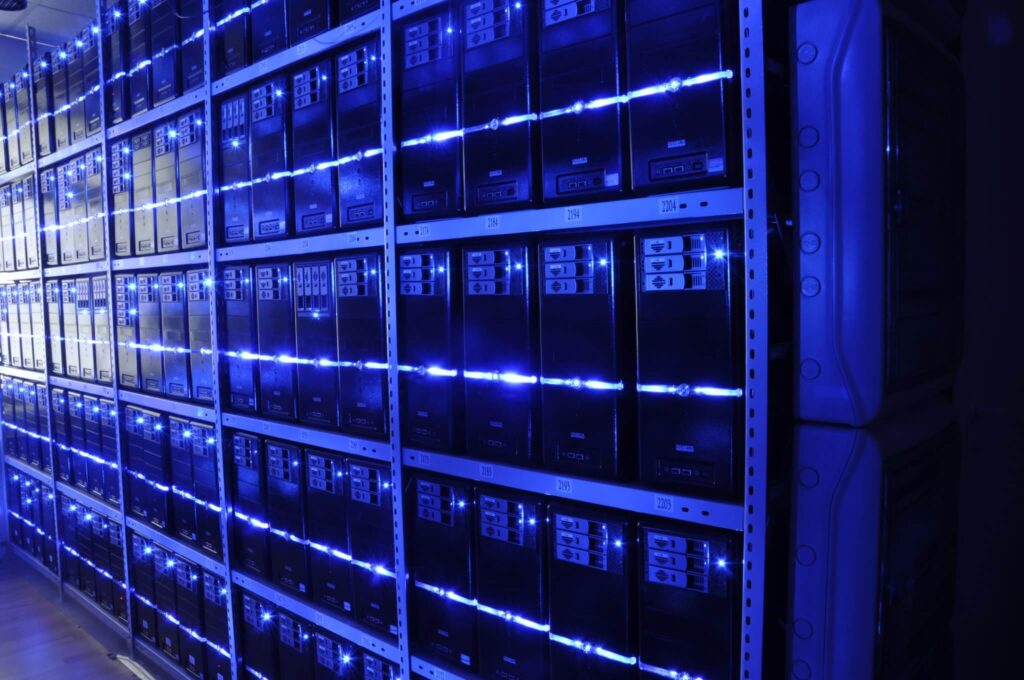
1,200 new datacentres expected by 2030
The global datacentre boom shows little sign of slowing.
JLL, a US property consultancy, expects around 1,200 datacentres to be built worldwide between now and 2030, with artificial intelligence expected to be the dominant driver of demand.
The expansion of these facilities will have implications far beyond their direct carbon emissions.
Datacentres require substantial quantities of electricity to power servers and cooling systems, while their construction also requires significant amounts of steel, concrete and other materials.
AI datacentres could dramatically increase electricity demand
The environmental impact of AI infrastructure is also closely linked to its enormous energy requirements.
The Uptime Institute, which rates and inspects datacentres, estimates that large datacentre projects announced last year could eventually consume 1.3% of global electricity use.
That would represent almost a doubling of current electricity demand from datacentres.
The majority of the additional power demand is expected to come from projects in the United States.
As governments and technology companies seek to expand AI infrastructure, the availability of low-carbon electricity will become increasingly important.
Can AI growth be separated from environmental impact?
Microsoft, Google and Amazon have all retained ambitious net zero targets, despite the recent increase in their emissions.
Google and Microsoft are targeting net zero by 2030, while Amazon has set a target of 2040.
However, the latest figures highlight the challenge of reconciling rapidly increasing demand for artificial intelligence with global efforts to reduce greenhouse gas emissions.
AI may have the potential to help identify efficiencies, improve energy systems and support environmental monitoring. But the physical infrastructure required to develop and operate AI systems also has a substantial environmental footprint.
The challenge is therefore not simply to make AI more efficient. It is to ensure that the growth of AI infrastructure does not undermine wider efforts to tackle climate change and restore the natural world.
Building a sustainable digital future
The rapid expansion of AI datacentres demonstrates how technological progress can create new environmental pressures.
As demand for cloud computing and artificial intelligence continues to grow, technology companies will need to address the carbon emissions, energy consumption and resource requirements associated with the infrastructure that makes these technologies possible.
For the wider environmental movement, this reinforces an important principle: the transition to a more sustainable future cannot focus on emissions alone. It must also consider the impact of infrastructure development on ecosystems, resources and the natural world.
Supporting Biodiversity and Nature Solutions
At Natural World Fund, we believe protecting the environment means addressing the interconnected pressures facing our planet — from climate change and biodiversity loss to habitat destruction and unsustainable resource use. The technologies of the future must ultimately work alongside nature, rather than placing additional pressure on the ecosystems that sustain life.
Image sources
- BalticServers_data_center by BalticServers.com. Cropped and resized from original: Wikipedia Commons
- Virginia_Tech_-_data_center by Christopher Bowns. Cropped and resized from original: Wikipedia Commons