

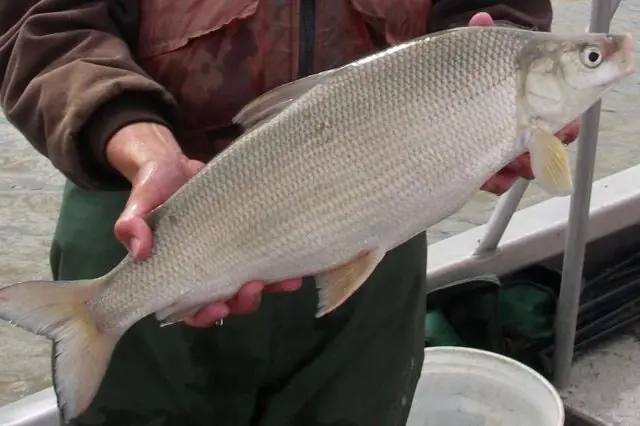
Lake Whitefish in Crisis as Invasive Mussels Threaten Great Lakes Fish
Once known as the “largest fresh water fish market in the world”, the city of Sandusky on the shores of Lake Erie has a long history with lake whitefish.
A book published in 1888, Sandusky of To-Day, celebrates the town’s fishing industry. On page 29, it describes Sandusky as the “largest fresh water fish market in the world”. Two pages later, a full-page image of lake whitefish calls the species “Sandusky’s pride”.
Today, that fishing heritage is under threat.
Lake whitefish populations have fallen sharply across parts of the Great Lakes. Researchers now warn that the species could disappear from some areas within the next five years.
Lake whitefish once supported Great Lakes communities
Lake whitefish has been an important food source in this part of North America for centuries. Indigenous communities built traditions and livelihoods around the fish.
By the mid-1800s, settler communities along the southern shore of Lake Erie, including Sandusky, had also built their economies around the growing demand for lake whitefish.
But from the 1990s onwards, the fish began to disappear.
Fishers and researchers first noticed fewer fingerlings and juvenile whitefish in Lake Erie. Over time, scientists linked the huge fall in numbers to the spread of invasive mussels across the Great Lakes.
Invasive mussels are disrupting the food chain
The main problem is not simply the mussels themselves. Their spread has changed the entire food web of the Great Lakes.
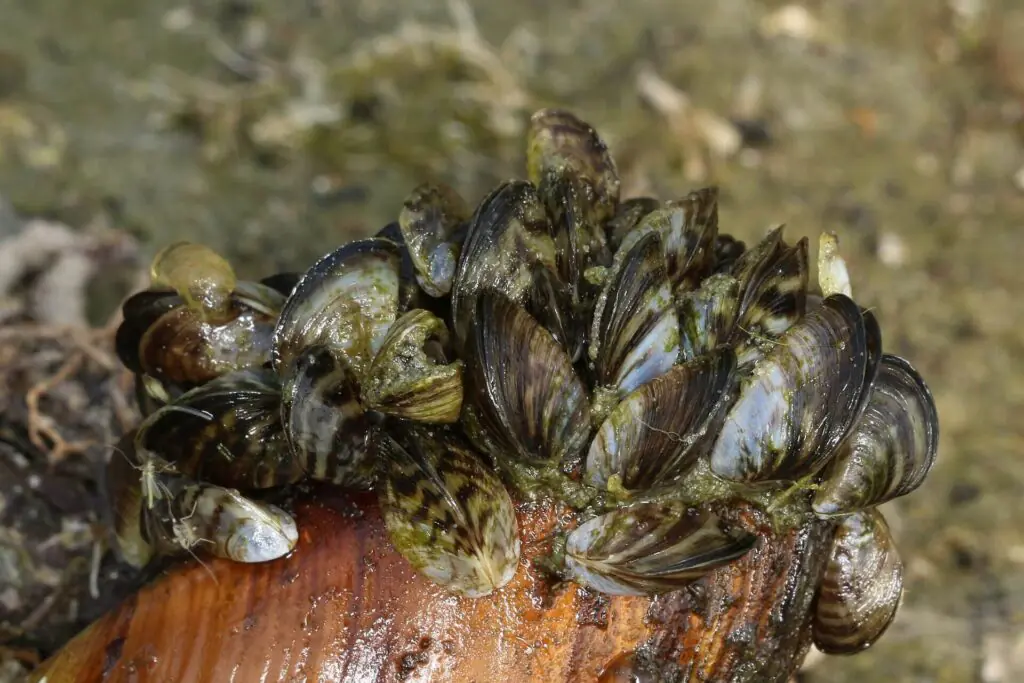
Freshwater quagga and zebra mussels arrived in the Great Lakes after travelling in the ballast water of transatlantic ships. Once established, they began filtering huge quantities of phytoplankton, tiny algae and bacteria from the water.
These organisms are an important food source for diporeia, a small, oil-rich, shrimp-like crustacean found in cold water between 100 and 400 feet deep.
Diporeia are also a crucial food source for young lake whitefish.
As invasive mussels remove phytoplankton from the water, diporeia populations decline. This leaves young whitefish with less food at a critical stage of their development.
The result is a damaging chain reaction through the food web.
Zebra and quagga mussels have transformed Lake Erie
Quagga and zebra mussels now carpet lakebeds across hundreds of miles of the Great Lakes.
Their presence has had some benefits for water quality. By filtering the water, mussels have helped remove phosphates and other pollutants linked to agriculture and industry.
However, their enormous numbers are also removing large quantities of phytoplankton.
That has serious consequences for species further up the food chain, including lake whitefish.
Biologists who recently completed an extensive survey of fish in western Lake Erie warned that lake whitefish could disappear from parts of the Great Lakes within five years.
Indigenous fishers face a devastating decline
For Indigenous communities that have depended on lake whitefish for generations, the decline is more than an environmental problem.
William Ortiz of the Little Traverse Bay Bands of Odawa Indians says the loss of whitefish has had a major economic and cultural impact.
“It’s the biggest source of income for the tribe’s fishers. We rely on whitefish probably more than anything,” he says.
Ortiz began commercially fishing for whitefish off the north-western shores of Lake Michigan in 2015.
“There’s been a steady decline even since I started. From 2015 to 2020, there was a noticeable decline. I did it full-time for nine years, but it’s hard to make a living when there’s not a lot of fish out there.”
Commercial whitefish fishing has collapsed
Commercial fishing for whitefish has fallen dramatically in the US waters of the Great Lakes.
In Ohio, around 200,000 pounds of whitefish were harvested in 2009. Last year, about 185,000lb were taken from Lake Erie as a whole.
Most of that catch is now harvested late in the year by commercial fishing operations based in Ontario.
Ortiz says zebra mussels have devastated the food supply available to young whitefish in spawning areas.
He explains that the mussels have eliminated the diporeia that young whitefish feed on after hatching.
“so they’re starving out before they get to a size where they’re moving up in the food chain.
“It’s heartbreaking what’s happening. It’s a treaty right; we used to be able to make a living, make enough money from spring till fall to hold yourself over through the winter. Now, it’s hard if not impossible to do that.”
Lake Superior could face the same threat
Lake Superior remains an important exception.
As the largest, deepest and most northerly of the Great Lakes, its colder conditions have so far limited the spread of invasive mussels compared with the warmer lakes further south.
But climate change could alter that.
Rising global temperatures have contributed to warming in Lake Superior. As conditions change, invasive mussels could find it easier to establish themselves in new areas.
That could put another major Great Lakes ecosystem at risk.
Scientists are searching for ways to control invasive mussels
The scale of the problem has prompted scientists and conservationists to search for new ways to control quagga and zebra mussels.
One promising area of research involves freshwater drum, also known as sheephead. These fish have powerful molar teeth that allow them to eat mussels.
Research suggests freshwater drum could help control invasive mussel populations at a local level.
A study published in June found that freshwater drum in the waters around Sandusky and western Lake Erie consumed an estimated 611 to 2,799 tonnes of dried, digestible mussel material each year between 2013 and 2023.
The mussels involved were quagga and zebra mussels.
However, natural predators alone are unlikely to solve a problem occurring across such a vast area.
Ohio researchers are testing direct controls
Researchers and conservationists are also testing methods to directly kill invasive mussels.
In Ohio, the Department of Wildlife has deployed large tarps across sections of the lakebed. Carbon dioxide is then injected beneath the tarps to kill the mussels.
High-pressure water jets have also been used to destroy mussel colonies.
“Both methods were very effective, but as you might imagine the scale and cost of effectively treating extremely large areas is a significant challenge,” says Travis Hartman of the Lake Erie Fisheries Program at Ohio’s Department of Wildlife.
“It’s fair to say that we are finding ways to be successful, but we have not found cost-effective large-scale ways to meet the needs at a Great Lakes scale.”
Calls for more funding to tackle invasive mussels
The scale of the challenge has also reached Congress.
Last year, two Michigan congressional representatives introduced a bill that would provide $50m a year for 10 years to develop new ways of controlling invasive mussels across the Great Lakes.
The legislation is currently before Congress.
Greg McClinchey of the Great Lakes Fishery Commission says tackling the problem will require major investment and cooperation.
“Just as was the case with lamprey back 70 years ago, invasive mussels will take a huge amount of research, work and cooperation to find a control solution that can be broadly and efficiently applied throughout the Great Lakes and perhaps in freshwater systems throughout North America,”
“This legislation will help to fund and manage that coordination … and hopefully lead to a second silver bullet solution.”
Further discussions between state and provincial leaders about controlling the spread of invasive mussels are planned for later this year.
Fishers want action, not more studies
For fishers such as Ortiz, however, there is growing frustration with the lack of a solution.
“It’s been studied since the 80s but no remedies have come up. We could study [the mussel problem] for another 100 years but when is somebody going to come up with a solution?” he says.
Ortiz points to the successful campaign against sea lampreys as an example of what can be achieved.
In the 1950s, scientists introduced a lampricide to control sea lampreys after the invasive species had devastated populations of native lake fish.
“But it seems like that in 2026 they can’t come up with a solution for quagga mussels. It kind of just blows my mind.”
McClinchey acknowledges the enormous scale of the challenge.
“There is no question that we need to resolve the problem as quickly as possible. The easy part is seeing what the problems are,” he says.
Removing or destroying quadrillions of mussels, many hundreds of feet below the surface, would require an unprecedented effort.
A fishing heritage at risk of disappearing
Back in Sandusky, the contrast with the city’s past is stark.
On a recent Saturday evening, preparations for an Ironman competition were in full swing. Yet not a single fisher could be seen along the town’s lakefront.
Sandusky of To-Day recorded that around 1,500 of the town’s estimated 16,000 residents were employed by 10 fishing companies during the 1880s.
Today, Sandusky’s fishing heritage is far less visible.
The town’s largest boating store, West Marine, is currently holding a closing-down sale.
For communities such as Sandusky, the decline of lake whitefish represents more than the loss of a fish.
It threatens a way of life built around the Great Lakes for generations.
The story of lake whitefish also shows how invasive species can transform entire ecosystems. A mussel that arrived unnoticed in the ballast water of transatlantic ships has helped reshape the food web of one of the world’s most important freshwater systems.
For now, scientists are searching for solutions while fishers wait for action.
Without effective control of invasive mussels, the future of lake whitefish — and the communities that depend on it — remains uncertain.
Protecting Freshwater Ecosystems and Restoring Nature
At Natural World Fund, we believe nature recovery means restoring healthy ecosystems where wildlife can thrive. From rivers and wetlands to lakes and coastal habitats, protecting biodiversity means rebuilding the natural systems that support life. The decline of lake whitefish shows what can happen when invasive species disrupt an entire food web. By restoring habitats, protecting native species and supporting healthier ecosystems, we can help nature become more resilient to the pressures it faces.
Image sources
- Wandermuschel_Dreissena_polymorpha by Holger Krisp. Cropped and resized from original: Wikipedia Commons
- Lake_Whitefish_(51298060785) by USFWS Mountain Prairie. Cropped and resized from original: Wikipedia Commons