

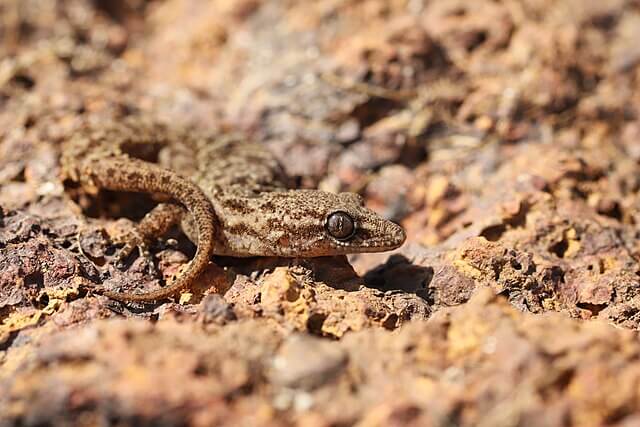
Global Agriculture Expansion Is Driving Biodiversity Loss
Wild landscapes around the world are being rapidly converted into farmland to meet the food demands of a growing global population. This accelerating agricultural expansion is now emerging as one of the biggest threats to global biodiversity, particularly in ecologically sensitive regions.
A major new global study published in Communications Earth & Environment reveals just how severe the impacts have been on wildlife, especially in the world’s most important biodiversity hotspots.
New Study Reveals Severe Impacts on Wildlife
The research was led by scientists from the Chinese Academy of Sciences and China Agricultural University, with collaborators from the University of Cambridge, the University of Maryland, and the University of Oklahoma.
The authors warn that conservation efforts must urgently focus on biodiversity hotspots, where agricultural pressure is increasing fastest and species are most at risk of extinction.
What Are Biodiversity Hotspots — and Why Do They Matter?
Biodiversity hotspots are regions with an exceptionally high number of unique plant and animal species found nowhere else on Earth. Although biologically rich, these areas are already highly degraded, having lost more than 70% of their original natural vegetation.
As a result, much of the planet’s remaining biodiversity is confined to small, fragmented habitats, making protection of these regions critical to preventing irreversible species loss.
Small-Ranged Species Are Especially Vulnerable
The study focused on vertebrates with very limited geographic ranges, including small mammals, birds and amphibians. These species are particularly vulnerable because even minor habitat loss can wipe out entire populations.
Many of these animals perform vital ecological functions such as pollination, seed dispersal and pest control. Their decline can trigger cascading effects that destabilise entire ecosystems.
Farming Inside Biodiversity Hotspots Reduces Species Richness
The findings show that agriculture inside biodiversity hotspots has already caused major biodiversity declines:
- 26% fewer species survive on cropland compared to natural habitats
- 12% fewer individual animals and plants are present overall
- Nearly 9% lower community diversity, even when population size is considered
At the same time, agriculture is expanding rapidly — particularly in tropical regions near the equator, where biodiversity is highest.
Most Wildlife Lies Outside Protected Areas
Compounding the crisis, researchers found that much of the wildlife in biodiversity hotspots exists outside protected parks and reserves. These unprotected landscapes are far more vulnerable to land-use change, leaving rare and endemic species exposed to ongoing habitat loss.
How Researchers Measured the Impact of Agriculture
To assess the global impact of farming on biodiversity, researchers analysed wildlife survey data from the PREDICTS database, which compiles ecological studies from around the world.
They compared natural forests and grasslands with agricultural land, examining three key indicators:
- Number of different species
- Total population of animals and plants
- Community diversity adjusted for population size
The losses were consistent and severe across all measures.
Cropland Expansion Is Accelerating in Biodiversity Hotspots
Using high-resolution satellite data, the study tracked cropland changes between 2000 and 2019. The results showed that cropland inside biodiversity hotspots expanded by 12%, outpacing the global average of 9%.
The fastest growth occurred in tropical and developing regions, including:
- The Cerrado and Atlantic Forest in South America
- Indo-Burma and Sundaland in Southeast Asia
- Parts of eastern and southern Africa
Thousands of High-Risk Zones Identified Worldwide
By overlaying cropland expansion with the distribution of small-ranged vertebrates, researchers identified 3,483 high-risk danger zones across global biodiversity hotspots, covering around 1.74 billion hectares.
Alarmingly, more than 1 billion hectares of these high-risk areas lie outside protected zones, leaving them vulnerable to further agricultural conversion.
The regions facing the greatest threat include the Atlantic Forest, Indo-Burma, Western Ghats and Sri Lanka, Sundaland, and the Eastern Himalaya.
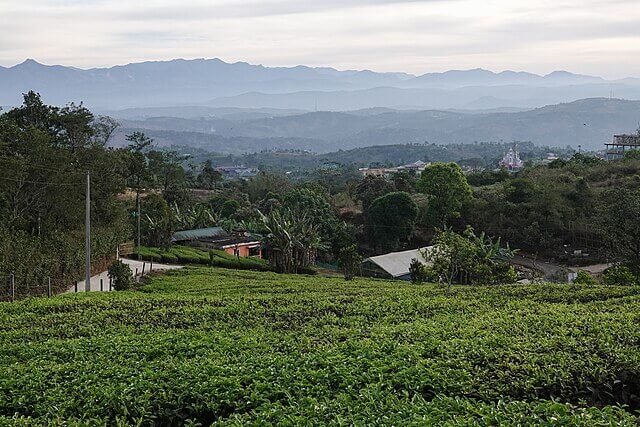
India’s Western Ghats: A Biodiversity Hotspot Under Pressure
The study’s global patterns are playing out starkly in India’s Western Ghats, one of the world’s most important biodiversity hotspots.
According to Akshay Gawade of the Applied Environmental Research Foundation (AERF), land-use change is accelerating, with large areas being converted into orchards, partly driven by government subsidies.
“Traditional farming systems are breaking down,” he added. “As younger generations move out, land is often sold to orchard owners or wood loggers. This is changing land-use patterns very quickly.”
Unlike industrial monoculture farming, agricultural expansion in the Western Ghats often takes the form of plantations and mixed-use farming, which fragments habitats into smaller, disconnected patches and restricts wildlife movement.
Habitat Fragmentation Is Driving Species Decline
The Western Ghats arehome to over 5,000 flowering plants, 139 mammals, 508 birds, and at least 325 globally threatened species, many of which — especially amphibians and plants — exist nowhere else.
Research has shown how damaging land conversion can be. A study by Vijayan Jithin found that when rocky plateau ecosystems in Maharashtra were converted into rice paddies and orchards, frog diversity collapsed.
Western Ghats Rated ‘Significant Concern’ by IUCN
The International Union for Conservation of Nature (IUCN) has rated the Western Ghats as being of “significant concern” in its 2025 World Heritage Outlook.
The assessment cited land-use change and development pressures, drawing on inputs from state forest departments and recommendations from the Western Ghats Ecology Expert Panel.
Protecting biodiversity in these regions is particularly challenging, as privately owned agricultural and plantation lands are far harder to regulate than national parks.
Why Current Agricultural Expansion Is Unsustainable
Although the global study did not analyse plantation landscapes directly, its findings underscore a clear message: continued land conversion in biodiversity-rich regions is unsustainable, regardless of how agriculture is practised.
The authors stress that expanding farmland alone cannot meet food demand without catastrophic biodiversity loss.
What Must Change to Protect Biodiversity Hotspots
The researchers call for urgent, coordinated action, including:
- Strategic expansion of protected areas in biodiversity hotspots, especially where rare species are concentrated
- Stronger management and enforcement within existing protected areas
- Improved productivity on existing farmland to reduce pressure on natural ecosystems
- Fairer international food trade, so biodiversity-rich countries are not forced to destroy ecosystems to feed wealthier nations
- Meaningful involvement of local communities in conservation and monitoring
Protecting Nature Is Essential for a Sustainable Future
The study makes one thing clear: protecting biodiversity hotspots is essential not only for wildlife, but for climate stability, food security and human wellbeing.
Without urgent action to curb habitat loss, the world risks losing irreplaceable ecosystems — and the life-support systems they provide — forever.
About Natural World Fund
Natural World Fund focuses on restoring and protecting habitats across the UK to support long-term wildlife recovery.
Image sources
- Tea_Western_Ghats_Calvary_Mount_Idukki_Kerala_Mar22_R16_05624 (1): Wikipedia Commons
- Hemidactylus_gleadowi,_Chalkewadi_Plateau,_Satara,_Maharashtra_Western_Ghats_IMG_0900_01 (1): Wikipedia Commons