

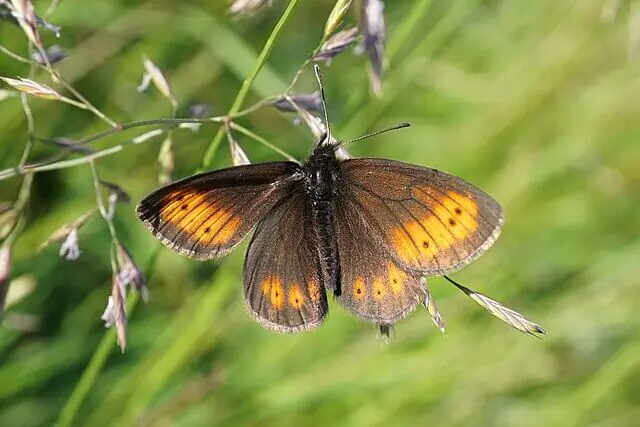
England’s Rarest Mountain Butterfly Requires New Conservation Tactics
Conservationists say they must become more innovative to monitor the population of one of England’s most unique and elusive butterflies — the mountain ringlet. This remarkable species is the only high-altitude butterfly of its kind in England and is restricted to the highest peaks of the Lake District.
A Species Found Nowhere Else in England
According to ecologist Dr Rosa Menéndez of Lancaster University, the mountain ringlet lives exclusively in the upland areas of Cumbria’s Lake District. Its remote habitat, combined with an extremely short flight period of just three weeks in summer, makes traditional butterfly monitoring methods difficult and physically demanding.
Surveying multiple mountain routes within this narrow time window requires significant time, planning and specialist knowledge.
Citizen Science and Mountain Walkers Supporting Research
To overcome these challenges, conservationists are exploring new approaches. One proposal is to work with experienced mountain walkers who can record sightings while navigating challenging high-level routes.
This builds on previous citizen science efforts, when visitors to the Lake District were encouraged to log butterfly sightings to help researchers better understand the species’ distribution.
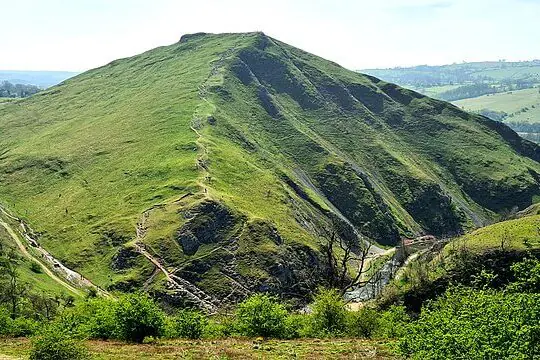
Mapping Sightings Across the Lake District
Butterfly Conservation created a detailed map of historic and recent sightings. All confirmed records were located above 450 metres in the Borrowdale volcanic range, stretching from Wasdale in the west to Mardale and Haweswater in the east.
The mapping project also identified new areas of potentially suitable habitat for future surveys.
160 Public Sightings — But Long-Term Trends Remain Unclear
Following the public call for records, conservationists received 160 sightings. However, according to Butterfly Conservation’s Martin Wain, differences in survey methods mean the data cannot be directly compared with earlier counts.
“We still have lots of areas in the mountains where we don’t know if it’s there or not,” said Menendez.
Despite this, recent evidence suggests the butterflies may be moving to even higher elevations — a possible response to environmental and climate pressures.
“We think it’s a reaction to climate change but it’s hard to prove those sorts of things,” Wain said.
Why Traditional Monitoring Methods Are No Longer Enough
Researchers now believe that standard butterfly survey techniques are not effective for this highly specialised species. Its isolated mountain habitat, short activity period and low population density require more flexible, collaborative and innovative monitoring solutions.
“You can’t send anyone to the mountains,” she said.
“We need to target particular individuals when they go to the mountains.
“They engage in this activity which is [already] challenging, so we can give them another kind of challenge.”
Protecting the Future of the Mountain Ringlet
While scientists have a strong understanding of most UK butterfly populations, the mountain ringlet remains a conservation priority due to its limited range in England.
Developing new ways to track and protect this species will be essential for safeguarding its future in the Lake District’s fragile upland environment.
At Natural World Fund, we believe the mountain ringlet’s fragile existence high in the Lake District is a powerful indicator of how climate change and habitat pressures are reshaping even our most remote landscapes. When a species can only survive on the highest peaks and becomes harder to monitor using traditional methods, it signals the need for faster, more innovative conservation action. Protecting these specialised butterflies means safeguarding the delicate upland ecosystems they depend on — and ensuring that rare and irreplaceable wildlife continues to thrive in England for generations to come.
Image sources
- View_from_Peak_District_hills_3 (1): Wikipedia Commons
- Erebia_sp._(48308512691) (1): Wikipedia Commons