

Raccoons in Germany: The Growing Invasive Species Challenge in Kassel
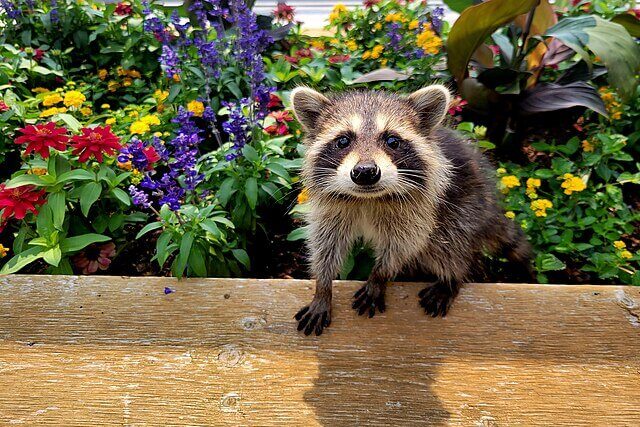
In the city of Kassel, raccoons are impossible to ignore. Nearly every resident has a story — from families discovering raccoons nesting in their roofs to picnic-goers watching helplessly as groups of these clever mammals raid their food. Known locally as Waschbären, raccoons have become a defining feature of urban life in central Germany.
“We are the raccoon city. They are everywhere,” says Lars, a Kassel resident, as he tends his allotment by Karlsaue park in the fading light.
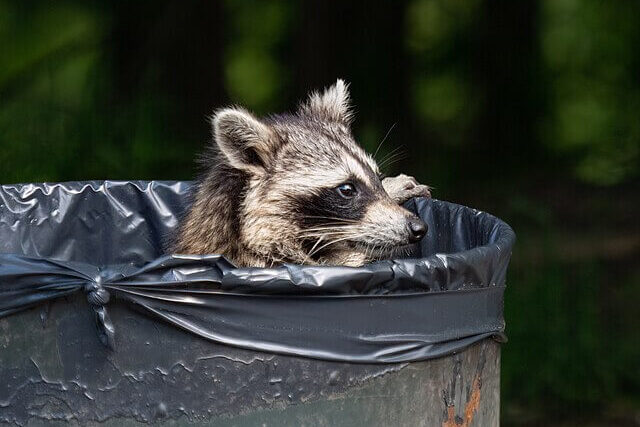
“When it’s a bit darker, they will come out. I sit here in my garden at night and the raccoons come. If your bag is here, they will steal your banana or something,” he says. “They have no predators, so they are the chiefs. They can do what they want. We love them but we also hate them.”
While precise numbers are difficult to confirm, experts estimate there are thousands of raccoons in Kassel alone. Nationwide, Germany is home to approximately 1.5 million raccoons, making it one of Europe’s most significant hotspots for this non-native species.
How Raccoons Became Established in Germany
The raccoon (Procyon lotor) is native to North America. It was first introduced to Germany in the 1930s during the era of Nazi Germany, primarily for fur farming. However, escaped animals and deliberate releases allowed wild populations to establish and expand rapidly.
Over the decades, raccoons have spread well beyond Germany. They are now increasingly reported across Europe, including in:
- France
- Denmark
- Poland
- Italy
- Austria
This expansion highlights a broader European invasive species issue with long-term ecological implications.
“It is clear that the raccoon is spreading very rapidly across western Europe,” says Daniel Willcox, a co-chair of the International Union for Conservation of Nature (IUCN) small carnivore specialist group. “It’s going to be very difficult to control – but it doesn’t mean you shouldn’t try.”
Raccoons in Kassel: Urban Adaptation and Local Attitudes
In Kassel, raccoons have become part of the city’s identity. Local sports teams have adopted raccoon-themed names, residents secure household bins to prevent scavenging, and drivers check beneath cars before starting engines.
“The impacts of raccoons are widespread,” says Marten Winter, an invasive species expert at the German Centre for Integrative Biodiversity Research (iDiv). “They can climb, which is a totally new ecological niche for a species like this in Europe. Ground-nesting birds, bats in caves, birds in boxes, amphibians – they are able to eat almost everything.”
Despite their mischievous reputation, many locals have grown fond of the animals. However, this coexistence is not without tension — especially when neighbours intentionally feed raccoons, attracting them to residential streets.
EU Invasive Species Classification and Ecological Concerns
Since 2016, raccoons have been officially classified as an invasive species under EU regulation due to their potential threat to native wildlife and ecosystems.
Research suggests serious environmental impacts:
- A study in Brandenburg indicates raccoons frequently prey on ground-nesting birds, many of which are already experiencing severe population declines across Europe.
- Research in western Poland shows raccoons consuming “extreme” quantities of endangered freshwater mussels.
These findings raise concerns about biodiversity loss and ecosystem imbalance — core issues for conservation organisations across Europe.
Managing Europe’s Raccoon Population: Control or Coexistence?
Wildlife ecologists are divided on how to respond. Some advocate for stricter EU-wide control programmes, similar to those implemented in countries like Australia and New Zealand, where significant investment has gone into eradicating non-native species to protect fragile ecosystems.
Willcox says: “There are certain native species that are going to be really sensitive to predation by raccoons. There have to be control programmes. There is no ecological equivalent to raccoons in Europe and it’s not something that should be tolerated.”
Others urge caution. Researchers argue that more long-term studies are needed to fully understand the raccoon’s ecological impact, noting that habitat loss, pollution, and climate change are also major drivers of species decline.
“We need better data to really have an idea of the actual impact of the raccoon on its prey populations. With potentially 1.6 million individuals in Germany, they have an impact. But we still have the mink, which is also a very effective predator for ground-nesting animals. And what about cats? Cats are very likely to be causing more severe declines in bird populations, at least in semi-urban areas,” he says.
However, population control measures are already underway. In Germany alone, approximately 200,000 raccoons were culled last year. Hunting associations report expanding ranges and rising numbers. To help with population control, at least one butcher has started making sausages and meatballs from their meat.
“I’ve never had anyone say it is disgusting or that you can’t eat it. Honestly, everyone likes it,” he told CNN in 2024.
The Future of Raccoons in Europe
“I’ve never had anyone say it is disgusting or that you can’t eat it. Honestly, everyone likes it,” he told CNN in 2024.
As dusk falls over Kassel, raccoons emerge from wooded areas and urban hiding spots, ready to forage through the city under cover of darkness. Their presence appears firmly established.
Many experts now believe raccoons may be permanently embedded within parts of Europe’s ecosystems. The key question facing policymakers, conservationists, and communities is not whether raccoons will remain — but how to manage their impact responsibly.
“When I was a child, they were here but not so many,” he says. “They are a symbol for us here, a badge of honour. Sometimes, we are proud of them. But they destroy a lot.”
Protecting Native Wildlife from Invasive Species
The raccoon’s rise in Germany illustrates a broader challenge: how human introductions of non-native species can reshape ecosystems for generations. Effective biodiversity protection requires research, balanced policy decisions, and public awareness.
At Natural World Fund, we support initiatives that protect native wildlife and promote sustainable ecosystem management across the UK and beyond.
Image sources
- Raccoon_in_a_garbage_can (1): Wikipedia Commons
- Oh_Hi,_Raccoon! (1): Wikipedia Commons