

A Remarkable Whale Recovery in the Southern Ocean
In Antarctica, one of the last true wildernesses on Earth, an extraordinary wildlife recovery is underway.
In the icy waters of the Southern Ocean, where more than 2 million whales were killed by commercial whaling during the 20th century, several whale populations are finally returning. For decades, relentless hunting pushed iconic species to the edge of extinction.
Since the global ban on commercial whaling in 1986, some species have begun to recover. Humpback whales have shown the fastest rebound and are now believed to be close to their pre-whaling numbers. Blue whales, the largest animals ever to live on Earth, are also returning — but much more slowly.
This recovery offers hope for the future of Antarctic wildlife. But it is also happening at a time when a new environmental threat is putting whales back into competition with humans.
Scientists Witness Huge Whale Gatherings Near the South Orkney Islands
Recent scientific surveys near the South Orkney Islands have revealed astonishing scenes of whale activity.
Independent researchers working in the region reported seeing multiple groups of more than 100 whales feeding together — a scale of abundance rarely witnessed in modern times. These “super aggregations” are being described as breathtaking and comparable to the extraordinary wildlife encounters recorded by the earliest polar explorers.
Such sightings are a powerful sign that whale populations in Antarctica are recovering. But they also highlight how important these feeding grounds are — and how vulnerable they may be.
Antarctic Krill: The Tiny Species Supporting the Entire Ecosystem
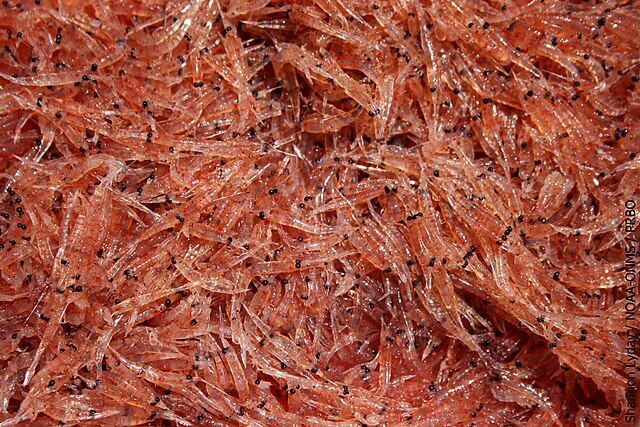
At the heart of this issue is Antarctic krill — small shrimp-like crustaceans that form the foundation of the Antarctic food web.
Krill are the main food source for many of the Southern Ocean’s most iconic species, including:
- Whales
- Penguins
- Seals
- Seabirds
- Fish
Without healthy krill populations, the wider Antarctic ecosystem cannot function.
For whales in particular, krill are essential. Vast feeding grounds rich in krill are what allow species like humpback and blue whales to recover after centuries of exploitation.
A Growing Threat: Industrial Krill Fishing in Whale Feeding Grounds
While whale numbers are increasing, industrial fishing for Antarctic krill is also expanding.
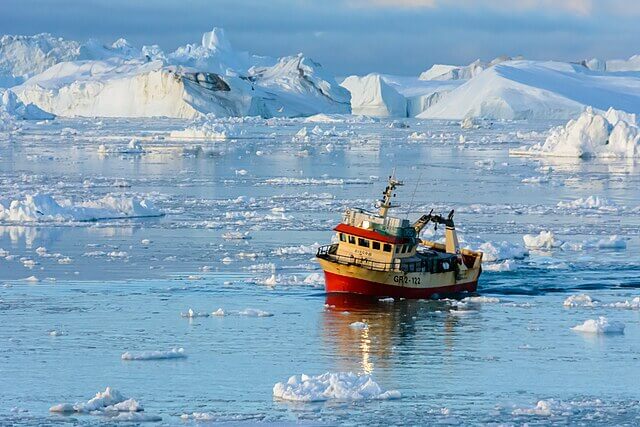
Conservationists are becoming increasingly concerned that large-scale krill trawlers are operating in the same feeding areas used by recovering whale populations. These vessels are targeting the very resource whales depend on for survival.
In February, marine conservation organisation Sea Shepherd returned to the Southern Ocean — not for direct action, but to support science. On board its research vessel, the Allankay, scientists carried out surveys using:
- Line-transect whale monitoring
- Drone observations
- Acoustic measurements
- Krill fishing activity tracking
Their mission was to better understand both the scale of whale recovery and the impact of krill fishing in Antarctica.
Could the South Orkney Islands Hold the Highest Density of Whales on Earth?
Dr Matt Savoca, a researcher from Stanford University’s Hopkins Marine Station, described the waters around the South Orkney Islands as potentially having “the highest density of whales anywhere on the planet.”
The scientific team’s goal was twofold:
- To assess just how significant these whale concentrations are
- To answer a critical question: Is Antarctic krill fishing truly sustainable?
“We have got these whales feeding and the krill industry extracting krill and the question is: is this sustainable or is it having an effect on the recovering whale population?” he asks.
This is not just a scientific issue — it is a major conservation question with global implications.
If whales are recovering in these waters but are once again being forced into competition with industrial activity, the long-term health of the Southern Ocean could be at risk.
Why Krill Matter for More Than Just Whale Survival
Whales do more than simply consume krill.
As they feed and move through the ocean, whales help recycle nutrients back into the marine ecosystem. This natural process supports productivity in Antarctic waters and helps sustain the broader web of life.
Industrial krill fishing, however, removes that nutrient base from the ocean entirely.
Krill caught by trawlers are commonly processed into products such as:
- Dietary supplements
- Pet food ingredients
- Aquaculture feed for fish farms
This raises a serious ecological concern: the removal of krill at industrial scale may affect not only whale feeding, but the health and resilience of the entire Antarctic marine ecosystem.
Political Deadlock Is Failing Antarctic Conservation
Concerns over krill fishing have intensified because international protections are becoming weaker.
The Commission for the Conservation of Antarctic Marine Living Resources (CCAMLR) was created to protect the Antarctic from overexploitation. But in recent years, the organisation has faced a growing diplomatic stalemate.
In 2024, China and Russia blocked the renewal of an important conservation agreement designed to limit krill fishing in ecologically sensitive areas of the Southern Ocean.
In 2025, CCAMLR once again failed to reach agreement on stronger conservation measures.
This lack of action has alarmed scientists and campaigners, particularly because krill are already under pressure from:
- Industrial fishing
- Climate change
- Warming ocean temperatures
- Changing sea ice conditions
Without effective international protections, some of Antarctica’s most important wildlife feeding grounds could become increasingly vulnerable.
Whale ‘Super Aggregations’ Show Recovery Is Real
Despite these threats, there is genuine hope.
Researchers continue to record extraordinary numbers of whales feeding in Antarctic waters. According to scientists on the recent expedition, sightings of 100 or more feeding whales at once are becoming increasingly common in key areas.
“It is incredible that every day at the South Orkneys with decent weather (far from a given), we could more or less guarantee seeing a group of 100-plus whales” says Savoca. “The fact that groups this size are common here is what’s most remarkable. It’s breathtaking to see blows stretch from horizon to horizon, just as the first explorers to the region described over a century ago”.
Ted Cheeseman, co-founder of the citizen science organisation Happywhale, described these observations as “really exciting.”
He noted that such scenes have rarely been documented in the region since the now-famous footage captured by Scottish scientist Conor Ryan in 2022, showing an estimated 1,000 whales feeding together — believed to be the largest whale aggregation ever recorded.
These moments are a powerful reminder of what nature can achieve when given the chance to recover.
Whales and Trawlers Are Competing for the Same Food
At the same time, researchers have observed industrial krill vessels operating alarmingly close to feeding whales.
Some krill trawlers can weigh up to 3,000 metric tonnes, making them a major industrial presence in one of the world’s most fragile marine ecosystems.
“Penguins and whales and quite a population of seals are eating this krill,” says Cheeseman. “Whales were always the largest predator here,” he says, “but now they have a predator, the krill trawlers, which are up to 100 times the size of a humpback. And these larger predators are taking the nutrients out of the system.”
This creates a direct conflict: whales are returning to the exact places where industrial fleets are extracting the food they depend on.
For conservationists, the issue is no longer theoretical. It is visible, immediate, and increasingly urgent.
A 30km Buffer Zone Could Help Protect Antarctic Whales
In response to these concerns, researchers are calling for stronger local protections.
One proposal is the creation of a 30km (19-mile) no-fishing buffer zone around key whale feeding areas near the South Orkney Islands. This would prevent industrial krill fishing from operating directly alongside feeding whales.
“When a whale eats krill, it poops out krill,” says Cheeseman. “There’s a nutrient recycling happening. If you take out more predators, you would imagine you get more prey. But when you take out whales, the krill reduces.”In the absence of international agreement through CCAMLR, such practical protections could offer an important safeguard for recovering whale populations.
Protecting krill means protecting the entire Antarctic food chain — from the smallest crustaceans to the largest animals on Earth.
“Krill fishers have, to their credit, agreed voluntary buffers of 30km around penguin colonies,” says Cheeseman. Savoca adds: “There is an incredible opportunity for conservation through collaboration. The NGOs, scientists, and the fishing industry can come together and succeed where CCAMLR has failed.”
Why Antarctic Whale Recovery Matters
The return of whales to Antarctica is one of the most inspiring marine conservation stories of our time.
But recovery is not the same as safety.
If industrial krill fishing continues to expand in sensitive feeding grounds, and if international conservation efforts remain stalled, the progress made since the end of commercial whaling could be undermined.
Antarctica is one of the few places on Earth where nature still has the chance to recover at scale. Protecting that recovery must be a global priority.
Support Wildlife Conservation
At Natural World Fund, we recognise that protecting Antarctica’s fragile marine ecosystems is essential for the future of our planet. Safeguarding Antarctic krill, defending vital whale feeding grounds, and supporting stronger ocean conservation measures can help recovering whale populations thrive, protect biodiversity, and preserve one of the last great wildernesses on Earth for future generations.
If you care about restoring native wildlife in the UK, support the work of Natural World Fund today.
Image sources
- Several_krill (1): Wikipedia Commons
- 2015-09-19_02_BINGO_III_-_GR_2-122_–_MMSI_331214000 (1): Wikipedia Commons