

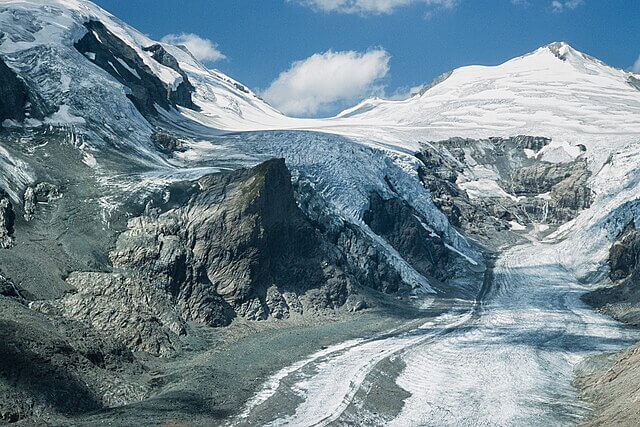
Austrian Alpine Glaciers Are Disintegrating Due to Climate Change
Scientists are raising urgent concerns that glaciers in the Austrian Alps are no longer simply melting—they are actively disintegrating as a result of accelerating climate change. The latest findings highlight a dramatic and ongoing loss of ice across the region.
“Many glaciers are not only shrinking in length but are increasingly entering a phase of structural disintegration,” said Andreas Kellerer-Pirklbauer from the University of Graz.
New Report Reveals Rapid Glacier Shrinkage
According to the Austrian Alpine Club’s latest annual glacier report, alpine glaciers continue to decline significantly in length, area, and volume.
“Exposed rock ledges, sections of ice breaking away and glacier tongues collapsing in on themselves are increasingly shaping the landscape.”
Of the 96 glaciers monitored over the past year, 94 have shrunk—clear evidence of a widespread and intensifying trend.
This rapid glacier retreat underscores the growing impact of global warming on fragile mountain ecosystems.
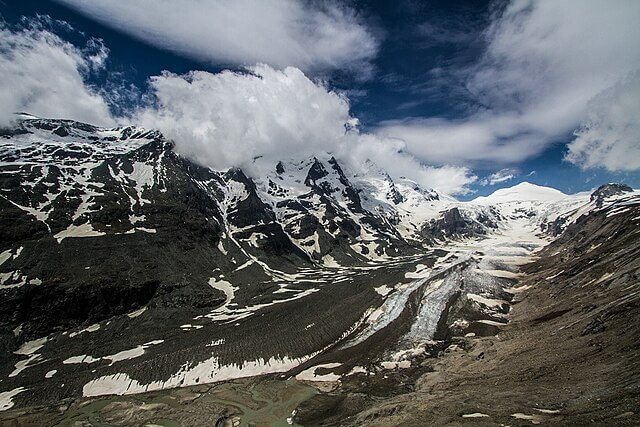
Worst-Affected Glaciers in Austria
Some glaciers are experiencing particularly severe losses. The Alpeiner Ferner glacier in Tyrol recorded a dramatic retreat of over 114 metres, while the Stubacher Sonnblickkees glacier in Salzburg lost more than 103 metres in length.
These substantial reductions highlight how quickly glacier landscapes are changing across the Austrian Alps.
Austria’s largest glacier, the Pasterze in Carinthia, continues to shrink at an alarming rate. Scientists warn that its glacier tongue could soon break off entirely, potentially splitting the glacier into two separate parts.
This would mark a significant and visible consequence of long-term ice loss driven by rising temperatures.
Rising Temperatures Accelerate Glacier Loss
Data from high-altitude monitoring stations show temperatures are now around 2°C above the long-term annual average. These elevated temperatures are creating increasingly hostile conditions for glacier survival.
Experts monitoring the glaciers describe recent weather patterns as extremely unfavourable, further accelerating ice melt and structural breakdown.
Climate Change Driving Extreme Impacts in the Alps
The Alpine region is considered one of the most sensitive indicators of climate change in Europe.
Gerhard Lieb, who runs the glacier monitoring service with Andreas Kellerer-Pirklbauer, said the weather conditions in recent years had been “extremely unfavourable for glaciers”.
“Many glaciers are now losing so much mass that they barely react to periods of short-term cooling, such as that seen in July 2025,” he said.
Scientists warn that continued warming is not only shrinking glaciers but also increasing the risk of extreme weather events and natural hazards.
Melting glaciers can contribute to landslides, flooding, and long-term water supply challenges—affecting both ecosystems and human communities.
Why Glacier Loss Matters for the Planet
Glaciers play a crucial role in regulating freshwater supplies, supporting biodiversity, and maintaining environmental balance. Their rapid decline is a clear signal of the broader climate crisis.
“Alpine infrastructure is increasingly at risk; and as the glaciers disappear, the landscape is undergoing profound changes,” the report said.
“Climate change has long been a reality in the Alps, and we are experiencing its consequences… right now,” Nicole Slupetzky, Vice-President of the Austrian Alpine Club said.
“It is no longer a question of whether we can still save the glaciers in their former state. It is a question of mitigating the consequences for ourselves”.
At Natural World Fund, we advocate for urgent climate action and ecosystem protection. The disintegration of Austria’s glaciers is a stark reminder that protecting our natural world has never been more critical.