

UN Calls for Global Economic Reform Beyond GDP
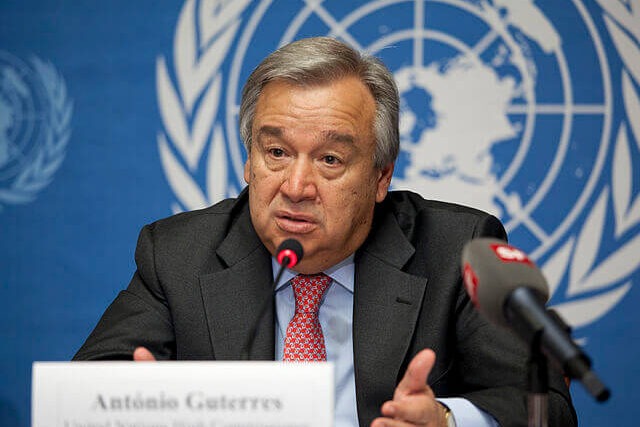
The global economy must be radically transformed to stop rewarding pollution, waste, and environmental destruction, according to António Guterres. The UN Secretary-General has warned that the world’s current economic model is pushing humanity towards climate breakdown, biodiversity loss, and deepening inequality.
Following a high-level meeting of leading global economists hosted by the United Nations, Guterres stressed the urgent need to overhaul existing accounting systems that prioritise Gross Domestic Product (GDP) above environmental sustainability and human wellbeing.
“We must place true value on the environment and go beyond gross domestic product as a measure of human progress and wellbeing. Let us not forget that when we destroy a forest, we are creating GDP. When we overfish, we are creating GDP.”
Why GDP Is No Longer Fit for Purpose
For decades, governments and policymakers have treated GDP growth as the ultimate measure of economic success. However, critics argue that endless economic expansion on a planet with finite natural resources is incompatible with environmental protection and social justice.
GDP was never designed to measure human progress, yet it remains the dominant benchmark of prosperity. According to development economist Nora Lustig, relying on GDP alone ignores inequality, environmental degradation, and long-term sustainability.
Guterres said: “Moving beyond gross domestic product is about measuring the things that really matter to people and their communities. GDP tells us the cost of everything, and the value of nothing. Our world is not a gigantic corporation. Financial decisions should be based on more than a snapshot of profit and loss.”
This narrow focus on growth has contributed to:
- Accelerating climate change
- Rapid biodiversity loss
- Escalating pollution levels
- Widening global inequality
These interconnected challenges are increasingly described as the “triple planetary crisis.”
Prof Basu, who co-chairs the UN group alongside Lustig, said: “Nations are so locked into the game of beating other nations in terms of the GDP metric, that the wellbeing of ordinary citizens and sustainability are getting ignored.
“If all the new income accrues to a few individuals, and the GDP grows, all citizens are expected to cheer. This is feeding hyper-nationalism, inequality and polarisation.”
Prof Lustig said GDP had never been “designed to measure human progress, yet it remains the dominant benchmark of success.”
“Economic growth can coexist with poverty, exclusion, violence, and serious violations of human rights – outcomes that remain largely invisible in conventional economic accounts … The group’s aim is not to replace GDP but to complement it, helping governments and the public assess whether development is truly improving human wellbeing, advancing equity, and safeguarding sustainability now and for future generations.”
The UN’s “Beyond GDP” Initiative
In January, the United Nations convened a landmark conference in Geneva titled Beyond GDP. The event brought together world-leading economists, including:
- Joseph Stiglitz
- Kaushik Basu
- Nora Lustig
This expert group has been tasked with designing a new global “dashboard” of economic indicators that prioritises:
- Human wellbeing
- Environmental sustainability
- Social equity
- Long-term resilience
The goal is to shift global economic systems away from extractive growth models and towards frameworks that recognise planetary boundaries and social needs.
Climate Shocks and Economic Instability
Recent UN-backed report highlights that current economic models are fundamentally flawed because they fail to account for climate risks — including extreme weather events, ecological tipping points, and systemic environmental collapse.
Over the past two decades, the global economy has endured repeated shocks:
- The 2008 financial crisis
- The COVID-19 pandemic
- Escalating climate disasters
These crises reveal the fragility of growth-dependent systems. Rapid technological change and automation are also disrupting labour markets, further exacerbating inequality.
Without structural reform, climate shocks could trigger severe economic instability on a global scale.
Alternative Economic Models for a Sustainable Future
The debate over replacing GDP is gaining momentum across academia, civil society, and policymaking circles. Several alternative economic approaches are emerging:
Green Growth and Green Keynesianism
Advocates argue for continued economic growth powered by renewable energy, sustainable infrastructure, and green innovation.
Doughnut and Wellbeing Economics
Inspired by frameworks such as “doughnut economics,” these models aim to balance human needs within ecological limits.
Steady-State and Post-Growth Economics
These approaches argue that advanced economies should stabilise production and consumption rather than pursue perpetual expansion.
Degrowth
Promoted by thinkers such as Jason Hickel, degrowth calls for a planned reduction in environmentally harmful production — particularly in wealthier nations — while expanding socially beneficial sectors like care, renewable energy, and public transport. He said that while he backed Guterres’s call to move beyond GDP, by itself that would not be enough.
“A deeper system change is required. Specifically, we need to democratise control over production, which can enable us to change what we produce and for whom.
“The dominance of GDP is not an accident, it occurs because GDP measures what is valuable to capital. It is the structure of capitalism that ultimately must be overcome.”
A recent global survey of climate policy researchers found strong support for post-growth approaches, signalling a significant shift in economic thinking.
Moving Beyond GDP Is Only the Beginning
While Guterres’s call to move beyond GDP represents a significant milestone, many experts argue that redefining economic success is only the first step. Structural reforms must follow — including changes to taxation, finance, trade, and corporate governance — to ensure economies reward sustainability rather than pollution.
Transforming the global economy is no longer a theoretical debate. It is central to addressing the climate crisis, restoring nature, and building a fairer, more resilient future.
Why This Matters for Environmental Action in the UK
For organisations committed to protecting wildlife, tackling climate change, and restoring ecosystems, shifting beyond GDP is essential. A sustainable economic framework would:
- End subsidies for fossil fuels and environmental destruction
- Value natural capital and ecosystem restoration
- Prioritise long-term community wellbeing
- Reduce inequality while accelerating climate action
A just transition to a wellbeing economy is critical if we are to safeguard both people and planet for generations to come.
At Natural World Fund, we recognise that protecting endangered species is inseparable from reforming the systems that drive environmental destruction. The debate around moving beyond GDP highlights a critical truth: when economic success is measured purely by growth, nature is too often treated as expendable. True prosperity must value thriving ecosystems, climate stability, and biodiversity alongside financial performance. From safeguarding rainforests to restoring wetlands and protecting vulnerable wildlife, conservation efforts depend on an economic model that rewards sustainability rather than exploitation. Transforming how we measure progress is not just an economic issue — it is fundamental to securing a future where both people and the natural world can flourish.