

China’s Billion-Tree Experiment: Can Planting Forests Really Stop the Desert?
Across northern China, the wind still blows hard — but it no longer carries quite as much sand.
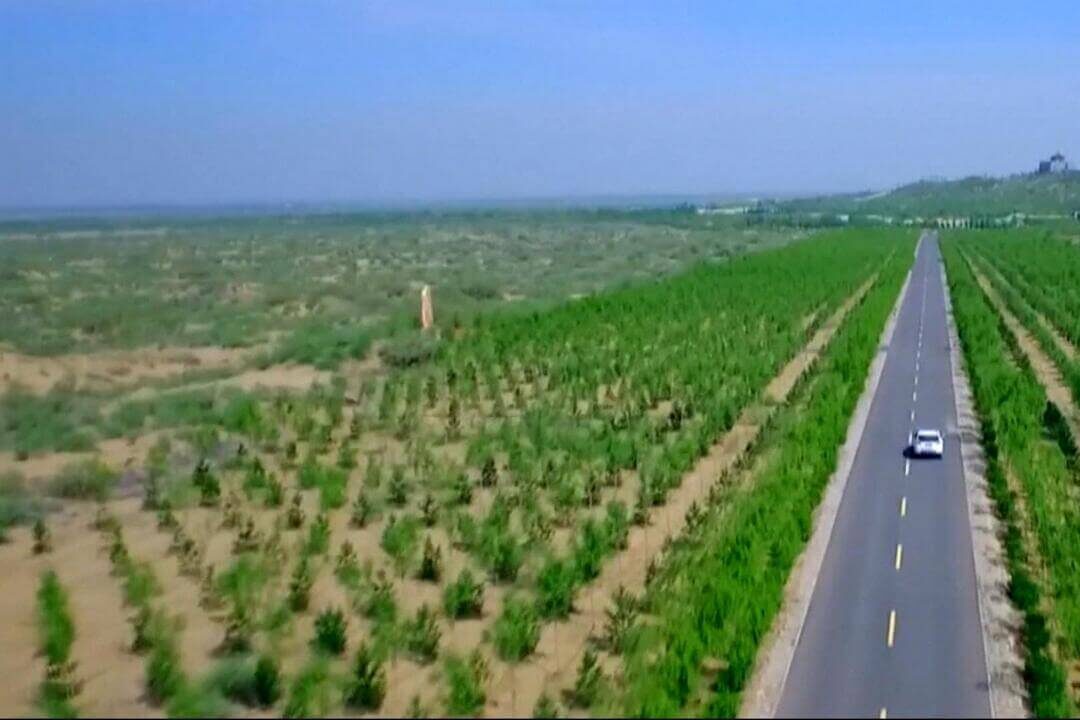
On the edge of the Tengger Desert, in Inner Mongolia and neighbouring regions, villages once braced themselves each spring for choking sandstorms. Fields vanished overnight, windows were sealed with tape, and children walked to school with scarves over their faces. Today, many of those same horizons are lined with rows of young trees, shrubs and grasses — a living barrier known as China’s “Great Green Wall”.
This vast reforestation effort, launched in the late 20th century, is one of the largest environmental engineering projects in human history. Its aim: to slow, halt, and ultimately reverse desertification.
So has it worked? The answer is complicated — and instructive for dryland restoration efforts worldwide.
What Is China’s Great Green Wall?
Often compared to the Great Wall of China, this “green wall” is not a single forest but a mosaic of shelterbelts, grasslands and restored soils stretching thousands of kilometres across northern China. Since the 1990s, government programmes have coordinated:
- Large-scale tree planting
- Sand dune stabilisation
- Grazing restrictions in vulnerable areas
- Financial incentives for local households to restore land
Chinese researchers estimate that more than one billion trees have been planted in key desertification zones over three decades.
The goal was not cosmetic greening, but climate resilience: slowing wind, anchoring soil, retaining moisture and giving ecosystems a chance to recover.
How Trees Help Slow Desertification
The science behind desert restoration is straightforward, if hard to implement at scale.
- Trees and shrubs reduce wind speed, limiting how much sand is lifted and carried
- Roots stabilise loose soil, preventing dunes from migrating
- Vegetation traps sand, turning shifting surfaces into rough, stable ground
- Moisture lasts longer, allowing grasses and native plants to establish
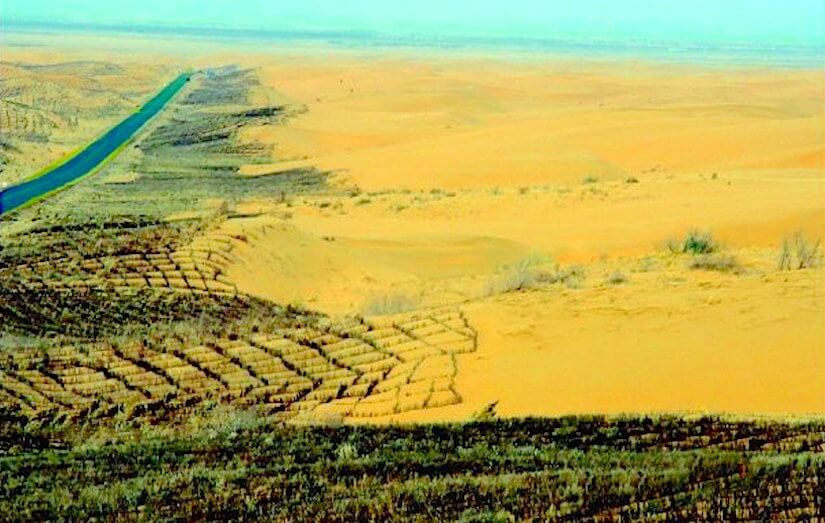
In practice, workers often begin by laying straw grids across dunes to break surface winds. Only then are saplings planted in careful patterns designed to interlock root systems. Water is trucked in and rationed meticulously — every tree planted by hand.
It is slow, repetitive, physically demanding work. Desert-scale change, built one hole at a time.
Measurable Successes of the Billion-Tree Programme
From satellite imagery to lived experience, there is clear evidence that parts of northern China look very different today than they did in the 1990s.
Reduced Desert Expansion
In several monitored regions, desertification has slowed, stabilised, or even reversed. Areas once dominated by bare sand now support patchy but persistent vegetation.
Fewer and Weaker Sandstorms
Major cities downwind, including Beijing, now experience fewer severe sandstorms than in previous decades. For residents, this means clearer skies, cleaner air and fewer days of disruption.
Improved Local Livelihoods
Some communities that once watched pastureland disappear now graze animals under sparse tree cover. For many families, the benefits are practical rather than symbolic: reduced crop loss, less soil erosion and greater stability.
The Limits and Failures of Mass Tree Planting
Despite these gains, China’s experience also highlights the risks of oversimplified solutions.
Water Stress and Groundwater Depletion
Early phases prioritised fast-growing tree species, such as poplars, that consumed large amounts of groundwater. In some areas, this lowered water tables, leaving ecosystems vulnerable once again.
Low Survival Rates
In harsh desert conditions, many plantations failed. Entire sections of trees died after just a few years, exposing the land beneath and wasting scarce resources.
Monocultures and Ecological Fragility
Planting single species over large areas reduced biodiversity and resilience. Uniform forests are more susceptible to disease, drought and climate stress.
Tensions with Local Communities
Grazing bans and top-down land-use plans sometimes disrupted traditional livelihoods. In places, communities felt excluded from decisions that directly affected their survival.
These shortcomings were not minor details — they forced major policy changes.
What Changed: From Tree Numbers to Ecosystem Thinking
Over time, China adapted its approach. Later programmes placed greater emphasis on:
- Native and drought-tolerant species
- Mixed vegetation, including shrubs and grasses
- Natural regeneration, rather than planting everywhere
- Monitoring groundwater, alongside tree cover
- Local knowledge, recognising where wind, sand and water actually move
The result is not a picture-perfect forest, but a scruffy, uneven, living landscape — one that functions better than rows of identical trees ever could.
One forestry engineer in Ningxia described the turning point this way:
“First we planted trees to fight the sand. Then we realized we had to plant communities, not just trees. Different species, different heights, different roots — that’s when the land started to hold.”
Lessons for Global Desert Restoration
From the Sahel to Central Asia, governments and NGOs now look to China’s experience for guidance. The key lesson is not “plant a billion trees”, but something more nuanced:
- Plant what belongs in that ecosystem
- Measure success over decades, not election cycles
- Combine trees with grasslands and human livelihoods
- Treat water as the limiting factor it is
- Be willing to admit mistakes and change course
There is no universal blueprint for stopping desertification. What transfers are principles, not numbers.
A Long Game with No Quick Fix
Three decades on, northern China’s landscape tells a mixed but meaningful story. The desert has not vanished — but in many places, it has paused. That alone is significant.
China’s billion-tree experiment shows what sustained political will, labour and funding can achieve — and what they cannot. It warns against chasing easy headlines about “greening deserts” while inviting us to rethink how we live with drylands rather than surrendering to them.
For organisations like Natural World Fund, the message is clear: lasting environmental change is slow, local, adaptive and deeply human. As climate change expands drylands across the globe, the real question is not whether we can plant trees — but whether we can build lasting ecosystems by adapting to help the bespoke landscapes recover for good.
At Natural World Fund, we recognise that land degradation and desertification are not problems that can be solved by planting trees alone. Fragile dryland ecosystems depend on a careful balance of soil, water, vegetation and human use. When that balance is disrupted — through overgrazing, water mismanagement or poorly planned interventions — landscapes become vulnerable to erosion, biodiversity loss and long-term decline. Protecting and restoring these environments requires a whole-ecosystem approach: using native plants, safeguarding water resources, supporting local communities and allowing nature to recover in ways that suit each place. Only by working with the land, rather than imposing one-size-fits-all solutions, can we build resilient landscapes that sustain both people and wildlife for generations to come.