

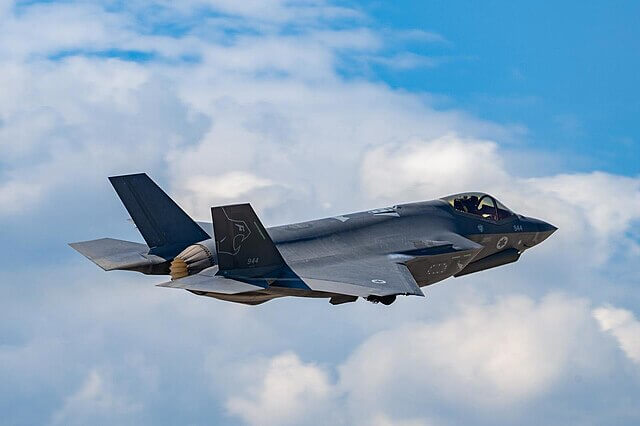
US-Israel War on Iran Accelerates Global Carbon Emissions
The ongoing US-Israel conflict with Iran is not only a humanitarian disaster but also a serious climate and environmental crisis. Analysis shows the war is releasing greenhouse gases faster than 84 entire countries combined, significantly draining the global carbon budget.
In the first 14 days of the war, the conflict produced an estimated 5 million tonnes of CO2 equivalent (tCO2e). This includes emissions from destroyed buildings, burning fuel, military hardware, and munitions, highlighting the enormous environmental toll of modern warfare.
The analysis adds a new perspective to reports of widespread environmental damage caused by attacks on civilian areas, military bases, fossil fuel infrastructure, and ships at sea.
“Every missile strike is another downpayment on a hotter, more unstable planet, and none of it makes anyone safer,” said Patrick Bigger, a research director at the Climate and Community Institute and a co-author of the analysis.
“Every refinery fire and tanker strike is a reminder that fossil‑fuelled geopolitics is incompatible with a livable planet. This war shows, yet again, that the fastest way to supercharge the climate crisis is to let fossil fuel interests dictate foreign policy.”
Enormous environmental impact of US‑Israel war on Iran
Infrastructure damage is the largest contributor to carbon emissions. According to the Iranian Red Crescent, about 20,000 civilian buildings have been damaged in the conflict. These destroyed structures account for an estimated 2.4 million tCO2e, illustrating the hidden climate cost of urban destruction.
Aircraft, drones, support vessels, and vehicles involved in combat have consumed massive quantities of fuel. Estimates suggest between 150 million and 270 million litres of fuel were used in the first two weeks alone, producing 529,000 tCO2e.
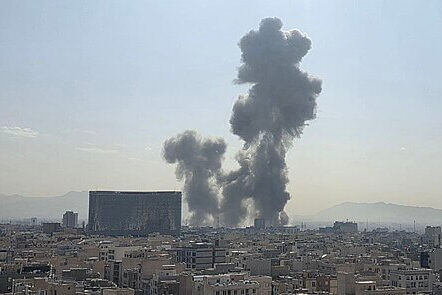
One of the most visually striking consequences of the war has been the black clouds and rain over Tehran after Israel bombed fuel storage depots. The resulting fires burned between 2.5 and 5.9 million barrels of oil, releasing roughly 1.88 million tCO2e. Iranian retaliatory strikes on Gulf oil infrastructure added to this climate impact.
Combat losses included US and Iranian aircraft, naval vessels, and missile launchers, contributing another 172,000 tCO2e of embodied carbon.
The extensive use of munitions also adds significantly to the climate impact. In the first 14 days, more than 6,000 targets were bombed in Iran by the US and Israel, while Iran launched 1,000 missiles and 2,000 drones. Estimated emissions from weapons systems total 55,000 tCO2e.
Overall, the first two weeks of conflict emitted 5,055,016 tCO2e, which is equivalent to 131 million tCO2e annually—comparable to a medium-size fossil fuel-intensive economy like Kuwait, or the combined annual emissions of the 84 lowest-emitting countries.
Fred Otu-Larbi, the study’s lead author, from the University of Energy and Natural Resources in Ghana, said: “We expect emissions to increase rapidly as the conflict proceeds, mainly due to the speed [at] which oil facilities are being targeted at an alarming rate.”
He added: “We all need to live with the climate aftermaths. Just what are the costs, no one really knows, that is why studies like this are so vital. Burning up the annual emissions of Iceland in two weeks is something we really cannot afford.”
Implications for the Global Carbon Budget
As of June last year, climate scientists estimated the remaining carbon budget for keeping global warming under 1.5°C is 130 billion tCO2e, with current human emissions at roughly 40 billion tCO2e per year. At this rate, the budget could be exhausted by 2028.
The conflict threatens to worsen the situation further. Disruptions to fossil fuel supplies may drive increased drilling and emissions, adding yet another layer of environmental and climate risk.
The Climate Cost of War
Beyond the human tragedy, the US-Israel war on Iran demonstrates that modern conflicts carry hidden environmental and climate costs. From infrastructure destruction to fossil fuel combustion, the war accelerates greenhouse gas emissions, undermining global efforts to tackle climate change.
Bigger said the disruption to fossil fuel supplies caused by the war would probably lead to more drilling.
“Historically, every US‑driven energy shock has been followed by a surge in new drilling, new LNG terminals and new fossil‑fuel infrastructure. This war risks hard‑wiring another generation of carbon dependence.
“This is not a war for security. It’s a war for the political economy of fossil fuels – and the people paying the price are Iranian civilians and working‑class communities around the world.”
At Natural World Fund, we highlight the importance of understanding the interconnected impacts of conflict and environmental degradation, emphasising that peace and planetary health are deeply intertwined.
If you care about restoring native wildlife in the UK, support the work of Natural World Fund today.