

Giant Tortoises Return to Floreana Island After 180 Years
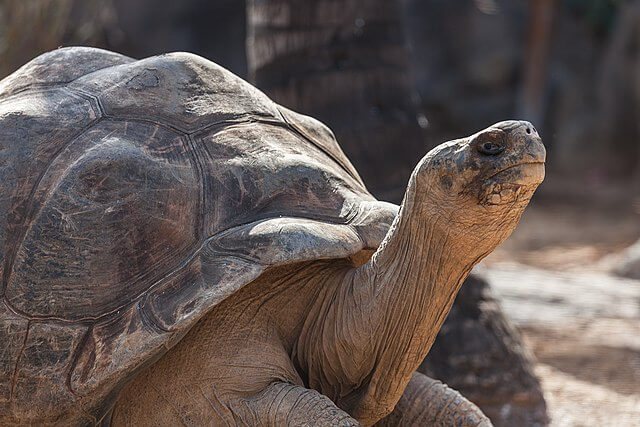
For the first time in more than 180 years, giant tortoises are once again roaming the Galápagos island of Floreana Island. Conservationists have described the moment as a major milestone in global wildlife restoration, marking the return of a species that disappeared from the island in the 19th century.
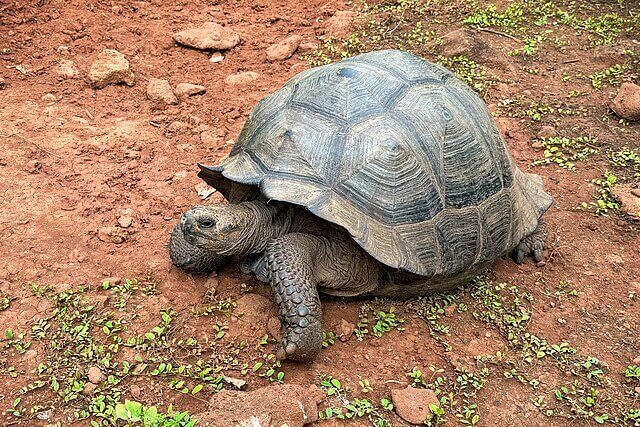
A total of 158 captive-bred juvenile tortoises have been released as part of the Floreana Ecological Restoration Project, led by the Galápagos National Park Directorate. The project aims to restore the island’s natural ecosystems by bringing back one of its most important native species.
Restoring the Floreana Giant Tortoise
The tortoises being reintroduced are descendants of the extinct Floreana giant tortoise, scientifically known as Chelonoidis niger niger.
This native subspecies once thrived across Floreana Island but was driven to extinction in the 1840s, when sailors and whalers removed thousands of tortoises from the island as a source of food during long ocean voyages.
“The restoration of Floreana has reached a hugely significant milestone, with 158 captive-bred giant tortoises released into the wild this week,” the Galápagos Conservation Trust (GCT) said in a statement on Friday.
“This long-anticipated moment gives hope, not just for the future of Floreana, but for the future restoration of islands around the world,” it added.
Their disappearance dramatically altered the island’s ecosystems, as giant tortoises play a critical role in maintaining vegetation and shaping habitats.
A Scientific Breakthrough on Isabela Island
The restoration effort became possible thanks to a remarkable discovery in 2008. Scientists found tortoises carrying Floreana ancestry on Wolf Volcano on the neighbouring island of Isabela Island.
These tortoises were descendants of individuals transported by sailors centuries earlier. Although they were hybrids, their DNA contained genetic traces of the extinct Floreana species.
Researchers selected 23 tortoises with the strongest genetic links to the lost population and began a carefully managed breeding programme on Santa Cruz Island.
Back-Breeding Programme Produces Hundreds of Hatchlings
The conservation breeding programme began in 2017, using a method known as back-breeding. This approach gradually increases the genetic similarity to the extinct species by selectively breeding individuals with the closest ancestry.
By 2025, the programme had produced more than 600 hatchlings. Several hundred of these tortoises have now grown large enough to survive in the wild and have been released back onto Floreana Island.
A Milestone for Global Conservation
Dr Jen Jones, chief executive of Giant Tortoise Conservation (GCT), described the reintroduction as a powerful moment for conservation.
She called the release “truly spine-tingling”, saying it validates more than two decades of collaboration between scientists, conservation charities, and the local community.
The project highlights how long-term conservation partnerships can restore species that were once thought permanently lost.
Why Giant Tortoises Are Ecosystem Engineers
Giant tortoises are often described as “ecosystem engineers” because of the powerful influence they have on their environment.
Their behaviour helps to restore and maintain ecosystems by:
- Dispersing seeds across large distances
- Shaping vegetation through grazing
- Creating habitats for other wildlife
Because of these activities, the return of tortoises to Floreana Island is expected to transform degraded landscapes and support biodiversity recovery across the island.
At Natural World Fund, we believe that restoring lost species is vital for rebuilding healthy ecosystems. The return of giant tortoises to Floreana Island shows how long-term conservation efforts can help repair environments that have been damaged by human activity. As natural “ecosystem engineers”, giant tortoises shape landscapes, disperse seeds and create habitats that support many other species. By supporting science-led conservation, habitat restoration and collaboration between local communities and researchers across the Galápagos Islands, we can help restore biodiversity and ensure these unique ecosystems remain resilient for generations to come.