

Forest Dieback in the Harz Mountains Reveals a Growing Climate Crisis
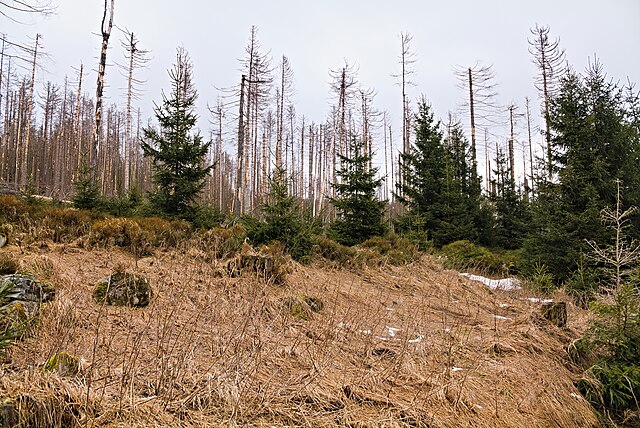
Even in late spring, the Harz mountains in northern Germany bear the scars of widespread forest loss. Across the rolling peaks, thousands of dead spruce trees stand upright, their skeletal trunks marking what was once a dense and thriving forest. The scale of destruction highlights a growing crisis facing Europe’s forests as the climate warms.
Bark Beetle Outbreaks Driven by Heat and Drought
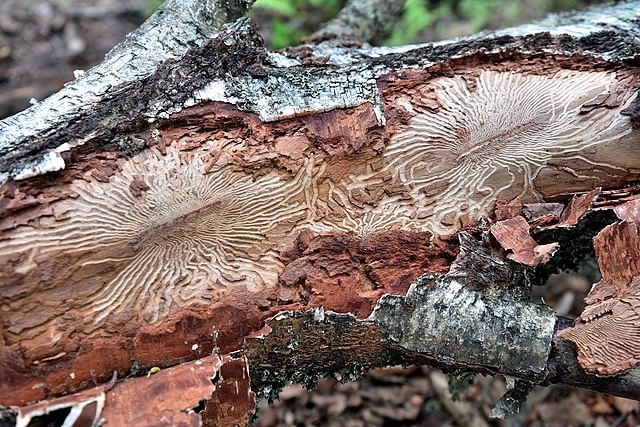
Since 2018, the Harz region has been devastated by a bark beetle outbreak, made possible by repeated droughts and heatwaves linked to climate change. These conditions weakened spruce trees, allowing beetle populations to explode. The result has been the rapid transformation of a lush green landscape into one dominated by grey, lifeless woodland.
The Limits of Monoculture Forestry
The loss of the Harz forests has prompted renewed scrutiny of modern forestry practices, particularly the reliance on large-scale monoculture plantations. Spruce monocultures, once valued for their efficiency, have proven highly vulnerable to pests, drought and extreme weather.
“There have been times where we did not have any confidence in what we were doing,” says Mathias Aßmann, a spokesperson for the regional forestry company responsible for this part of the range, pointing out the scars in the landscape from the top of a hill.
“You spend the whole day cutting down infected trees. The next day, too, and the next. For months. The whole year: cutting, cutting, cutting. A lot of colleagues have burnout symptoms,” he says.
Foresters warn that simply replanting spruce would risk repeating the same disaster. Instead, the crisis has exposed the urgent need to rethink how forests are managed in a warming world.
Restoring Forests Through Biodiversity
Rather than returning to monoculture planting, foresters in the Harz mountains are trialling a more biodiverse approach to forest restoration. Beech, oak, fir, sycamore and maple are being planted alongside surviving spruce to create mixed woodlands.
This diversity is intended to improve resilience, helping forests better withstand drought, pests and disease. Early signs suggest these mixed forests are healthier, more stable and better suited to future climate conditions.
Climate Change Is Weakening Europe’s Forest Carbon Sink
Forest dieback is not limited to Germany. Across Europe, rising temperatures and prolonged droughts are driving large-scale tree loss, from the Czech Republic to Scandinavia and southern Europe. Between 2018 and 2021 alone, Germany lost half a million hectares of forest, nearly 5% of its total woodland.
The consequences are now visible in climate data. Scientists noted a downwards revision in estimates of how much carbon Europe’s land absorbs, citing a weakening forest carbon sink. Since 2010, carbon absorption by land in the EU has fallen by around a third, undermining climate targets.
“The EU and Germany can set their political goals but … what we have experienced since 2018 is that forests are strongly affected by drought. It is a significant dieback. We have huge carbon stocks that are dying and which no longer contribute to a carbon sink,” says Prof Matthias Dieter, head of the Thünen Institute of Forestry, explaining that Germany is now almost certain to miss its carbon sequestration target for land.
“You cannot force the forest to grow – we cannot command how much their contribution should be towards our climate targets,” he says.
Can Nature Still Help Meet Climate Goals?
Forests, oceans and other natural systems currently absorb around half of global human carbon emissions. While protecting and restoring these ecosystems is essential, experts warn that relying on nature alone risks delaying urgent emissions cuts.
“What happens is that countries use their carbon sink – or assumptions about their carbon sink – as an offset against going slower on phasing out black carbon sources like oil, coil and gas. That is very dangerous because it means that countries can use their carbon sink from forests to claim they are net zero without fully phasing out fossil fuels,” says Johan Rockström, the director of the Potsdam Institute for Climate Impact Research.
Countries such as Finland illustrate the danger. Despite vast forests and peatlands, carbon absorption has declined dramatically and turned some natural areas into net contributors to global heating in recent years.
Biodiversity Builds Climate-Resilient Forests
Scientific research consistently shows that biodiversity strengthens forest resilience. Studies published in Nature and PNAS have found that tree diversity reduces drought-related dieback and protects forest growth during prolonged dry periods.
By contrast, monoculture forests are far more vulnerable to drought, disease, bark beetle outbreaks and wildfires — all of which threaten the world’s remaining carbon sinks.
A New Vision for the Harz Mountains
Walking through regenerating areas of the Harz, foresters now point to mixed forests filled with dappled light, young saplings and a variety of tree species. These landscapes stand in stark contrast to the dark, uniform spruce plantations that suffered the worst losses.
Rather than clear-cutting dead trees, forest managers are focusing on restoration through biodiversity, creating landscapes that can be selectively harvested while supporting wildlife and storing carbon.
Hope for Forests in a Warming World
The Harz mountains have endured centuries of pressure, from mining and war to acid rain and industrial pollution. Today’s challenge — climate change — demands a new response. By embracing biodiversity and sustainable forest management, foresters hope to restore healthier ecosystems that can endure future extremes.
“Even if there are pests like bark beetles on spruce, it doesn’t matter because there are young trees beneath it. They can grow and the forest as a whole won’t disappear because there’s only one spruce next to a Douglas fir, next to the beech and so on,” he says.
These healthier forests, Aßmann says, can also offer hope for those disturbed by seeing the trees that are lost.
“Many people worked in these forests for 40 years and in just three years, all their work is gone: cut down and put in a truck. It’s very hard for them. So this place is good for their soul. It’s a good goal for them to work towards,” he says.
These recovering forests, experts say, also offer hope to communities affected by forest loss — showing that with the right approach, nature can recover and thrive.
At Natural World Fund, At Natural World Fund, we support efforts to protect forest ecosystems and restore biodiversity. Healthy, resilient forests are essential for combating climate change, safeguarding carbon sinks, and ensuring a sustainable future for generations to come.