

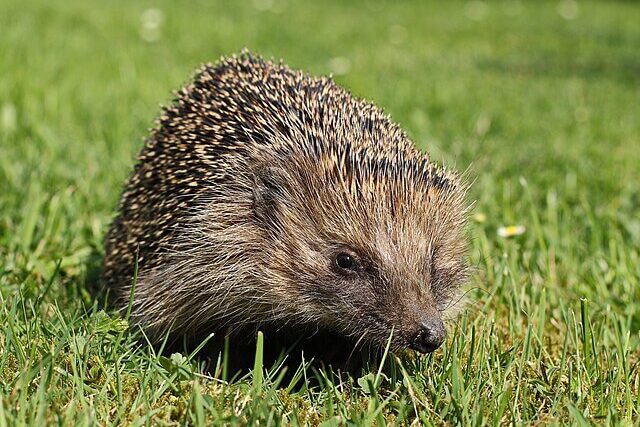
New Research Offers Hope for Hedgehog Conservation
A new scientific discovery has revealed that hedgehogs can hear high-frequency ultrasound, opening up the possibility of using ultrasound repellers to help keep them away from dangerous roads.
This breakthrough could become an important step in hedgehog conservation, as road traffic remains one of the biggest threats to hedgehog populations across Europe.
Roads Are a Major Threat to Hedgehogs
It is estimated that vehicles kill up to one in three hedgehogs, contributing significantly to the dramatic decline of this much-loved species in recent decades.
As hedgehog numbers continue to fall, conservationists are searching for new and innovative ways to reduce the risks they face in both urban and rural environments.
Oxford Researchers Discover Hedgehogs Can Hear Ultrasound
Scientists from the University of Oxford, working with colleagues in Denmark, studied the hearing ability of 20 hedgehogs that had been rehabilitated in Danish wildlife rescue centres.
To test their hearing, researchers used a method called auditory brainstem response, placing small electrodes on the animals to measure electrical signals travelling between the inner ear and the brain. During the test, the hedgehogs were exposed to short bursts of sound played through a loudspeaker.
According to the study, hedgehogs responded to sounds ranging from 4 to 85kHz, proving that they can hear well into the ultrasound range.
For comparison:
- Humans can hear up to 20kHz
- Dogs can hear up to around 45kHz
- Hedgehogs can hear up to 85kHz
This means hedgehogs have a far more advanced ability to detect high-frequency sounds than previously thought.
A Closer Look Inside the Hedgehog Ear
As part of the study, researchers also carried out high-resolution micro-CT scans on a deceased hedgehog to create a detailed 3D model of the animal’s ear.
The scans revealed previously unknown features of hedgehog anatomy, including:
- Very small, dense middle-ear bones
- A partly fused joint between the eardrum and the first middle-ear bone
- A stiffer chain of ear bones that helps transmit high-pitched sounds more efficiently
These specialist hearing adaptations are similar to those found in mammals such as echolocating bats, which use ultrasound to navigate and locate prey.
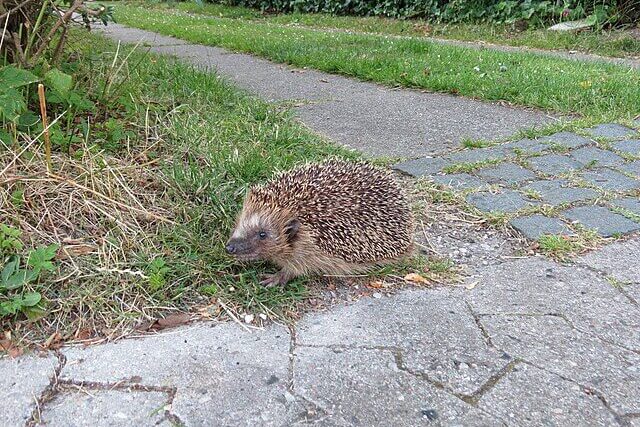
Could Ultrasound Repellers Help Protect Hedgehogs?
The findings suggest that ultrasound technology could be used to protect hedgehogs from everyday dangers.
Researchers believe it may now be possible to develop:
- Ultrasound road safety devices
- Vehicle-based hedgehog repellers
- Garden strimmers and lawn mowers with ultrasonic deterrents
These tools could help keep hedgehogs at a safe distance before harm occurs.
Could Ultrasound Devices Be Safe for Pets?
One of the most promising parts of the research is that hedgehogs appear to hear much higher frequencies than many domestic animals.
Although pets such as dogs can hear some ultrasound, the study suggests that devices could potentially be designed to use frequencies that are effective for hedgehogs while minimising impact on pets.
This raises the possibility of creating wildlife-friendly technology that protects vulnerable species without disturbing animals in nearby homes and gardens.
A Promising Future for Hedgehog Protection
This discovery offers a new avenue for hedgehog conservation efforts and could lead to practical solutions for reducing one of the species’ greatest threats.
With continued research and innovation, ultrasound repellers for hedgehogs may one day help save thousands of animals from injury or death on roads and in gardens.
Protecting hedgehogs will require a combination of science, awareness, and action — and this latest finding could become a valuable part of that effort.
The lead researcher, Dr Sophie Lund Rasmussen, an assistant professor at the Wildlife Conservation Research Unit at the University of Oxford and University of Copenhagen, said: “Having discovered that hedgehogs can hear in ultrasound, the next stage will be to find collaborators within the car industry to fund and design sound repellents for cars. If our future research shows that it proves possible to design an effective device to keep hedgehogs away from cars, this could have a significant impact in reducing the threat of road traffic to the declining European hedgehog.”
At Natural World Fund, we believe science and innovation can play a vital role in protecting vulnerable wildlife like hedgehogs. As populations continue to decline across the UK and Europe, discoveries like this offer fresh hope for practical solutions that could save lives on our roads and in our gardens. Protecting hedgehogs means creating a safer natural world where wildlife can thrive for generations to come.
If you care about restoring native wildlife in the UK, support the work of Natural World Fund today.