

Marine Restoration Efforts Expand as Species Face Climate Pressure
On the mudflats of Swan Bay in Victoria, royal spoonbills sweep their distinctive paddle-shaped bills through shallow waters in search of food. Nearby, beneath the grass-covered roof of the Queenscliff Marine Research Centre, researchers from Deakin University are working to restore the fragile marine ecosystems that support countless species.
Inside specialised laboratories, scientists are preserving marine organisms and developing techniques that could help protect threatened habitats from climate change and environmental degradation.
Their work forms part of an increasingly important conservation strategy: marine biobanks and “living libraries” designed to safeguard species before they disappear.
What Are Marine Biobanks and Living Libraries?
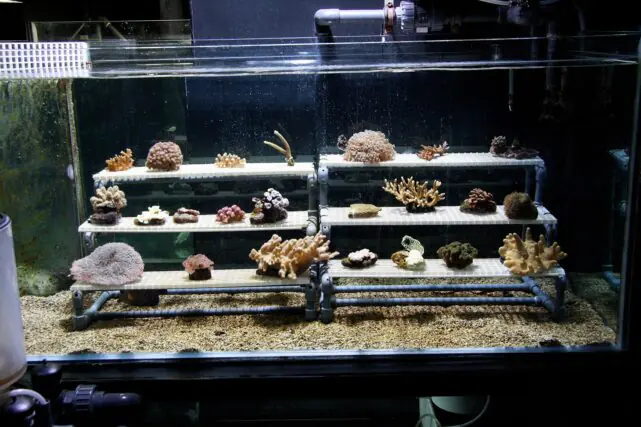
Associate professor Prue Francis oversees part of Deakin University’s innovative marine preservation programme. In her laboratory, bubbling beakers filled with brown liquid sit under red light in highly controlled refrigeration systems.
The containers hold golden kelp in its early life stage.
“The red light keeps them perpetually in an early algal life stage. ‘They won’t produce the next stage. They’ll just keep growing like grass,’ Francis says.”
Nearby, colder storage units contain tiny dormant samples preserved for future use.
These facilities make up Deakin University’s “living library”, a marine biobank that stores and protects vulnerable marine life. Similar to an insurance policy against extinction, biobanks preserve genetic material and living samples that researchers can later use for conservation, restoration and scientific study.
“Restoration has become quite an urgent need for not just our coastline but for coastlines all across Australia and the world,” Francis says.
“A lot of our research teams are looking at ways of being able to do restoration, or future-proofing some of our organisms that are getting lost at such a high rate.”
Australia Expands Conservation Through Biobanking
Marine and environmental biobanks are becoming increasingly valuable across Australia.
The country’s conservation efforts include:
- Seed vaults preserving native Australian plant species
- Long-term storage of wildlife cells and tissues
- Genetic collections from threatened species
- Research facilities designed to support ecosystem restoration
The Australian National Botanic Gardens, for example, preserve seeds collected from regions including the Australian Alps, Uluru, Kakadu and several island ecosystems. These seeds are stored in freezing conditions and can later be grown if needed.
Elsewhere, Melbourne Museum houses an unusual collection of cryogenically frozen but still-living wildlife cells. Tissue samples, DNA and living cells are stored at extremely low temperatures of -196°C, effectively halting all biological activity.
Scientists also see future potential for storing embryos from threatened species.
Marine Heatwaves Triggered Action for Golden Kelp
A severe marine heatwave off Western Australia acted as a wake-up call for researchers and conservationists.
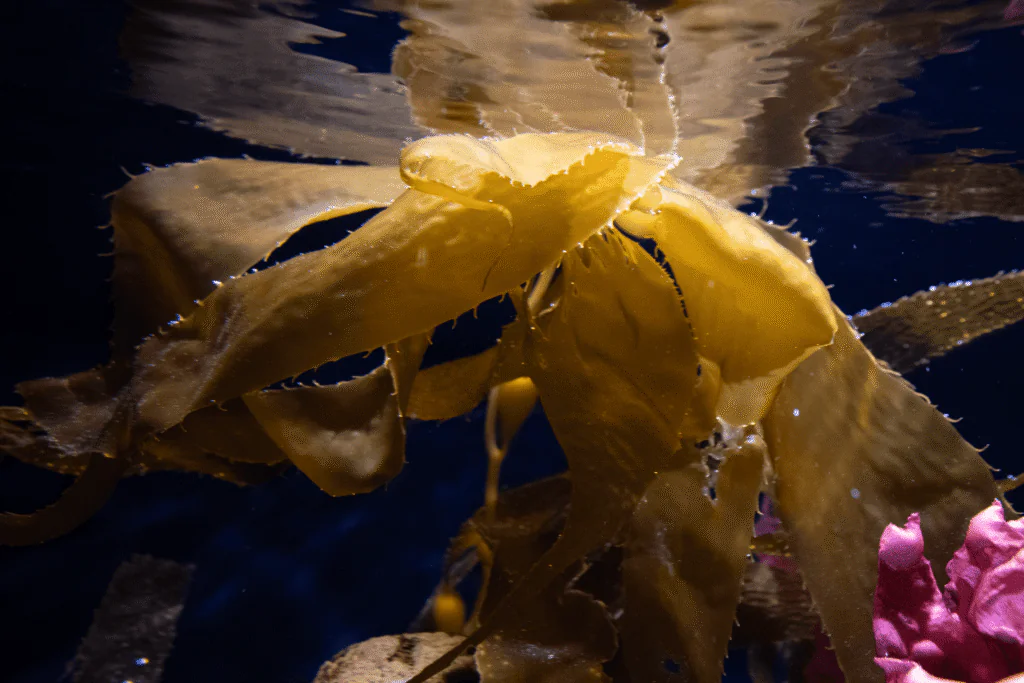
Golden kelp is a critical foundation species throughout Australia’s Great Southern Reef — an interconnected marine ecosystem stretching around 8,000km. It provides shelter and food for species such as lobsters, abalone and many fish found nowhere else on Earth.
However, warming oceans place these ecosystems under significant threat.
“There was a really intense marine heatwave off the coast of Western Australia a few years back and it wiped out a lot of the golden kelp,” Francis says.
“And that was scientists’ call to action, seeing that huge decline, to start establishing biobanks around the different areas where this golden kelp is found.”
Restoring Kelp Forests in Port Phillip Bay
Francis also helped lead a kelp restoration project within marine sanctuaries at Jawbone and Ricketts Point in Port Phillip Bay.
In these areas, populations of purple sea urchins had overgrazed large sections of kelp habitat.
“The first thing we did was to reduce the urchins in those areas to a density that we know that they can coexist with the kelp,” Francis says. “Then part of our work was to grow the kelp.”
Unlike land plants, golden kelp does not use roots. Instead, it grows from structures known as holdfasts, which anchor it to hard surfaces.
Researchers cultivated kelp on cotton twine and gravel within laboratory conditions before scuba divers transplanted them into marine habitats.
Recent updates suggest the project is showing encouraging results.
“They just look absolutely fantastic,” Francis says. “Some of those kelp have gone beyond 30cm in length and are showing reproductive signs as well.”
Native Oyster Reefs Reduced to Less Than 1%
Elsewhere in the Queenscliff facility, researchers are working on another highly threatened ecosystem: native flat oyster reefs.
Once widespread throughout southern Australian waters, oyster reefs have suffered extensive declines due to destructive fishing practices.
“Less than 1% of historical reefs remain,” Overton says. “They’re definitely one of the most imperilled marine ecosystems that we have here in Australia.”
Dr Kathy Overton has been collecting samples from surviving reef systems to study their genetics and reproductive success.
“Having these oysters here means that we can look for different experiments to better understand how we can restore them,” Overton says. “In the long term, it’d be really fantastic to be able to build on this.”
Seagrass Restoration Remains a Global Challenge
Scientists are also focusing on restoring seagrass meadows, one of the ocean’s most important ecosystems.
Seagrass provides habitat for fish and crustaceans while also helping absorb carbon, process nutrients, trap sediment and improve water quality.
However, coastal development, agricultural runoff, dredging and climate change continue to place these habitats under pressure.
“Any time the ocean’s changing because of something that we’re doing, they’re vulnerable to that,” Callahan says.
Marine ecologist Laney Callahan has been leading seagrass restoration work in Coronet Bay, where early results have shown promise.
“The goal is to grow bigger. We really want to achieve larger scale restoration this year, hopefully”, Callahan says.
“It’s a global challenge at the moment, seagrass restoration.”
“There’s a handful of successful projects that have achieved restoration at a scale that’s ecologically relevant, but very few. And that’s something that we’re all working towards together.”
Why Marine Restoration Matters
From kelp forests and oyster reefs to seagrass meadows, marine ecosystems provide essential habitat for biodiversity and play a major role in climate regulation.
As ocean temperatures rise and human pressures continue to increase, initiatives such as marine biobanks and ecosystem restoration projects may prove essential in protecting species before they are lost.
Scientists hope that by preserving biodiversity today, they can help rebuild healthier oceans for future generations.
Support Environmental Efforts
At Natural World Fund, we support action to protect and restore marine ecosystems facing increasing pressure from climate change, pollution and habitat loss. From kelp forests and oyster reefs to vital seagrass meadows, healthy ocean habitats support biodiversity, store carbon and help sustain life on Earth. Protecting and restoring these ecosystems is essential for a healthier and more resilient future for both people and nature.
If you care about restoring native wildlife, support the work of Natural World Fund today.
Image sources
- Golden-Leaf-Under-the-Sea by Coughdrop12. Resized from original: Wikipedia Commons
- Growing_coral_(3814394886) by Brian Snelson. Resized from original: Wikipedia Commmons