

Politicians Underestimate Public Support for Climate Action
New research shows that politicians in the UK and Belgium significantly underestimate public support for climate policies, leading to weaker political backing for urgently needed climate action.
One former UK MP involved in the study summed up the problem clearly:
“There may have been a silent majority in favour of windfarms and higher petrol taxes, but if there was, these people were mighty quiet. Essentially, all I ever heard from was people objecting to them.””
This misperception is not harmless. According to the research, politicians who believe the public opposes climate policies are less likely to vote for them or speak out in their favour, slowing progress on climate solutions.
Strong Public Backing for Climate Policies Is Being Missed
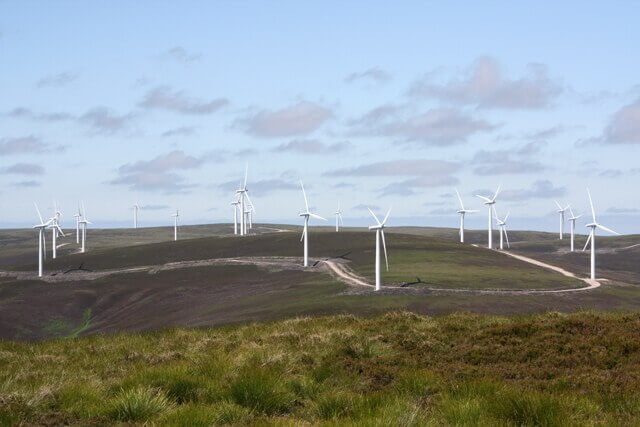
From renewable energy and home insulation to frequent flyer levies and meat taxes, politicians consistently failed to recognise the public’s appetite for climate action.
“Based on recent research, I think some of these issues with the information environment has to do with a rightwing bias where the voices of conservative leaning members of the public tend to be overrepresented, for a range of systemic reasons,” says Lisa-Maria Tanase, an academic at the University of Cambridge who led the research. “They tend to be more privileged, educated and politically engaged segments of society.” Anti-climate disinformation from lobby groups also contributes, she says.
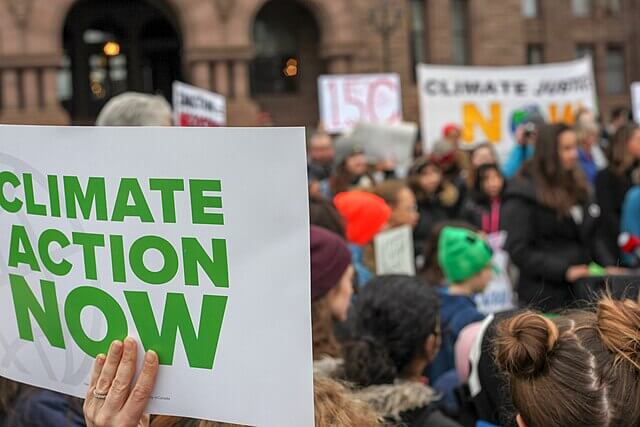
Polling data tells a very different story. Studies show that 89% of people worldwide want stronger action on the climate crisis, yet many remain silent because they believe they are in the minority. This “spiral of silence” prevents public opinion from translating into political leadership.
Experts warn that simply making people aware that pro-climate views are the overwhelming majority could trigger a social tipping point and accelerate climate action.
UK MPs Misjudge Support for Green Taxes and Energy Efficiency
To understand how large the perception gap is, researcher Tanase surveyed 100 UK MPs in early 2025, reflecting the political balance of Parliament. Their estimates of public opinion were compared with results from an Ipsos poll asking the public the same questions.
The findings were striking:
- MPs underestimated support for frequent flyer taxes and environmentally weighted product taxes by around 15 percentage points
- Support for taxes on red meat and dairy was underestimated by 18 percentage points
- Backing for grants or loans to improve home energy efficiency was underestimated by 7 percentage points
Even when MPs were told that the public had been informed about the personal costs of these policies, they still assumed support was much lower than it actually was.
“They are perhaps overly pessimistic about the impact of costs” on public support, said Tanase. She was recently awarded a PhD for the research, which is in the process of being published in a prominent journal.
“We saw these misperceptions had direct consequences on climate policy progress,” Tanase added. “Our data showed that when the UK MPs believed there was insufficient support for some of the policies, they were less willing to speak up in support of the policy. In the Belgian case, they were less likely to vote for the policy in the local parliament.”
Tanase also interviewed former UK MPs: “They said one of the key barriers to them implementing stronger climate action is the fact that the public, in their opinion, was simply not ready. Due to these misperceptions, even willing politicians who want to do more felt their hands were tied.”
Belgian Politicians Show Even Larger Perception Gaps
The study also surveyed more than 600 Flemish politicians in Belgium, allowing researchers to test whether correcting misinformation could meaningfully shift political perceptions.
Belgian politicians underestimated public support for:
- Higher taxes on short-haul flights
- Preventing local authorities from blocking windfarm developments
- Solar panel subsidies
- Pricing products based on environmental impact
In many cases, politicians believed only a minority supported these measures when, in reality, a majority did — with perception gaps of up to 25 percentage points.
Correcting Misinformation Helps – But Not Enough
When Belgian politicians were shown accurate polling data from the University of Antwerp, their estimates of public support for other green policies increased by around 10 percentage points compared with a control group.
However, even after being presented with clear evidence, politicians still underestimated public support by about seven percentage points. This suggests that misinformation in the political information environment runs deep and is not easily corrected.
Other research has found that politicians often overestimate support for right-wing policies, further distorting decision-making.
“The interventions are competing in an information environment where the politicians are being bombarded with conflicting information and loud opposition,” Tanase said. They told her that in gauging public opinion, they most trusted direct interactions with citizens from their constituencies and their letters, a finding supported by earlier research. “The people more likely to engage with politicians are very specific types politically – they don’t necessarily represent the majority,” she said.
One senior policymaker Tanase spoke to said: “It is plausible that politicians are influenced by the fact that they hear much more from those who stand to lose from green policies than from those who stand to gain.” Other studies have found politicians tend to overrate the public popularity of rightwing policies.
Furthermore, said Tanase: “There is intentional disinformation – there’s a lot of people who have an interest in climate support being muted. There’s a lot of fake news and sensational headlines that we hear and that the MPs will also hear.”
Why Closing the Perception Gap Matters for Climate Action
Tanase has already begun engaging with policymakers in the UK and EU and has inspired similar research in Denmark. She argues that improving awareness of these perception gaps can make both politicians and the public less vulnerable to misinformation.
“Showing there is stronger support than assumed could give encouragement that there is public backing [for climate action] and that it’s politically viable,” she said.
For climate and nature organisations, the message is clear:
Public support for climate action already exists — but it is not being heard.
Making that support visible could unlock political courage, accelerate climate solutions, and help deliver the decisive action the climate crisis demands.
About Natural World Fund
Natural World Fund focuses on restoring and protecting habitats across the UK to support long-term wildlife recovery.