

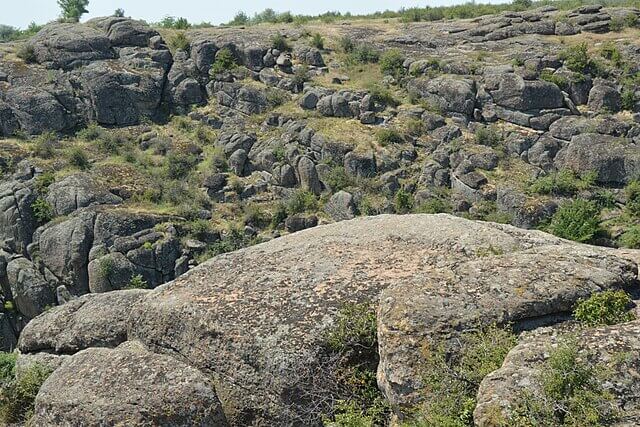
Protecting Ukraine’s Rarest Plants in the Midst of War
In the basement laboratory of the National Dendrological Park Sofiyivka, botanist Larisa Kolder works through long power outages to save one of Ukraine’s most endangered flowers. Her team in Uman received just 23 seeds of Moehringia hypanica, a species that exists in the wild only in the Mykolaiv region.
Only two seeds germinated. Through microclonal propagation, those fragile shoots have become a living collection of 80 rooted seedlings. In a time of war, this is a remarkable achievement for plant conservation and a vital step in preventing extinction.
A Biodiversity Hotspot Under Threat
Ukraine is one of Europe’s most important countries for biodiversity, supporting around 35% of the continent’s species despite covering less than 6% of its land. Much of this natural wealth is concentrated in the southern steppe landscapes and coastal regions now affected by Russian occupation.
Before 2014, Sofiyivka’s researchers worked closely with leading institutions such as the Nikitsky Botanical Garden and the Nova Kakhovka research station in Kherson. These centres held irreplaceable collections of rare plants and led climate-adaptation research. Today, contact has been lost and many scientists have been forced to leave their laboratories behind.
The Nikitsky Botanical Garden was long considered the leading botanical research site in Ukraine, according to Volodymyr Hrabovyi, the acting director of the Sofiyivka.
“It’s worse than the Berlin Wall,” says fellow scientist Iryna Denysko, describing the black hole that exists in trying to communicate with the occupied territories.
The occupied territories also include some of Ukraine’s most valuable protected areas, including the ancient steppe reserve Askania-Nova. Environmental damage in these regions is now being documented as potential ecocide war crimes.
“This territory that is taken, it’s almost 40% of all the agricultural land of Ukraine,” says Oleksii Vasyliuk, a zoologist and member of the Ukraine War Environmental Consequences Work Group. He said that the country’s largest national parks and reserves, including one of the world’s oldest steppe reserves, Askania-Nova, are primarily under occupation. “This territory will be inaccessible to us for many decades, or maybe even centuries” because it has been heavily mined, he says.
A Historic Garden Leading Conservation Efforts
Founded in 1796 and now part of the National Academy of Sciences of Ukraine, Sofiyivka remains a centre of scientific resilience. The park is recognised as one of the Seven Wonders of Ukraine and continues to welcome visitors, even as its researchers work under blackouts that can last up to 15 hours a day and with colleagues serving on the frontlines.
With other major botanical institutions cut off, the responsibility for safeguarding endangered plant species increasingly falls to the scientists in Uman.
The Science Saving Endangered Species
Inside the laboratory, conservation begins in sterile glass test tubes. Seeds are placed on a nutrient-rich agar medium and grown in controlled conditions protected by bactericidal filters. As the plants develop, they are carefully transferred into peat substrates, a delicate transition from sterile to natural conditions. Once strong enough, they continue growing until they can be planted outdoors.
This method allows researchers to clone rare plants rapidly, preserving their genetic line and creating future populations for restoration projects.
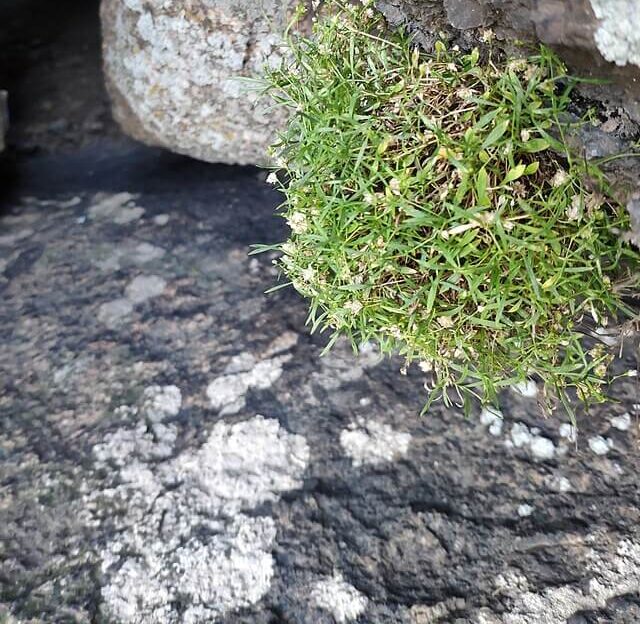
The First New Home for Moehringia hypanica
One of the lab-grown seedlings has now been planted in Sofiyivka’s arboretum. It is the first time this flower has ever grown outside its native habitat. This single planting represents far more than a scientific success. It is a safeguard for a species at risk, a symbol of Ukraine’s environmental resilience, and a reminder that biodiversity conservation continues even in the darkest circumstances.
Why This Work Matters for Global Conservation
The work at Sofiyivka protects species that exist nowhere else on Earth and preserves genetic resources that may be crucial for future ecological restoration. It shows how botanic gardens, seed conservation, and plant science can defend nature during conflict and climate crisis alike.
“If the people who do this research disappear, and that material disappears, then the Earth will lose,” Hrabovyi says.
Every new seedling is proof that even in wartime, the natural world can still be protected.
At Natural World Fund, the survival of Moehringia hypanica is a powerful reminder that protecting biodiversity often depends on urgent, science-led action taken under the most challenging conditions. When habitats are lost, research centres are cut off and species are pushed to the edge, recovery becomes infinitely harder. Supporting botanic gardens, seed conservation and the scientists working to safeguard endangered plants is not only about saving a single flower — it is about defending the ecosystems and genetic diversity on which our shared future depends. By investing in long-term conservation and standing with those protecting nature on the front lines, we help ensure that even in times of conflict, life can take root and grow again.