

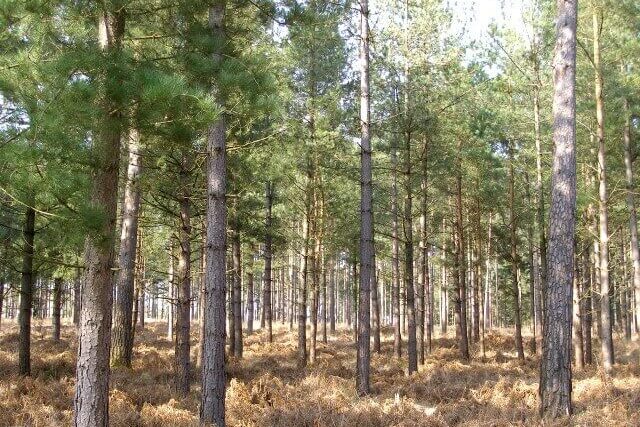
A pioneering forestry project in the southern United States is exploring whether wild soil fungi could help young trees grow faster, reduce reliance on artificial fertilisers, and capture more carbon dioxide from the atmosphere.
At a commercial tree nursery in western Louisiana, millions of young pine seedlings have been treated with a liquid extract packed with beneficial fungi collected from healthy forest soils. Scientists and forestry experts believe this natural treatment could transform how commercial forests are grown.
Brad Ouseman, the nursery manager, is confident he will see results from this fungal inoculation, which is intended to improve yields and reduce the need for artificial fertilisers.
“By the time January gets here, you’ll tell the difference between that seedling and this seedling,” Ouseman says, pointing to separate rows of sprayed and non-sprayed pines.
A Natural Boost for Pine Seedlings
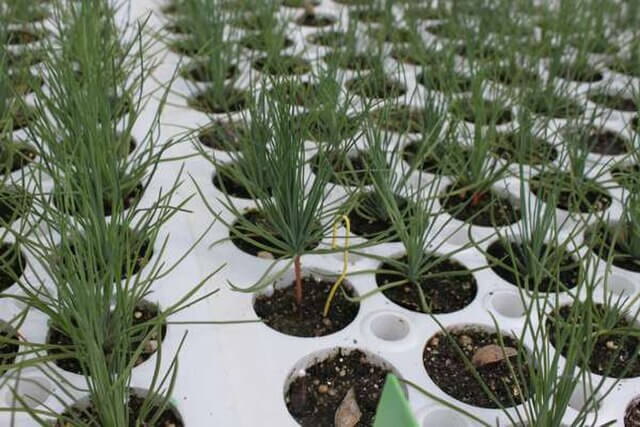
At the nursery near Evans, around 5 million pine seedlings are being grown on large irrigation tables before being planted across the region’s vast pine plantations.
Last autumn, many of these young trees were sprayed with what looked like muddy water. In reality, it was a living fungal solution containing hundreds of species of wild soil fungi.
The treatment was supplied by Funga, a company developing nature-based methods to improve tree growth and forest health.
Its founder, Colin Averill, compares the process to a microbiome transplant for trees—introducing beneficial microbes from healthy forests into nursery-grown seedlings.
Doctors can successfully treat certain bowel conditions by transferring gut microbes from healthy donors to patients; similarly Funga treats young pine trees with wild microbes derived from the soils of thriving pine forests.
“We’re not trying to isolate individual pieces of the soil community; we’re taking the whole thing,” Averill says. “As a result, we get all the complexity and all the interactions that come with it.”
Why Soil Fungi Matter for Forest Growth
Pine trees do not grow alone. Beneath the soil, they depend on a complex relationship with ectomycorrhizal fungi (ECM fungi).
These fungi attach to tree roots and form a powerful underground partnership. The fungi gather nutrients such as nitrogen and phosphorus from the soil, while the tree provides them with sugars produced through photosynthesis.
This partnership is essential for healthy forest growth. According to fungal ecologist Kabir Peay, pine trees and these fungi are so closely connected that they effectively function as a shared biological system.
Biodiversity Below Ground Is Critical
Healthy forests rely not only on trees, but also on the rich biodiversity hidden beneath the soil surface.
Research suggests that a single tree may depend on hundreds of different fungal species, each helping it access nutrients under different environmental conditions. This diversity can improve resilience, productivity and long-term forest health.
A 2018 study showed that if young seedlings are delayed in forming these fungal partnerships, their growth can be significantly reduced.
This means that restoring soil biodiversity may be just as important as planting trees in the first place.
How Commercial Forestry Can Disrupt Forest Ecosystems
Across the southern US, pine forests are harvested intensively on short cycles. While these plantations are highly productive, repeated logging can severely disrupt the underground fungal networks that young trees rely on.
Funga’s surveys suggest that as much as 75% of beneficial fungal diversity may be lost after clearcutting. If forests are replanted before those fungal communities recover, trees may never benefit from the full ecological support of a mature forest soil system.
Some researchers say recovery rates may vary depending on climate and local conditions, but there is broad agreement that commercial forestry can significantly disturb the natural relationships between trees and fungi; as seen in Scandinavian and Canadian pine forests.
Can Fungal Inoculation Reduce the Need for Fertiliser?
One of the most promising aspects of fungal inoculation is its potential to reduce dependence on chemical fertilisers.
Many soils beneath southern pine plantations remain low in nutrients, partly due to decades of intensive agriculture before forestry became widespread in the region.
Early trial results suggest fungal treatments may improve tree growth in ways that begin to rival the gains typically achieved through fertiliser use. If proven at scale, this could offer a more natural and lower-impact way to support forest productivity.
For land managers, this matters not only for environmental reasons, but also because the cost of fertilisers has risen sharply in recent years.
Trees, Carbon Storage and Climate Solutions
Faster-growing, healthier trees also have another major benefit: they can absorb more carbon dioxide from the atmosphere.
This has made fungal forestry increasingly attractive in the context of climate change and carbon removal. By helping forests grow more efficiently, these treatments could strengthen the role of trees in long-term carbon storage.
However, carbon markets remain controversial. Critics have raised concerns about the reliability of some offset schemes, particularly where projects may not deliver genuine or lasting emissions reductions.
Funga says its approach focuses only on the additional tree growth generated by fungal treatments, rather than claiming credit for trees that would have grown anyway.
A New Frontier in Nature-Based Forestry
Founded in 2022, Funga has rapidly expanded its operations. After treating around 500 acres in its first year, the company scaled up to around 25,000 acres by 2025.
Its ambitions now stretch beyond southern pine forests. Future projects may include Douglas fir in the Pacific north-west, as well as field trials involving other tree species in Wales.
The broader goal is to use forest microbiology to support healthier, more resilient woodlands in a changing climate.
Why Underground Forest Life Deserves More Attention
While tree planting often dominates environmental headlines, the ecosystems beneath our feet are just as important.
Fungi, microbes and soil biodiversity play a vital role in helping forests thrive, recover and store carbon. Understanding and restoring these hidden networks could become a major breakthrough in both biodiversity conservation and climate action.
At Natural World Fund, we believe this research is a powerful reminder that protecting nature means looking beyond what we can see. From forest canopies to underground fungal networks, every part of an ecosystem matters if we are to restore the natural world for future generations.
If you care about restoring native wildlife in the UK, support the work of Natural World Fund today.