

Reintroducing Extinct Sphagnum Moss to Yorkshire’s Moors
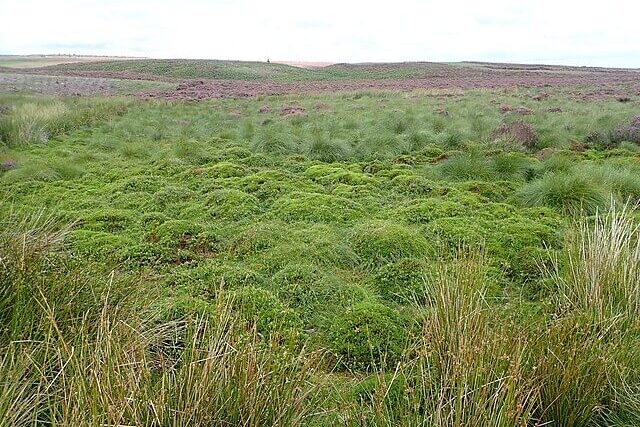
Efforts are underway to reintroduce extinct sphagnum moss across Yorkshire’s moors as part of the fight against climate change. This remarkable moss can hold up to 20 times its weight in water, helping form peat bogs where dead vegetation accumulates instead of decaying, trapping carbon safely underground.
Yorkshire Peat Restoration Projects
Two major projects are leading the restoration of upland habitats: one in the Yorkshire Dales and another on Marsden Moor near Huddersfield. Both aim to reintroduce mosses to degraded peatlands, improving water retention and creating diverse wildlife habitats.
At Kingsdale Head Farm in Ingleton, experts from the Yorkshire Peat Partnership are planting the rare sphagnum austinii, a species that has been extinct in Yorkshire for hundreds of years. Data and evidence manager
Beth Thomas explains that drainage and industrial activity caused the moss’s disappearance from the Dales.
“Austinii is a real peat forming species. When you look through the peat cores that exist in this landscape for about the last 6,000 years, the peat formed after the last ice age, you can see that austinii is the real dominant sphagnum here,” she says.
“It’s been extinct in Yorkshire for hundreds of years and we’re looking to reintroduce it to these peat lands so that we can reintroduce that function and formation of the peat habitat.
“It is so important for carbon storage, for flood mitigation, for cleaning our water but also for our wildlife and the people who use these places and want to enjoy the wildness of them.”
The moss is sourced from Scotland, propagated in local nurseries, and carefully planted within blanket bogs. Each moss plug is tracked using GPS to monitor its growth and impact on the ecosystem.
Restoring Blanket Bogs at Kingsdale Head
Two-thirds of the 610-hectare Kingsdale Head site consists of blanket bog.
Farm manager Jamie McEwan reports that restoration efforts are already showing promising results, with healthy moss growth improving water retention and soil quality across the uplands.
“Huge landscapes and huge parts of the landscape are made up of blanket bogs and peat lands but a lot of the interest happens at this tiny little scale,” he says.
“Whether I’m there to see the full results of what we’re doing today or not I don’t know, but we’ll certainly find out more about it.”
Marsden Moor: Reviving Moss in Industrial Heartlands
Unlike the Dales, sphagnum moss had not completely disappeared from Marsden Moor but was severely affected by centuries of industrial pollution.
Managed by the National Trust, rangers have been re-wetting the moor for 20 years. The site is recognised as a Site of Special Scientific Interest (SSSI) and a Special Area of Conservation.
Area ranger Ian Downson encourages the public to visit the National Trust moss nursery to learn more about sphagnum moss and its ecological importance.
“Sphagnum moss gets all its nutrients from the air, from the water. And what happens is if that is poisonous – a lot of sulphur and lead from industrial pollution – that then settles on the moss and it doesn’t like that.
“So historically we’ve lost a good portion, if not most of the species that were up there,” he says.
Carbon Capture and Wildlife Benefits
Over the past decade, hundreds of thousands of sphagnum moss plugs have been planted on Marsden Moor, capturing over 1 million tonnes of carbon—equivalent to roughly 150,000 round-trip flights from London to Sydney.
“The peatlands form roughly about a millimetre per year. So it’s growing all the time, it’s laying down that peat as the sphagnum is kind of decaying.
“In that peat formation, you’re drawing down and you’re storing carbon, you’re storing CO2, which is the main thing in terms of climate resilience.”
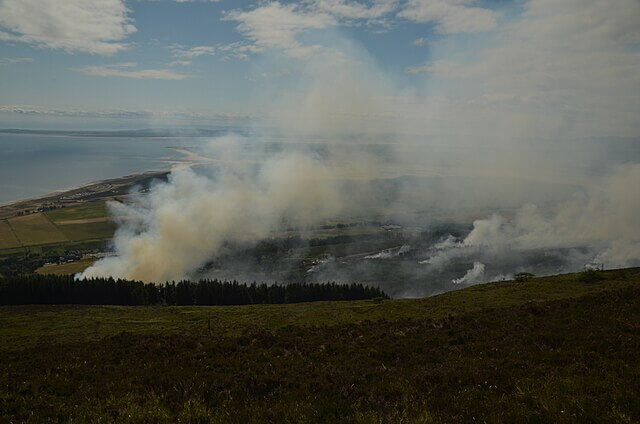
Beyond carbon storage, sphagnum moss supports rare species such as curlews and plays a vital role in preventing wildfires.
“If a fire hits a blanket bog, it doesn’t burn. If you’ve got lots of sphagnum up there, if your bog’s made up of 80-90% sphagnum, then when a fire gets there it’s pretty much going to stop it,” says Downson.
Healthy peat can store between 30kg and 70kg of carbon per cubic metre, making it a crucial tool in climate change mitigation.
“We’re not trying to bring the moors back to what they were 1,000 years ago. We’re looking forward to a future of climate change,” she says.
“We want to try to produce the diversity of plant life there because the more diversity we have, the more resilient they’re going to be through climate change and if we can bring back these species that have been lost we can see if we will get resilient habitats that will survive the next 100, 1,000 or millennia in these places.”
Why Peatland Restoration Matters
Restoring sphagnum moss and peat bogs is a key strategy for tackling climate change, protecting biodiversity, and safeguarding the UK’s upland landscapes. By reintroducing extinct and damaged moss species, these projects demonstrate how nature-based solutions can have lasting environmental benefits.
At Natural World Fund, we champion projects that restore peatlands and reintroduce key species like sphagnum moss. By supporting nature-based solutions that capture carbon, improve water management, and create habitats for wildlife, we help transform degraded landscapes into thriving ecosystems for the benefit of people and nature.