

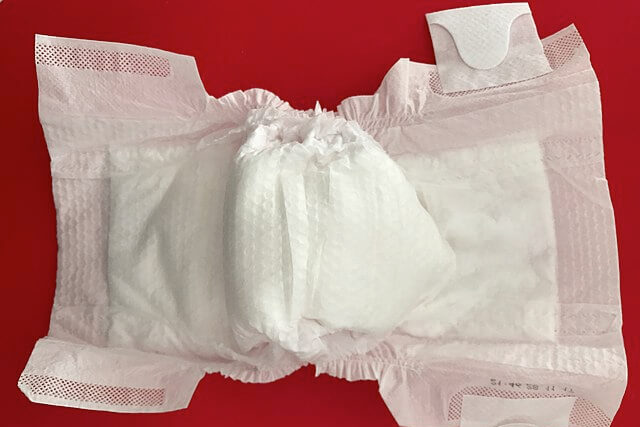
Disposable Nappies and the Growing Waste Crisis
Before Leila Green became a mother of triplets three years ago, she imagined she would be the kind of parent who relied on reusable nappies.
But for many families, the reality of parenting is very different. Convenience, time, and cost often shape daily choices — especially when caring for multiple children.
“But as soon as my babies arrived, I realised I just couldn’t – I was flat out looking after the three of them so I went for the easy option.”
“I’d buy disposables and in the early days we’d get through 25 a day,” continues Green, who lives in Broadstairs in Kent and runs an online community focused on motherhood issue.
“I think the reality is that mums would like an eco option but they are so busy and it would have to be priced appropriately.”
That matters because the environmental impact of disposable nappies is enormous. Globally, it’s estimated that 300,000 disposable nappies are sent to landfill or incineration every minute. Many of these products contain plastic, synthetic fibres, and chemical-treated materials, meaning they can take hundreds of years to break down.
As concern grows over nappy waste and plastic pollution, parents and innovators alike are looking for more sustainable solutions.
Why Aren’t Reusable Nappies More Widely Used?
Although washable and reusable nappies are often seen as the most sustainable option, they are not always practical for every household.
For many parents, especially those juggling work, childcare, and rising living costs, reusable nappies can feel like a major commitment. Upfront costs, frequent washing, storage, and time pressures all contribute to lower uptake.
This has created a growing demand for eco-friendly disposable nappies that offer a more realistic balance between convenience and sustainability.
New Start-Ups Are Rethinking the Disposable Nappy
In recent years, a wave of start-ups has emerged with one goal: to make disposable nappies more environmentally friendly.
One of the latest innovators is Texas-based Hiro Technologies, which has developed an unbleached disposable diaper designed to break down more naturally after use.
Each pack comes with a small packet of fungi, which is added to the used nappy before disposal. According to co-founder Miki Agrawal, the fungi help digest and break down the diaper materials over time.
The idea was inspired by Agrawal’s own experience as a parent after seeing just how many nappies her son used.
Can Fungi Really Help Nappies Decompose Faster?
The science behind fungi-based decomposition is promising, but questions remain around how effective it is at scale.
“We cannot give a timeline because all conditions are different and the fungi currently works in some conditions better than others,” says Agrawa.
“All we can say that it’s exponentially faster than without the fungi in the best conditions, and still better than nothing in the worst conditions.”
While the concept is innovative, Hiro Technologies has not given a clear timeline for exactly how long the nappies take to decompose in real-world conditions. That uncertainty may make some parents hesitant.
Still, the company reflects a wider trend in green product design, where businesses are trying to rethink waste at the source.
The Cost of Sustainable Nappies
One of the biggest barriers to adoption is affordability.
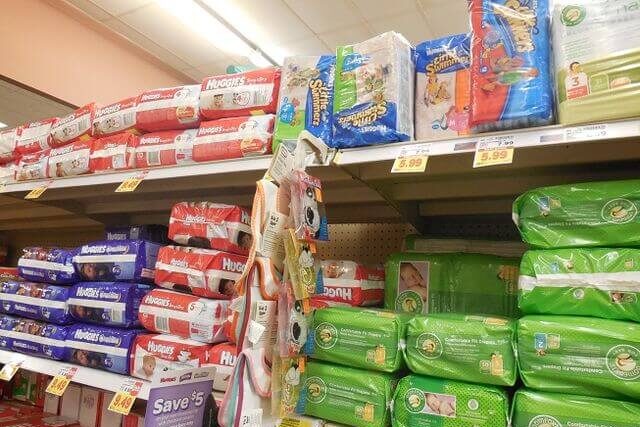
Hiro’s nappies cost around $136 (£100) for a month’s supply, with a subscription option priced at $199. By comparison, standard disposable nappies are estimated to cost around $70 per month.
For many families, that price difference puts sustainable disposable nappies out of reach — even if the environmental benefits are appealing.
This raises an important question: can eco-friendly parenting products succeed if they remain unaffordable for most households?
“The price is less expensive than luxury diapers,” replies Agrawa. “I think it’s a great deal for the diaper that is best for baby and their planet they will grow up in.”
Why Innovation in Nappy Sustainability Is Still Slow
According to Sonali Jagadev, Senior Research Analyst at Euromonitor, progress in the sustainable nappy market remains slow and uneven.
There are several reasons for this:
- High production costs
- Limited supply chains for sustainable materials
- Lack of large-scale composting or recycling infrastructure
- Consumer priorities around price and convenience
“Bio-based polymers, bamboo fibres and organic cotton all come with higher raw material and processing costs than traditional plastics, while the supply chains for these sustainable inputs are still immature, making prices volatile and challenging for mass market brands,” she says.
Jagadev added that smaller players face bigger hurdles. “Rising inflation, higher raw material costs and the need for heavy marketing investment can make it difficult for them to survive, even when their sustainability credentials are strong.”
Lack of composting infrastructure is another challenge.
“Most biodegradable nappies still end up in landfill because industrial composting facilities are limited or unavailable in many regions,” says Jagadev.
Parental priorities also provide a barrier.
“Parents continue to prioritise performance, hygiene and convenience over sustainability, meaning brands take a risk if greener solutions compromise any of these core expectations.”
In other words, even the best eco-friendly design can struggle if the systems needed to support it do not yet exist.
Woosh in Belgium: A Circular Economy Approach to Nappies
Another company taking on the problem is Belgium-based start-up Woosh.
Rather than focusing only on biodegradability, Woosh has designed its nappies to be easier to recycle.
According to co-founder and Chief Technology Officer Alby Roseveare, the nappies are made using one specific type of plastic, rather than a mix of materials that are harder to separate and process.
“If you use different plastics, it’s extremely difficult to separate [when recycling].”
This simpler design makes recycling more practical — but Woosh’s real innovation lies in its collection and recovery system.
The company partners with daycare centres across Belgium, delivering clean nappies and collecting used ones for processing at its own recycling facility.
“We wanted to focus on putting the right materials in so we can get the right materials out and unless you take responsibility to take your own waste back, no one is incentivised to do this,” says Roseveare.
“Big brands are incentivised to optimise costs, but in most cases there’s no incentive for brands to pay much attention to the recyclability of the nappy.”
Some of the recovered materials are then reused, helping to create a more circular nappy system.
How Woosh Is Scaling Sustainable Nappy Recycling
Woosh is already making a measurable impact.
The company currently works with more than 1,400 daycare centres across Belgium and says that over 30,000 children wear Woosh nappies every day.
It is now testing partnerships with retailers and beginning to roll out its closed-loop recycling model for parents at home.
This kind of joined-up system — where design, collection, and recycling are all considered together — may offer a more realistic path forward than relying on product innovation alone.
Pura and Wales: Recycling Millions of Nappies
In the UK, nappy and wipes brand Pura is also helping to push the conversation forward.
With support from the Welsh Government, Pura says it helps recycle 60 million nappies every year in Wales.
Used nappies are collected from the kerbside and taken to the NappiCycle plant in South Wales, where they are processed using a method known as friction washing.
This process breaks the nappies down into a mixed material that can then be reused in practical applications such as:
- Road surfacing
- Outdoor benches
- Construction and public-use materials
It is a strong example of how nappy recycling infrastructure can help reduce landfill waste when backed by public investment and local systems.
The Real Challenge: Building Systems, Not Just Better Products
While new materials and biodegradable technologies are important, the future of sustainable nappies may depend just as much on the systems around them.
Without:
- better recycling infrastructure
- wider collection schemes
- more affordable eco-friendly options
- and stronger government support
…it will remain difficult to significantly reduce the environmental impact of nappies.
As innovators from Texas to Belgium to Wales continue testing new ideas, one thing is clear: solving the nappy waste crisis will require more than a single product. It will require a complete rethink of how nappies are made, used, collected, and reused.
A Cleaner Future for Parents and the Planet
Back in Ghent, Alby Roseveare hopes that these more connected, circular approaches will mean fewer nappies ending up in landfill.
“We have ambitions to create as much impact as possible and are seeing where else we can expand to in Europe.”
For parents like Leila Green — and millions of others trying to balance convenience, cost, and environmental responsibility — that future cannot come soon enough.
The question is no longer whether nappies need to become more sustainable.
It’s whether we can make those solutions accessible, affordable, and scalable fast enough.
At Natural World Fund, we believe tackling everyday waste is a vital part of protecting our planet. From disposable nappies to plastic pollution, rethinking the products we use — and the systems behind them — is essential if we are to build a cleaner, more sustainable future for people and nature.