

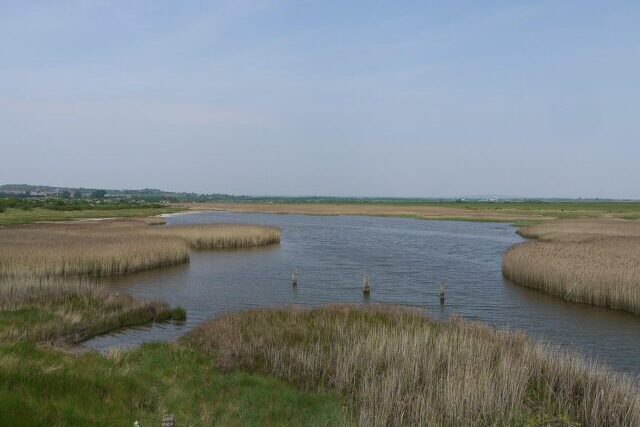
Farlington Marshes Nature Reserve at Risk as Seawater Flooding Threatens Rare Wildlife Habitats
An internationally important nature reserve on England’s south coast is facing a growing environmental crisis after seawater flooding caused by failing coastal defences began damaging valuable wildlife habitats.
Conservationists have warned that Farlington Marshes Nature Reserve, near Portsmouth, could face severe ecological consequences as rising saltwater intrusion destroys reed beds, floods nesting areas and threatens the future of one of the region’s most important wetland ecosystems.
Farlington Marshes: A Protected Wildlife Haven
The 120-hectare (300-acre) Farlington Marshes Nature Reserve holds several significant conservation designations, including Special Protection Area (SPA), Special Area for Conservation (SAC) and Ramsar site status.
The reserve provides vital habitat for a wide range of bird species, including bearded tit, avocet, redshank and lapwing, making it one of the most important coastal wetlands in southern England.
However, conservation groups say the site is increasingly under threat due to a failing tidal valve and deteriorating sea wall infrastructure.
Failing Coastal Defences Allow Seawater to Flood Reserve
According to Hampshire and Isle of Wight Wildlife Trust, a malfunctioning tidal flap and crumbling sea defences are allowing seawater to enter the reserve, flooding grazing marshes and damaging sensitive habitats.
Jamie Marsh, director of land management for Hampshire and Isle of Wight Wildlife Trust, said: “This is a bit of a disaster”, with eight hectares of reed bed already lost.
He added: “We have a tidal flap that’s not sealing off properly and we’re seeing water flooding into the site.
“The elevated sea levels have flooded out a lot of these areas and consequently flooded out a lot of the nesting areas. So nests have been lost.”
The flooding has forced many birds to abandon affected nesting sites and move to higher ground to attempt to breed again.
Temporary Repairs Fail to Solve the Problem
The tidal flap first failed during spring 2024. The Environment Agency (EA), which manages the sea defences, installed a temporary repair while longer-term solutions were explored.
Earlier this year, engineers fitted a permanent replacement valve, but that system has also failed.
Marsh said the latest setback had left the reserve “back to square one”.
He warned: “Habitats that were recovering are now back under threat and under pressure again.”
The Environment Agency estimates that replacing the entire two-mile (3.5km) coastal defence system would cost approximately £90 million.
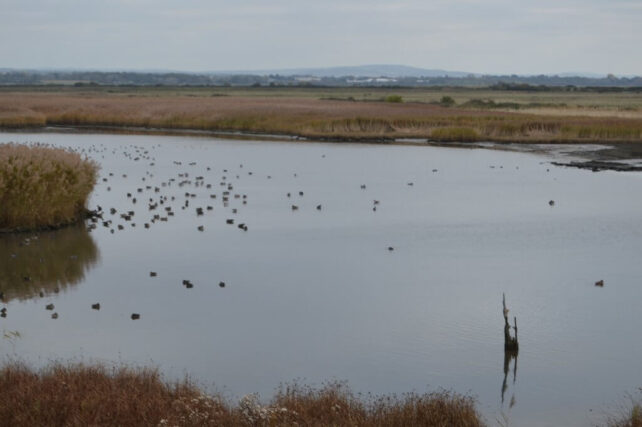
Why Salt Marshes Are Critical for Nature and Climate
Salt marshes and grazing marsh habitats such as those at Farlington Marshes are among the rarest and most valuable coastal ecosystems in southern England.
These habitats support specialised wildlife communities while also delivering important environmental benefits. Coastal wetlands help absorb carbon from the atmosphere and provide a natural buffer against flooding and coastal erosion.
Scientists warn that climate change and rising sea levels are placing increasing pressure on these ecosystems.
Climate Change Creates a Coastal Squeeze
One of the biggest challenges facing salt marshes is a process known as coastal squeeze.
As sea levels rise, habitats naturally need to migrate inland. However, development and infrastructure often prevent this movement. At Farlington Marshes, the nearby A27 and surrounding development leave little room for the wetland to expand inland.
Without intervention, experts warn that some of these habitats could disappear altogether.
Creating replacement salt marshes elsewhere is possible, but finding suitable land on already crowded coastlines remains extremely difficult.
Scientists Warn of Declining Salt Marsh Habitats
Dr Stefanie Carter, coastal eco systems scientist at the UK Centre for Ecology and Hydrology, described salt marshes as a “declining habitat”.
She said: “It is possible to create salt marshes and restore some of the marsh we’ve lost but it probably won’t be possible to do this at the scale.”
Comparing salt marshes to peatlands, she added:
“It’s similar to peatland where in the past they’ve been regarded as wastelands. In the past they were dried out for agriculture and now they’re realising peatlands are really important.”
“And it’s the same for saltmarshes. We’re realising how important they are so we’re trying to prioritise restoring them.”
Environment Agency Working on Long-Term Solution
In an effort to prevent further damage, the Environment Agency has implemented another temporary repair and plans additional modifications to the water control system later this month.
A spokesperson said: “These sea wall assets are nearing the end of their operational life, and we have spent hundreds of thousands of pounds and officer time in recent years to keep them working until we can find a longer term solution.
“We fully recognise the importance of Farlington Marshes to the community in terms of flood protection, recreation and as a wildlife haven, and remain committed to resolve the issue as quickly as possible.”
While emergency measures may provide short-term relief, conservationists warn that securing the future of Farlington Marshes will require significant investment and long-term action to protect this nationally important coastal landscape from the growing impacts of climate change and rising sea levels.
Protecting Rare Animals and Their Habitats in the UK
At Natural World Fund, we support conservation projects that protect vulnerable habitats and the wildlife that depends on them. The challenges facing Farlington Marshes highlight the growing pressures that climate change, rising sea levels and ageing infrastructure can place on important coastal ecosystems. Supporting habitat restoration, wetland conservation and long-term environmental management can help safeguard these valuable landscapes for future generations.
If you care about restoring native wildlife, support the work of Natural World Fund today.
Image sources
- Pond,_Farlington_Marshes_-_geograph.org.uk_-_6511893 by N Chadwick. Cropped and resized from original: Wikipedia Commons
- Farlington_marshes_april_2011 by Geni. Cropped and resized from original: Wikipedia Commons