

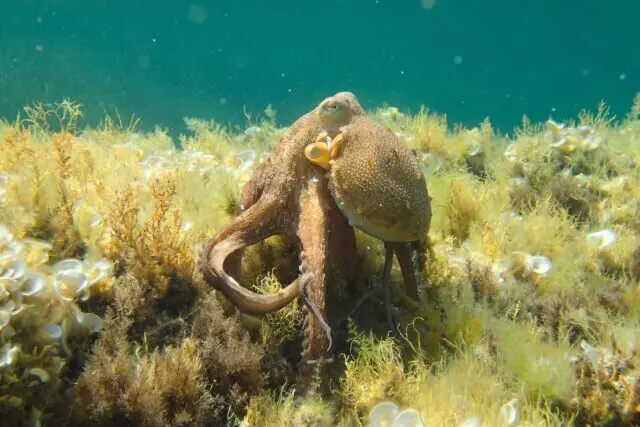
Record Numbers of Octopuses Expand Beyond South-West England
Record numbers of octopuses first observed off the south-west coast of England have now spread to Scotland and Wales, according to a new study, with researchers saying the phenomenon is transforming both the fishing industry and the wider marine ecosystem.
The surge in sightings of the common or Mediterranean octopus (Octopus vulgaris) was initially recorded in 2025 along the south coast of Devon and Cornwall. Scientists have since documented the species spreading along the north coasts of Devon and Cornwall, with reports extending to Wales, Dorset, East Sussex and even Scotland.
The findings are based on scientific surveys, underwater monitoring and observations submitted by recreational divers and snorkellers.
Scientists Describe the Octopus Bloom as “Pretty Extraordinary”
Researchers believe the scale of the current octopus bloom is unlike anything seen in recent years.
“It is pretty extraordinary,” said Bryce Stewart, a senior researcher at the Marine Biological Association and lead author of the study. “We have had blooms before but everything I am seeing is telling me this is the biggest bloom we have seen, it is quite different.”
Although Octopus vulgaris is native to UK waters, it is usually present in relatively low numbers and is rarely encountered. Scientists say population blooms can occur after a mild winter followed by favourable breeding conditions in spring.
Warmer Seas May Be Driving Population Growth
Experts believe rising sea temperatures and broader environmental changes are creating increasingly suitable conditions for octopuses around the UK coastline.
“Now we have warmer waters much more suited to these animals, we are seeing a huge increase in numbers,” Stewart said.
The unusual abundance has also encouraged greater public participation in marine research, with hundreds of divers and snorkellers helping scientists monitor the expanding population.
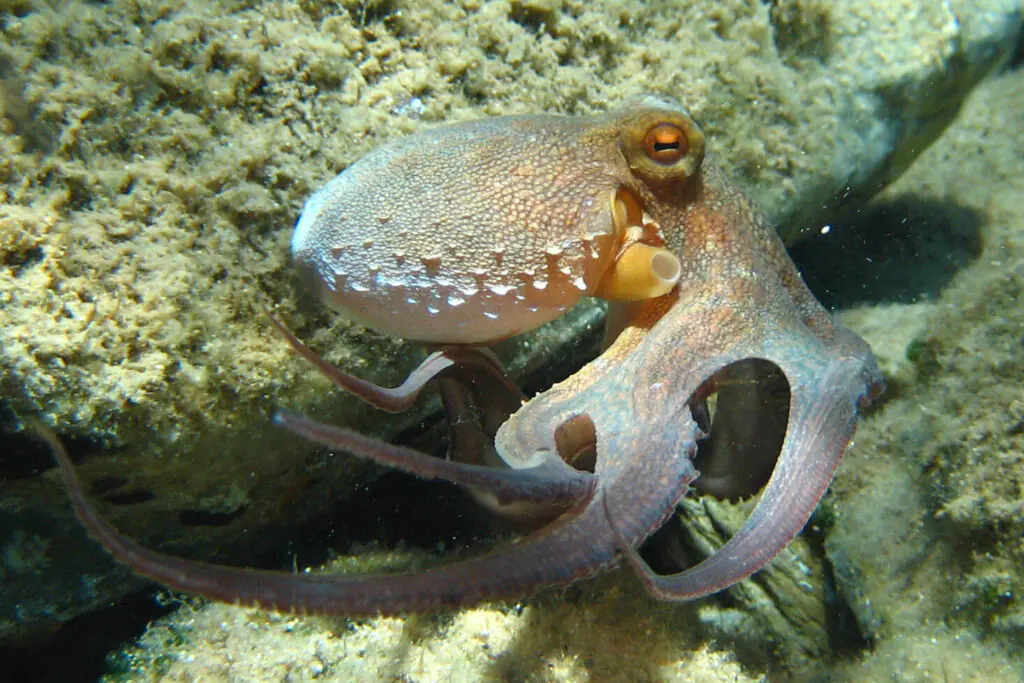
Fishing Industry Sees Winners and Losers
The rapid increase in octopus numbers has had contrasting effects on coastal fishing communities.
Fishers who rely on crabs and lobsters have suffered significant losses, as octopuses are highly efficient predators that frequently target shellfish caught in fishing pots. Meanwhile, others have benefited from exceptionally large octopus catches.
According to Stewart, octopus landings increased by 7,700% during 2025. At Brixham market in Devon, where much of the catch is traded, a record 100 tonnes of octopus was reportedly sold in a single day.
“Some fishermen have had to sell their boats because of the impact on crab and lobster populations, while others are doing extremely well,” he said.
Marine Ecosystem Undergoing Major Changes
The influx of octopuses is also influencing the wider marine food web. While feeding heavily on shellfish and some fish species, the animals are themselves becoming prey for predators including seals, conger eels and the rare Risso’s dolphins.
“It is a shake-up of the whole ecosystem,” Stewart said.
Researchers will continue monitoring the spread of the octopus bloom to better understand its long-term effects on biodiversity, fisheries and the changing marine environment around the UK.
“We are calling on governments to create fully protected ocean sanctuaries that will close vast areas of the ocean off from extractive human activities. Governments have promised to protect 30% of the world’s ocean by 2030 – the minimum scientists say we need for the ocean to be able to recover.”
Protecting the UK’s Marine Ecosystems
At Natural World Fund, we support efforts to protect the UK’s rich marine biodiversity and improve understanding of how changing environmental conditions affect wildlife. As species such as the common octopus expand their range and alter established ecosystems, ongoing research and conservation are essential to help safeguard healthy seas, support sustainable fisheries, and ensure marine life can thrive for generations to come.
If you care about restoring native wildlife, support the work of Natural World Fund today.
Image sources
- Octopus_vulgaris2 by Beckmannjan. Cropped and resized from original: Wikipedia Commons
- Octopus_vulgaris_0 (2) by Emanuele Santarelli. Cropped and resized from original: Wikipedia Commons