

Animal Welfare Groups Urge Gradual End to Historic Practice
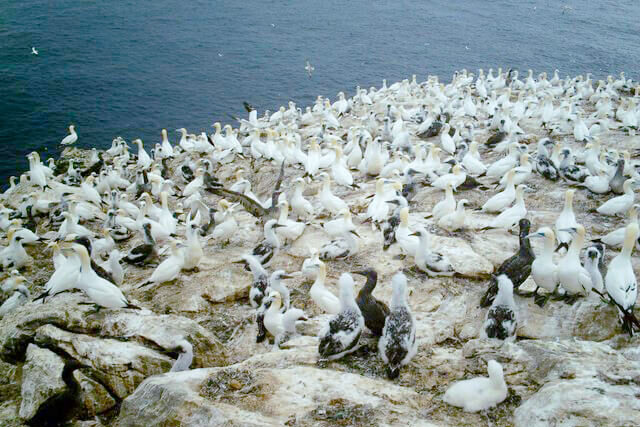
Animal welfare organisations have renewed calls for discussions on phasing out Scotland’s controversial annual guga hunt, describing the killing of juvenile gannets as inhumane while acknowledging the centuries-old cultural significance of the tradition.
Campaign groups OneKind and the League Against Cruel Sports believe the hunt should be gradually ended through dialogue with the Hebridean communities that have practised it for more than 400 years. Local participants view the harvest as both an important cultural tradition and a form of sustainable food gathering.
Activist Campaign Sparks Debate
The issue has gained national attention following a high-profile campaign by Protect the Wild and associated activists aimed at securing a ban on the practice.
Their campaign featured a 60-hour rooftop occupation of NatureScot’s headquarters by members of Abolish the Guga Hunt, while Protect the Wild founder Rob Pownall stood for election to the Scottish Parliament dressed as a gannet to raise awareness.
The organisation also commissioned actor Brian Cox to narrate a graphic animated film highlighting the hunt. Cox described the practice as “needless cruelty”, while Pownall stated: “Gannet chicks are being snatched from their nests and bludgeoned to death for nothing more than a tradition.”
Calls for Cooperation Rather Than Confrontation
Despite supporting efforts to end the hunt, the League Against Cruel Sport Scotland has questioned whether confrontational campaigning is the most effective strategy.
Robbie Marsland, the organisation’s director in Scotland, believes dialogue offers the best route forward.
“It’s a hunt for food, no doubt about that,” he said. “It’s not a sport, it’s a tradition. People on Lewis don’t think it’s horrific.”
Although Marsland supports petitions calling for a ban, including one signed by more than 183,000 people, he argued that any long-term solution should “honours and respects” the longstanding tradition.
Protect the Wild defended its campaign, saying its “bold, creative approach” had succeeded in drawing national attention to the issue.
“Bringing a hidden cruelty into the light is never comfortable, but it is necessary,” a spokesperson said. “Any issue that touches on culture, tradition and the treatment of animals will stir strong feelings on all sides. But we believe the public has a right to know what happens to wildlife in their country.”
A Tradition Protected by Law
The annual guga hunt is unique within the UK because it benefits from legal protection under the Wildlife and Countryside Act 1981. The exemption recognises its deep historical roots on the Ness peninsula in the north of Lewis and its role as a traditional source of food.
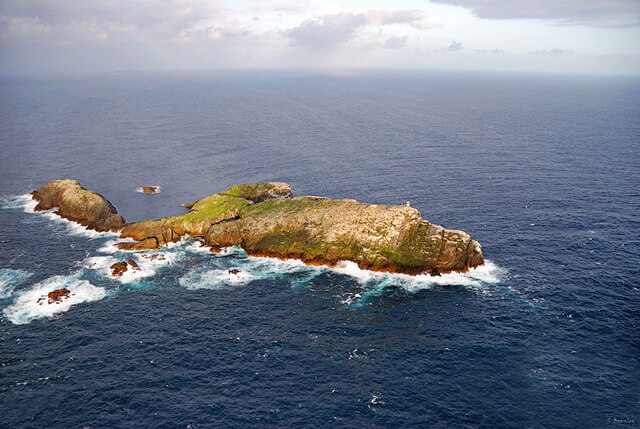
Each year, around 10 hunters travel to the remote island of Sula Sgeir, approximately 40 miles north of Lewis, where they traditionally camp in stone bothies while collecting juvenile northern gannets known locally as guga.
Following concerns about the impact of avian influenza on local seabird populations, the harvest quota was reduced to 500 birds last year, significantly shortening the expedition.
Hunters Defend the Practice
Representatives of the hunting community reject claims that the harvest is cruel or barbaric.
Murdo MacRitchie, speaking on behalf of the hunters, said: “Like many rural communities, we live close to our sources of food. On our crofts there are sheep, cattle and chickens. In the seas that circle us, we catch haddock, mackerel and ling. They are part of the food chain that has sustained island life for generations.”
He added: “Capture to stunning only takes seconds, and the bird is dispatched immediately. There is no pleasure in that time span. As with any animal raised or taken as food, this is the hardest part of the procedure, but it is undertaken as a serious responsibility and never as an act of cruelty.”
After capture, the birds are prepared using traditional methods before being salted and air-dried. Once considered a staple food for island communities, guga remains a delicacy for enthusiasts, although its strong salty and gamey flavour is often considered an acquired taste.
Report Questions Animal Welfare Standards
A joint report by OneKind and the League Against Cruel Sport Scotland argues that the legal protections surrounding the hunt are outdated and provide exemptions unavailable to other forms of animal-based food production.
The report, authored by Kirsty Jenkins, claims there is evidence that hunting methods may not satisfy humane standards and that the activity could disturb other seabird species breeding on Sula Sgeir, including fulmars, European storm petrels and Leach’s petrels.
It also raises concerns about the lack of independent oversight of the hunt.
“There is no independent oversight or monitoring of the guga hunt, hampering any effort to undertake an animal welfare impact assessment. Indeed, given the Scottish government’s public commitment to the evaluation of its policies, the lack of scrutiny of this licence condition appears particularly remiss,” the report said.
NatureScot to Review 2026 Licence Application
NatureScot is expected to consider issuing a new licence for this year’s hunt while undertaking further scientific assessment of the local gannet population.
A spokesperson for the agency said: “We will assess the 2026 licence application carefully to determine if granting it will affect the long-term stability of the gannet population on Sula Sgeir, in accordance with existing legal frameworks.”
They added: “The assessment by NatureScot will be informed by the latest scientific evidence including an updated population viability analysis model.”
“We are calling on governments to create fully protected ocean sanctuaries that will close vast areas of the ocean off from extractive human activities. Governments have promised to protect 30% of the world’s ocean by 2030 – the minimum scientists say we need for the ocean to be able to recover.”
Protecting the UK Wildlife
At Natural World Fund, we support efforts to protect vulnerable wildlife populations and conserve important seabird habitats while promoting informed discussions about the relationship between people and nature. By safeguarding ecosystems and the species that depend on them, we can help build a future where both biodiversity and cultural heritage are respected and preserved for generations to come.
If you care about restoring native wildlife, support the work of Natural World Fund today.
Image sources
- Sula_Sgeir_-_geograph.org.uk_-_1242208 by Stephen Branley. Cropped an resized from original: Wikipedia Commons
- Sula_Sgeir_gannets_2008_-_geograph.org.uk_-_1032134 by John M Macfarlane. Cropped and resized from original: Wikipedia Commons