

UN Report Warns World’s Oceans Face ‘Severe and Accelerating’ Human Pressure
A major new United Nations assessment has warned that the world’s oceans are under “severe and accelerating” pressure from human activities, with rising sea levels, increasing ocean temperatures, plastic pollution and industrial fishing placing marine ecosystems under unprecedented strain.
The Third World Ocean Assessment, compiled by nearly 600 scientists from 86 countries, paints a concerning picture of ocean health between 2021 and 2025, highlighting the urgent need for stronger international cooperation to protect marine biodiversity and build resilience against climate change.
Sea Levels Rising Twice as Fast as a Decade Ago
Among the report’s most striking findings is the acceleration in global sea-level rise. Scientists found that annual sea-level increases have more than doubled, rising from approximately 2mm per year before 2015 to 4.3mm per year in 2023.
At the same time, ocean warming continues to intensify. The assessment found that 16% of all the additional heat absorbed by the world’s oceans since 1955 accumulated after 2018 alone.
The greatest relative warming has been recorded in the Atlantic Ocean and in the southern regions of the Indian and Pacific Oceans, reflecting the growing influence of climate change on marine environments.
Human Activities Are Placing Marine Ecosystems Under Strain
According to the report, multiple human-driven pressures—including pollution, large-scale industrial fishing and climate change—are acting together to create cumulative impacts that threaten ocean health.
These combined stressors are contributing to widespread biodiversity loss and placing marine systems under “severe strain”, with scientists warning that the damage is becoming increasingly difficult to reverse.
UN Calls for a New Relationship with the Ocean
United Nations Secretary-General António Guterrez emphasised the need for immediate action to safeguard marine ecosystems.
He said:
“We cannot keep treating the ocean as limitless. Urgent global collaboration is needed to protect marine ecosystems.
“We must build a new relationship with the ocean [that is] grounded in science, framed by international law and built on shared responsibility across nations, sectors and generations.”
Ocean Protection Has Improved, but Challenges Remain
The assessment acknowledges important progress in marine conservation, including the landmark High Seas Treaty that entered into force this year, establishing international rules for protecting waters beyond national jurisdictions.
Together with dozens of other international agreements, these measures have strengthened efforts to conserve biodiversity, reduce harmful subsidies and improve resource management.
However, the report concludes that ocean governance remains fragmented across different sectors and regions, making stronger coordination essential for effective conservation.
Oceans Continue to Regulate the Global Climate
Covering more than 70% of Earth’s surface, the oceans play a vital role in regulating climate and supporting life.
The report notes that the oceans have already absorbed around 90% of the excess heat generated by global warming and approximately 30% of the carbon dioxide emitted through fossil fuel combustion.
Scientists also warn that changing ocean currents could have significant consequences for future climate patterns, although many of these processes remain poorly understood.
Plastic Pollution Threatens Thousands of Marine Species
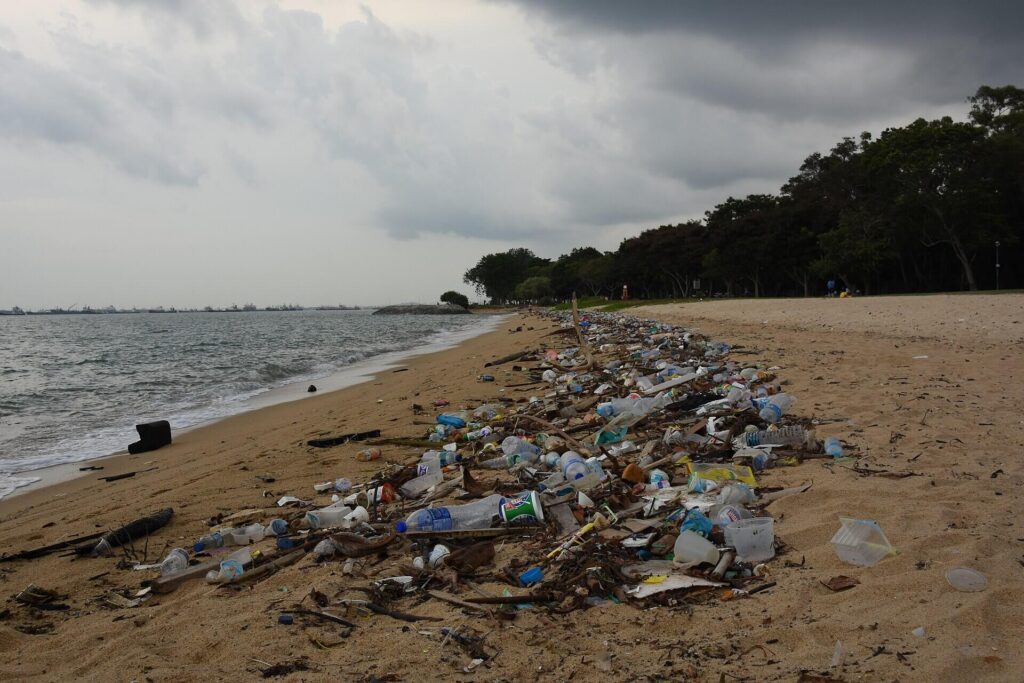
Plastic waste continues to accumulate at an alarming rate.
Researchers estimate that approximately 52.1 million tonnes of plastic enter the oceans every year, contributing to an estimated 24.4 trillion microplastic particles dispersed throughout marine environments.
These pollutants are believed to affect more than 4,000 marine species, creating long-term risks for ecosystems and food chains.
Much of the Ocean Remains Unexplored
Despite advances in marine science, researchers acknowledge that major knowledge gaps remain.
By 2025, only 27% of the ocean floor had been mapped, leaving many deep-sea ecosystems largely unexplored and poorly understood.
This lack of knowledge makes it more challenging to assess biodiversity, monitor environmental change and develop effective conservation strategies.
Population Growth Increases Pressure on Coastal Regions
The report identifies population growth, technological change, governance challenges and geopolitical instability as major drivers affecting the marine environment.
The global population increased from 7.7 billion in 2017 to 8.2 billion by late 2024. Today, more than one-third of people live within 100 kilometres of coastlines, while around 11% inhabit land less than 10 metres above sea level, increasing both human reliance on healthy oceans and vulnerability to rising seas.
Scientists and Campaigners Urge Stronger Ocean Protection
Rafael González-Quirós, joint coordinator of the expert group behind the assessment, highlighted the urgency of protecting marine ecosystems.
He said:
“The imperative for a healthy and resilient ocean has never been more urgent. Global collaborations and research, and our increased understanding of the ocean, provide essential insights into the state of marine ecosystems, the profound changes they are undergoing, and the need for our care.”
Environmental organisations have echoed these concerns. Greenpeace described the findings as an “urgent wake-up call” for governments to safeguard vulnerable marine habitats from deep-sea mining and industrial fishing.
Lukas Meus, Greenpeace’s global ocean campaigner, said:
“We are calling on governments to create fully protected ocean sanctuaries that will close vast areas of the ocean off from extractive human activities. Governments have promised to protect 30% of the world’s ocean by 2030 – the minimum scientists say we need for the ocean to be able to recover.”
Protecting the Future of Our Oceans
At Natural World Fund, we support efforts to conserve marine ecosystems and promote sustainable solutions that protect biodiversity and strengthen resilience against climate change. The latest UN assessment highlights both the growing pressures facing the world’s oceans and the importance of coordinated global action. By investing in ocean conservation, reducing pollution and safeguarding critical habitats, we can help ensure healthier seas for wildlife and future generations alike.
If you care about restoring native wildlife, support the work of Natural World Fund today.
Image sources
- Litter_on_Singapore’s_East_Coast_Park by Vaidehi Shah. Cropped and resized from original: Wikipedia Commons
- Waves_crashing_on_rocks_at_Windansea_Beach,_San_Diego,_California by Matthew T Rader. Cropped and resized from original: Wikipedia Commons