

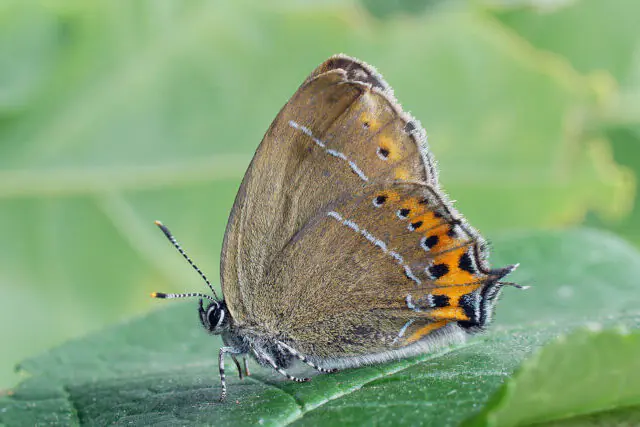
Rare Black Hairstreak Butterfly Discovery in Surrey Sparks Conservation Breakthrough
An amateur lepidopterist from Surrey has helped reshape butterfly conservation after discovering a population of the elusive black hairstreak in a county where it had never previously been recorded.
Gareth Tilley’s discovery of a previously unrecorded population of black hairstreak butterflies in Surrey has transformed conservation research and introduced an innovative new way to monitor one of the UK’s rarest butterfly species.
Rare Black Hairstreak Butterfly Discovered in Surrey
Gareth Tilley made his remarkable find during walks near his home in Epsom, revealing that the endangered species exists beyond its previously recognised range.
According to Butterfly Conservation, the black hairstreak had historically been found only in woodlands stretching between Oxford and Peterborough before Tilley’s discovery.
Lockdown Walk Leads to Remarkable Butterfly Find
Tilley explained that his interest in the species began during the COVID-19 lockdown.
He said: “I live in Epsom, and it was during the lockdown in 2020 I started going for walks in the area.
“During one of those walks a butterfly landed in front of me. I was amazed to see it was a black hairstreak.”
Since 2002, the UK distribution of the black hairstreak has declined by 33%, with habitat loss identified by Butterfly Conservation as the primary cause.
Initial Skepticism Over the Discovery
After reporting his sighting, Tilley said some local people believed the butterfly had been illegally released and that its appearance was a one-off event.
To verify the finding, he collaborated with Butterfly Conservation, the local council and the University of Sussex. Together, they confirmed that a genuine population of black hairstreak butterflies is established in Surrey.
UV Light Technique Revolutionises Butterfly Monitoring
Monitoring black hairstreaks has long been a challenge because the insects are exceptionally difficult to spot.
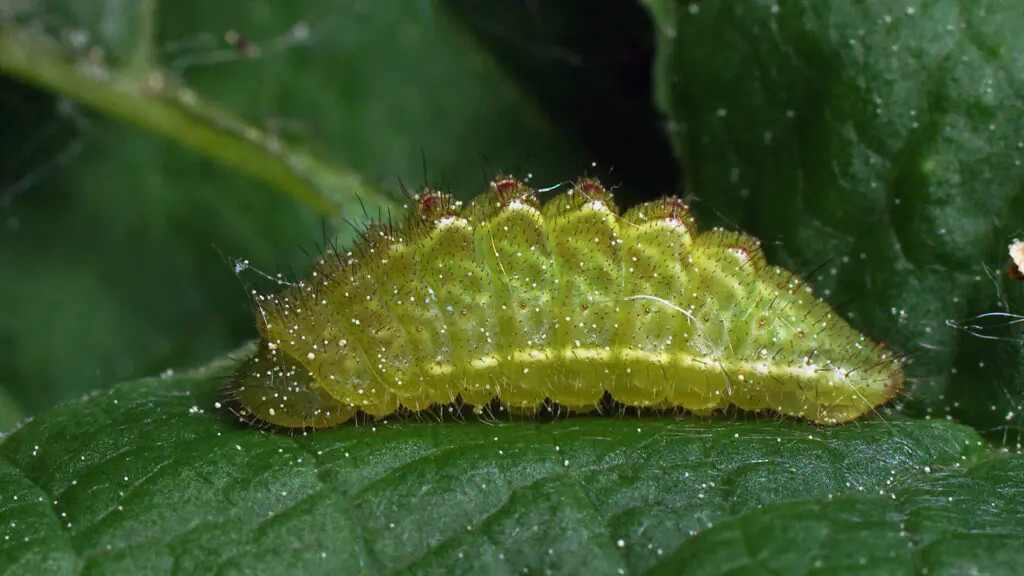
Tilley explained: “The caterpillars look like leaves, the chrysalis like bird droppings, and the adults stay high in trees.”
His breakthrough came after learning that some caterpillars in the United States fluoresce under ultraviolet light.
Inspired by this, he purchased a UV torch and tested the idea while searching for black hairstreak caterpillars in May 2022.
He recalled: “I was sceptical it would work.”
“But when I found a caterpillar, it didn’t just glow, it was incredibly bright.”
The technique proved highly effective, with Tilley discovering 46 caterpillars in a single evening.
Scientists Still Unsure Why Caterpillars Glow
Although the UV method has become an important conservation tool, the biological reason behind the caterpillars’ fluorescence remains unclear.
Tilley said: “It may help them deter predators, or have no direct function.”
Further research may help scientists better understand the purpose of this unusual characteristic.
Conservation Groups Adopt New Surveying Method
Butterfly Conservation has recognised the significance of Tilley’s discovery and is now encouraging the use of UV surveys to monitor hairstreak butterflies across the UK.
Steven Lofting, the charity’s south east conservation manager, praised the work, saying it had made a “hugely valuable contribution” to butterfly conservation in Britain.
He added: “We are finding much higher numbers of hairstreaks using UV surveys and it’s a new, fun way to engage volunteers.”
Tilley is also sharing the technique with conservation organisations overseas, including groups in Australia, helping to expand its potential use in butterfly research around the world.
Protecting Rare Butterflies and Their Habitats
At Natural World Fund, we recognise that conserving rare species such as the black hairstreak depends on protecting habitats, supporting scientific innovation and encouraging community involvement in nature conservation. Discoveries made by dedicated volunteers can play a vital role in improving our understanding of biodiversity and informing future conservation efforts.
If you care about restoring native wildlife, support the work of Natural World Fund today.
Image sources
- Satyrium_pruni_(larva)_-_Black_hairstreak_(caterpillar)_-_Хвостатка_сливовая_(гусеница)_(47996439241) by Ilia Ustyantsev. Cropped and resized from original: Wikipedia Commons
- Satyrium_pruni_-_Black_hairstreak_-_Хвостатка_сливовая_(48127277703) by Ilia Ustyantsev. Cropped an resized from original: Wikipedia Commons