

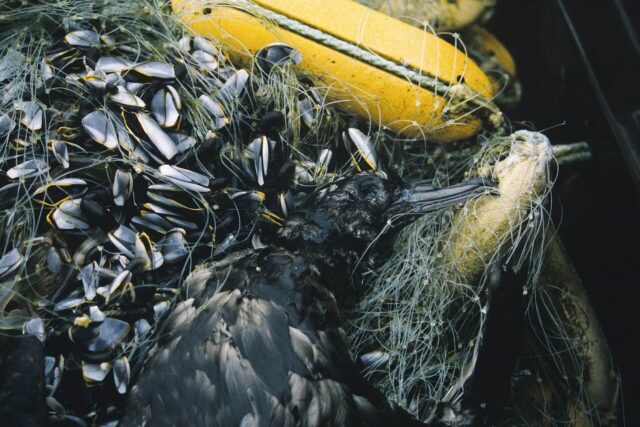
New analysis reveals hidden toll on whales, dolphins, seals and seabirds
Thousands of Britain’s protected marine animals, including whales, dolphins, porpoises, seals and seabirds, are being unintentionally killed by fishing vessels every year, according to the first comprehensive analysis of UK bycatch data.
The study, published by the Wildlife and Countryside Link (WCL), describes bycatch—the accidental capture and death of non-target species in fishing gear—as a major but often overlooked threat to marine biodiversity. Campaigners argue that the true scale of the problem is likely to be far greater than current estimates because only a small proportion of fishing vessels monitor or report bycatch.
Report suggests current figures may be just the “tip of the iceberg”
The report, Hidden in the haul: The true scale of bycatch, estimates that every year in UK waters:
- More than 1,000 harbour porpoises and common dolphins are accidentally killed.
- Around 10,000 seabirds die after becoming entangled in fishing gear.
- Approximately 500 seals are lost to bycatch.
- Six humpback whales and 30 minke whales have been found dead after becoming trapped in Scottish creel ropes.
- More than 1,000 endangered Atlantic salmon are unintentionally caught.
- Around 120 tonnes of protected sharks, skates and rays are killed by commercial fishing operations.
Researchers noted that these estimates were extrapolated from limited monitoring data and excluded non-UK fishing vessels operating in British waters. Monitoring coverage remains extremely low across parts of the fleet, with only 0.05% of dredging vessels recording bycatch.
Conservation groups call the scale of destruction “shocking”
Richard Benwell, chief executive of Wildlife and Countryside Link, believes many of these deaths could be prevented through improved fishing practices and stronger government action.
He said: “From razorbills and dolphins to endangered salmon and sharks, the scale of destruction exposed in this report is shocking, with animals dying in awful and unnecessary ways.”
Benwell also urged ministers to strengthen protections for vulnerable marine species.
“The government mustn’t let these terrible losses continue. To protect marine wildlife, Ministers must finally deliver strong bycatch action plans, backed by strict mandatory monitoring and enforcement, before more wildlife is pushed closer to extinction.”
He added: “We need to support fishers to move to more modern methods and not cause collateral damage.”
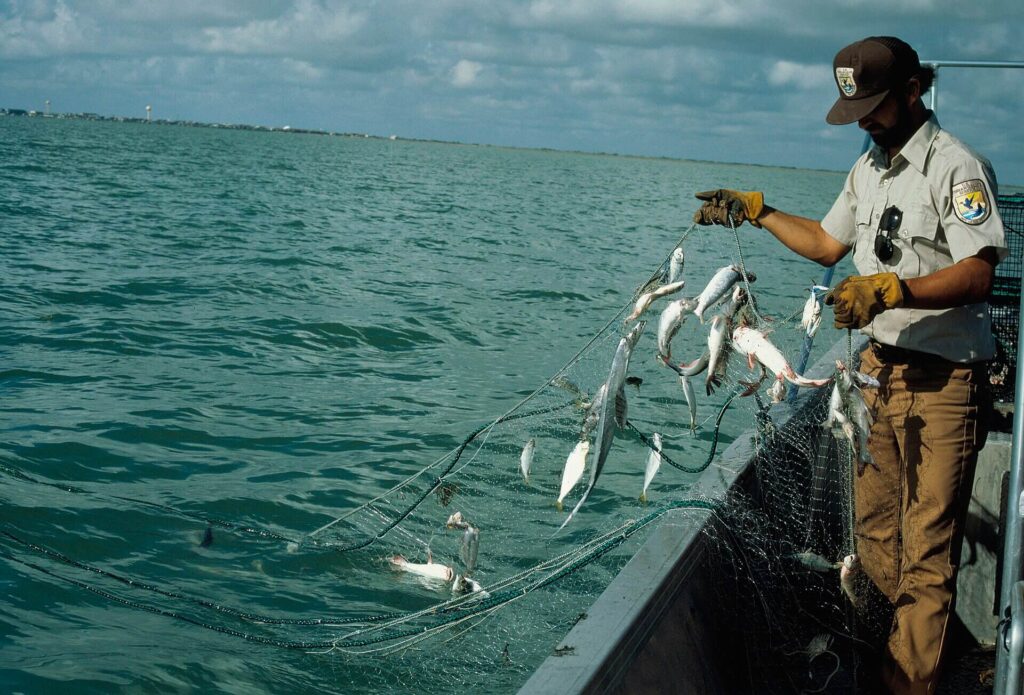
Gillnets pose significant threat to seabirds
The report identifies gillnets as one of the highest-risk fishing methods for seabird bycatch in English waters. These curtain-like nets can trap diving birds such as puffins, gannets and razorbills, causing them to drown while searching for food.
According to research cited from BirdLife International, gillnets are responsible for an estimated 400,000 seabird deaths globally each year.
Bycatch undermining UK marine conservation goals
The report concludes that accidental deaths of cetaceans—including dolphins and porpoises—are a key reason the UK is failing to meet legal obligations for achieving good environmental status in some of its seas.
Ruth Williams, head of marine conservation at the Wildlife Trusts, highlighted the wider ecological consequences of these losses.
She said: “For many in the fishing industry, bycatch is a distressing and unwanted outcome – these species are critical to the health of our seas, and their deaths will have serious consequences on marine ecosystems.”
Williams also criticised previous governments for failing to adequately address what she described as a “silent and largely unseen” crisis affecting Britain’s marine wildlife.
Calls for mandatory electronic monitoring on fishing vessels
Wildlife and Countryside Link is urging the UK Government to introduce mandatory remote electronic monitoring across all fishing vessels operating in English waters, including smaller boats under 10 metres in length, which are believed to account for a significant share of bycatch incidents.
The organisation argues that improved monitoring would provide more accurate data and help enforce measures designed to reduce accidental wildlife deaths.
Practical solutions are already proving effective
The report highlights several examples where collaboration between fishers and conservationists has significantly reduced bycatch.
In Filey Bay, Yorkshire, small-scale fishers working near one of the UK’s largest mainland seabird colonies tested heavier fishing nets and other modified techniques. These changes reportedly reduced annual seabird bycatch from around 700 birds to just four or five.
Meanwhile, in Scotland, research into whale entanglements found that floating ropes attached to creels were responsible for many incidents. Trials using weighted ropes have shown promising results in lowering the risk of whales becoming trapped.
Government says action is already underway
Responding to the findings, a Defra spokesperson said: “This government is committed to restoring our oceans to good health and we are taking action to reduce the bycatch of marine species.”
The spokesperson added: “Our flagship programme, Clean Catch, uses electronic monitoring to collect bycatch data and evaluate the effectiveness of mitigation measures, and our new Seabird Bycatch Action Plan will look to reduce seabird deaths in and around English waters.”
Protecting Marine Wildlife Through Sustainable Fishing
At Natural World Fund, we recognise that healthy oceans depend on balancing sustainable fishing with effective protection for vulnerable marine species. Reducing accidental bycatch can help safeguard whales, dolphins, seabirds, seals and other wildlife while supporting resilient coastal ecosystems for generations to come.
If you care about restoring native wildlife, support the work of Natural World Fund today.
Image sources
- Fish_and_Wildlife_Service_worker_on_boat_checking_gill_net_full_of_fish by Pedro Ramirez Jr. Cropped and resized from original: Wikipedia Commons
- Drift_net_with_bird_(8080506611) by Roy Lowe. Cropped and resized from original: Wikipedia Commons