

Plankton Decline Leaves No North East Atlantic Marine Habitat in Good Environmental Status
A major new study has revealed that none of the pelagic habitats assessed across the North East Atlantic are currently in Good Environmental Status, highlighting widespread declines in plankton that could have serious consequences for marine ecosystems, fisheries and climate regulation.
Using more than 60 years of monitoring data, including records from the Marine Biological Association’s Continuous Plankton Recorder (CPR) Survey, researchers found evidence of deteriorating ocean health across waters stretching from Portugal to Norway, including the entire North Sea.
Plankton Are Essential to Life on Earth
Although microscopic and often overlooked, plankton play a vital role in sustaining life on Earth.
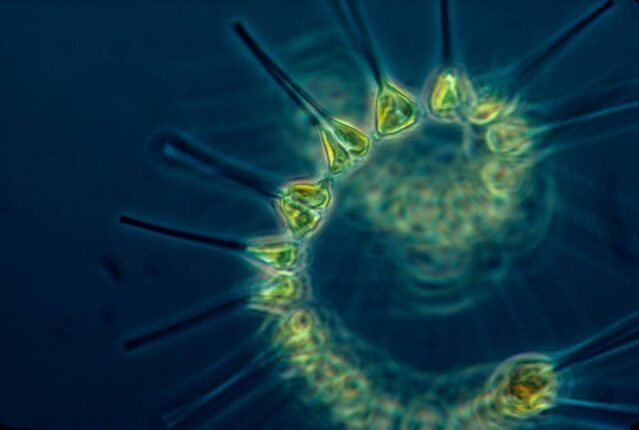
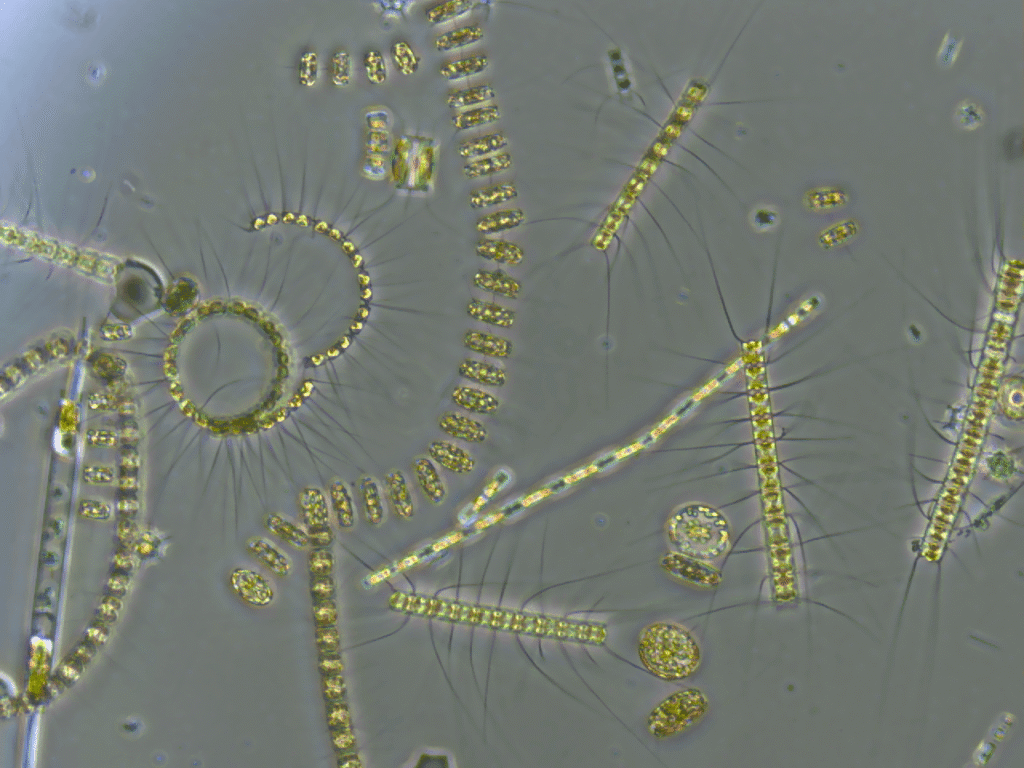
Phytoplankton produce around half of the planet’s oxygen, while plankton communities form the foundation of marine food webs. They support commercially important fisheries, feed species ranging from tiny fish to blue whales, and help regulate the Earth’s climate by absorbing and storing carbon.
Despite their importance, the new research found that plankton abundance has declined across large areas of the North East Atlantic.
First Comprehensive Assessment of Europe’s Open Ocean Habitats
The study brought together 23 plankton datasets from 13 research institutions, alongside satellite observations, to produce the first quantitative assessment of whether western Europe’s pelagic habitats meet the environmental standards set under the EU and UK Marine Strategy Framework Directive.
Pelagic habitats are open-water ecosystems dominated by plankton and are fundamental to healthy oceans. Previous assessments monitored changes in plankton but had been unable to combine the data into an overall measure of ecosystem health.
Researchers addressed this by integrating monitoring data from assessment areas and long-term sampling stations to generate regional environmental status across multiple plankton indicators.
No Assessed Habitat Achieved Good Environmental Status
The findings paint a concerning picture.
None of the assessed pelagic habitats across the North East Atlantic were classified as being in Good Environmental Status.
Instead:
- Six habitat-region combinations were assessed as Not Good.
- Three were classified as Uncertain.
- One could not be assessed because insufficient data were available.
At the regional level:
- The Celtic Seas were assessed as Not Good.
- The Bay of Biscay and Iberian Coast were assessed as Not Good.
- The Greater North Sea received an Uncertain rating.
The poorest conditions were generally found in shallow shelf seas, where scientists detected the clearest declines in phytoplankton biomass and zooplankton abundance.
Climate Change and Pollution Driving Ocean Changes
Researchers identified several environmental pressures associated with the changing plankton communities, including:
- Rising sea surface temperatures.
- Changing nutrient conditions.
- Declining ocean pH.
- Altered patterns of ocean mixing.
The study concludes that tackling climate change through global reductions in carbon emissions is the most important action needed to restore healthy pelagic habitats.
Scientists also call for stronger measures to reduce nutrient pollution—particularly nitrogen entering coastal waters—and continued investment in long-term plankton monitoring programmes.
Several monitoring time series across the OSPAR assessment region are already paused or under threat because of reduced funding, despite being essential for tracking long-term ecological change.
Scientists Warn Plankton Are Often Overlooked
Lead author Professor Abigail McQuatters-Gollop from the University of Plymouth said:
“I’ve been studying plankton for more than two decades, but for the most part they are totally underappreciated. The majority of people don’t even know what they are, which is crazy when you think they are responsible for half of the breaths we take, form the diet of species such as blue whales and basking sharks, and are key to cycling carbon and removing it from our atmosphere.
“Our study is the first to provide a quantitative assessment of the state of plankton across key regions such as the Celtic Sea, the Bay of Biscay and the North Sea. It has shown there is an urgent need to improve the health of these waters and to reduce the harm we are causing to the ocean, at both a local and a global level. It has also shown we need to establish new ways that science and policymakers can work together to generate more data and figure out how we transition to good status in the future.”
Long-Term Monitoring Was Critical
The research involved around 40 plankton experts from universities, environmental agencies and scientific organisations across Europe, working through OSPAR, the Regional Seas Convention for the Northeast Atlantic.
Dr Clare Ostle, Senior Research Fellow at the Marine Biological Association and Chair of the Global Alliance of CPR Surveys, said:
“That none of the assessed pelagic habitats are in Good Environmental Status is a strong signal that plankton communities across the Northeast Atlantic are being restructured by climate change and altered nutrient regimes. The Continuous Plankton Recorder Survey’s six decades of consistent sampling were central to detecting these shifts offshore, sustaining long-term plankton observation is not optional if we want to manage what’s coming.”
Improving Future Ocean Assessments
The researchers assessed phytoplankton and zooplankton abundance alongside environmental measurements including water depth, sea temperature, salinity, plankton biomass and species diversity.
Habitats were then classified into one of four categories:
- Good Environmental Status.
- Not Good Environmental Status.
- Uncertain.
- Not Assessed.
The team says future assessments should incorporate more long-term monitoring data, improve coverage of coastal and estuarine waters, and make greater use of emerging technologies such as environmental DNA (eDNA) and automated imaging systems to better capture plankton diversity.
Professor McQuatters-Gollop added:
“The warning is clear: plankton are changing across some of Europe’s most important seas, and those changes matter far beyond the plankton themselves. They affect food webs, fisheries, carbon cycling and the wider benefits people receive from the ocean. The challenge now is to use this evidence to drive practical action, from climate mitigation to better nutrient management and long-term monitoring.”
“The UK may account for just 1% of current global emissions, but we’re responsible for 100% of our own emissions, and we have the opportunity to show global leadership by bringing them down.”
Supporting Healthy Oceans Through Science
At Natural World Fund, we support science-led conservation that improves understanding of ecosystems and helps protect marine habitats for future generations through evidence-based action and environmental stewardship. Healthy oceans depend on healthy plankton. These microscopic organisms underpin marine biodiversity, support sustainable fisheries and play a crucial role in regulating the Earth’s climate.
If you care about restoring native wildlife, support the work of Natural World Fund today.
Image sources
- Mixed_phytoplankton_community_2 by NASA Earth Expeditions. Cropped and resized from original: Wikipedia Commons
- Zooplancton_NOAA by NOAA. Cropped and resized from original: Wikipedia Commons