


Can Rotterdam’s Port Really Become Green?
The Port of Rotterdam is the biggest port for freight in Europe and a major hub for energy, chemicals and international trade. But its huge scale comes with a significant environmental cost.
The port is now at the centre of a growing debate over whether a major industrial port built around fossil fuels can successfully transition to a cleaner, more sustainable future.
Rotterdam: Europe’s Fossil Fuel Powerhouse
Standing on a grassy verge in the Hook of Holland, the scale of the Port of Rotterdam is immediately clear.
Located at the delta of the Rhine and Meuse in the Netherlands, much of the port sits on land reclaimed from the North Sea. By freight volume, it is the largest port in Europe.
By some measures, Rotterdam alone handles almost as much cargo as all UK ports combined.
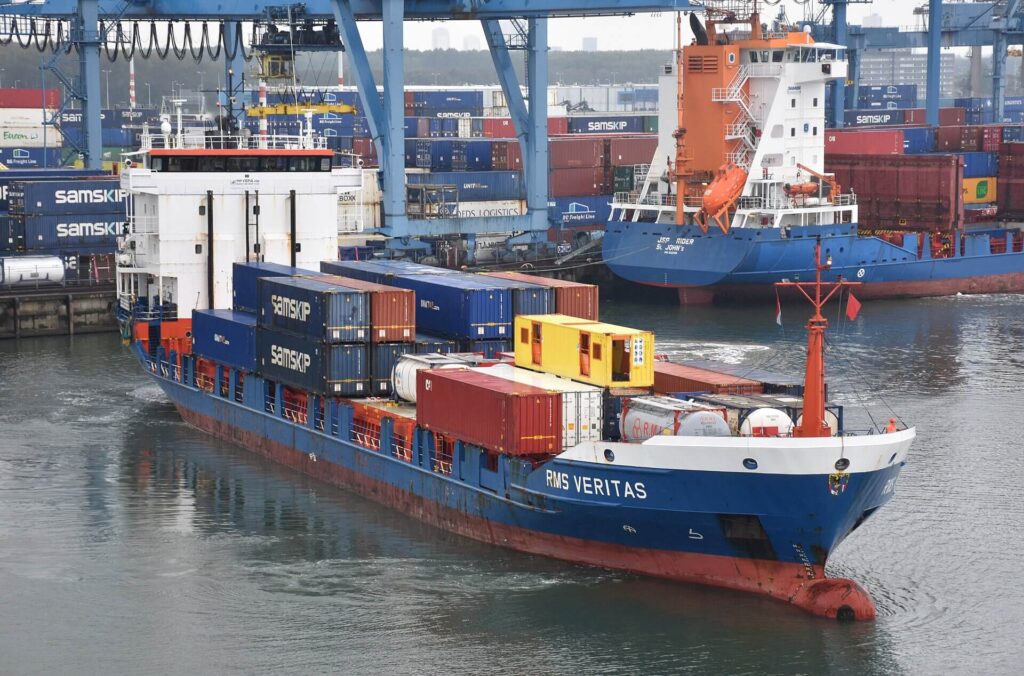
The horizon is dominated by cranes, bulk carriers and towering stacks of containers. Behind them lies a vast industrial and energy complex.
Five refineries, including Shell’s largest in Europe, process hundreds of thousands of barrels of crude oil each day. A dense network of chemical plants also supplies manufacturers across the continent.
According to research by CE Delft, the fossil fuels passing through Rotterdam are ultimately linked to around 600 million tonnes of CO2 emissions each year. That is many times greater than the CO2 output of the Netherlands’ largest airport, Schiphol.
The scale of these emissions has made Rotterdam a major test case for the global transition away from fossil fuels.
Can a Fossil Fuel Port Become Sustainable?
The central question is difficult: can a port built around fossil fuels genuinely become green?
Pressure is growing on the Port of Rotterdam Authority to accelerate the transition.
Environmental group Advocates for the Future has brought a lawsuit arguing that the authority is not doing enough to phase out fossil-based energy. The group is calling for a concrete plan to reduce coal, oil and gas flows whose associated emissions are enormous.
Figures released by the port show that Rotterdam’s industrial cluster currently emits around 21 million tonnes of CO2 each year, equivalent to approximately 14.5% of the Netherlands’ total domestic emissions.
That’s the equivalent of tens of thousands of return flights from Amsterdam to Los Angeles.
“It’s not good,” admits Mark van Dijk, the Port of Rotterdam Authority’s head of external relations.
Rotterdam’s Plan to Cut Emissions
The Port Authority has developed a plan to reduce emissions from its own operations while encouraging companies operating within the port to adopt cleaner technologies.
It has set a target of reducing its own direct and purchased energy emissions by 90% between 2019 and 2030.
The strategy includes several major initiatives:
- Developing a hydrogen hub where companies can test alternative fuels.
- Expanding onshore power, allowing ships to connect to the electricity grid while in port rather than running engines.
- Supporting alternative fuels including LNG, biofuels and methanol.
- Developing infrastructure for carbon capture and storage (CCS).
- Supporting the wider transition towards cleaner industrial processes.
These measures could help reduce emissions from port operations, although critics argue that much more needs to be done to address the fossil fuels passing through Rotterdam.
Carbon Capture and Storage
One of the key technologies being considered is carbon capture and storage.
“In the short term we’re focusing on CCS [Carbon Capture and Storage] – capturing CO2 and storing it in depleted gas fields,” van Dijk says, referring to the Porthos project that will pipe industrial emissions offshore.
Carbon capture aims to prevent some industrial CO2 emissions from entering the atmosphere by capturing them and storing them underground.
However, environmental campaigners argue that carbon capture should not become a substitute for reducing dependence on fossil fuels in the first place.
Calls for a Faster Fossil Fuel Phase-Out
Advocates for the Future believes Rotterdam’s position as a major international energy and logistics hub gives it an opportunity to accelerate the transition to cleaner industry.
Director Maikel van Wissen argues that the port should use its influence to encourage businesses to move away from fossil fuels.
“A state-owned enterprise should take legal obligations on states to reduce emissions,” Van Wissen says.
The organisation is calling for a clear plan to reduce the port’s dependence on coal, oil and gas while developing alternative industries.
“We are asking in the lawsuit to phase out that dependency, to create alternatives. It takes time, but if you don’t have a plan, you always choose cheap short-term solutions. This is an important hub, if you do it in a controlled way, you offer an alternative, that will stop industry from moving elsewhere.”
The Port Authority says it is already working to change its business model.
“We try to work together with the polluters, and slowly phase them out,” says Oscar van Veen, director of innovation at the Port of Rotterdam, speaking on a small boat in the harbour. He pauses, then corrects himself: “As fast as possible, of course.”
The Challenge of International Business
One of the biggest obstacles to decarbonising Rotterdam is that many of the port’s largest industrial companies are controlled by multinational corporations headquartered elsewhere.
Their decisions are therefore influenced by global markets and international regulations. If environmental rules become significantly stricter in Rotterdam, companies could potentially move energy-intensive operations to countries with lower costs and fewer restrictions.
Shell, for example, shifted its headquarters to the UK, while Unilever left Rotterdam altogether.
“The Port of Rotterdam is a key player in this sustainable transition but their sphere of influence is limited,” says Bettina Kampman, from environmental consultancy CE Delft, which works for governments, companies and NGOs.
Limited Space and Energy Infrastructure
Even reducing emissions from Rotterdam’s own activities presents major practical challenges.
The transition to electrification and cleaner technologies requires new infrastructure and significant amounts of land.
“New developments need physical space. They can speed up the energy infrastructure developments – the electricity needed to electrify the processes. That’s all limited at the moment due to the lack of power cables,” Kampman says.
This highlights a wider challenge facing the clean energy transition: renewable energy and electrification require substantial investment in electricity generation, transmission networks and infrastructure.
Why Global Climate Rules Matter
Emeritus professor Harry Geerlings of Erasmus University Rotterdam has spent more than three decades studying sustainable transport and ports.
He believes that no individual port authority can deliver a complete transition alone. Instead, international rules and a level playing field are needed to ensure businesses face similar environmental requirements across different regions.
European measures such as the Emissions Trading System and restrictions on sulphur in marine fuels demonstrate how regulation can change behaviour.
EU sulphur limits required ships operating in European waters to switch to cleaner fuels or install scrubbers to reduce pollution.
China initially resisted similar measures, Geerlings says, but eventually followed when ships could no longer enter US and European ports without complying.
“If you have the right incentives, you change the behaviour of these companies.”
However, regional regulation has limitations.
Some ships now operate with dual-fuel systems, allowing them to burn cleaner, low-sulphur fuel when entering European waters before switching back to cheaper, high-sulphur heavy fuel oil once they reach international waters.
The Dilemma Facing Rotterdam
Geerlings believes the Port of Rotterdam Authority genuinely wants to reduce emissions and is developing infrastructure to support a cleaner future.
However, the port remains financially dependent on fossil fuel industries.
“But their biggest income is still tied to fossil fuel industries,” he notes. “It’s not simply a switch you turn on or off. A port needs activity as a logistics node – otherwise it’s no longer a port. It’s a real dilemma.”
This is perhaps the central challenge facing Rotterdam.
The port needs to remain economically competitive while simultaneously reducing its environmental impact. Moving too slowly risks locking in fossil fuel infrastructure and emissions. Moving too quickly could encourage businesses to relocate elsewhere.
The Global Politics of the Energy Transition
The challenge is made more complicated by international politics.
Across the Atlantic, US President Donald Trump has cast doubt on climate policy and criticised wind power, while offering incentives that favour fossil fuels over renewable energy.
This creates additional concerns for Rotterdam about losing energy-intensive businesses to regions where environmental regulations are weaker and energy costs are lower.
The experience demonstrates why global climate policy and international cooperation are important to the transition away from fossil fuels.
Without comparable environmental standards across countries, businesses may simply move emissions from one location to another.
How Fast Can Rotterdam Reach Net Zero?
Advocates for the Future argues that the publicly owned Port of Rotterdam Authority should be held to a particularly high environmental standard.
The organisation wants a detailed plan for phasing out fossil fuel activities rather than relying solely on a long-term commitment to climate neutrality by 2050.
“We are not asking for anything extraordinary,” says director Maikel van Wissen. “We’re asking for a plan that really contributes to a sustainable future for the port.”
The Port Authority maintains that it shares the same ultimate objective.
“We do want the same thing,” insists Van Dijk.
The disagreement is therefore not necessarily about the destination, but about the speed and scale of the journey.
Rotterdam is aiming for net zero around the middle of the century. The question is whether its transition away from fossil fuels can happen quickly enough to protect the climate while maintaining the economic activity on which the port depends.
What Rotterdam Can Teach Us About Nature and Climate
The transition at Rotterdam illustrates a wider environmental challenge. Modern economies depend on infrastructure, energy and industrial systems that have transformed landscapes and contributed to climate change.
Moving towards a more sustainable future requires more than reducing emissions. It also means considering how economic activity affects ecosystems, biodiversity and the natural systems that support life.
Protecting and restoring nature must therefore go hand in hand with the transition to cleaner energy.
Restoring the Natural World in the UK
At Natural World Fund, we support habitat restoration and conservation projects that help rebuild healthy ecosystems across the UK. By restoring habitats and creating space for wildlife to thrive, we can help strengthen the natural systems that communities and future generations depend upon.
Image sources
- RMS_Veritas_(IMO_9138745)_Rotterdam_2020 by Niels Johannes. Cropped and resized from original: Wikipedia Commons
- Aerial_photograph_of_the_port_of_Rotterdam_in_2017_(1) by Olivier Cleynen. Cropped and resized from original: Wikipedia Commons