

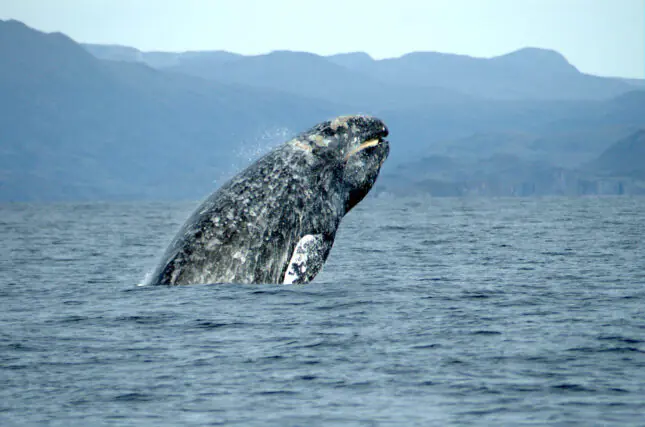
Gray Whales Face Catastrophic Mortality Event as Climate Change Disrupts Pacific Food Supply
Gray whales in the Pacific Ocean are facing a potentially devastating population decline as climate change disrupts their food supply and leaves the animals struggling to survive.
Environmental groups warn that the species is experiencing a “catastrophic mortality event”, with the estimated population falling from around 20,000 whales in 2019 to fewer than 13,000 today. The number of deaths also appears to be accelerating.
Climate change is thought to be a major driver of the crisis, as dramatic reductions in sea ice around Alaska are affecting the availability of the whales’ food. However, other threats—including ship strikes, oil pollution, microplastics, algal blooms and hunting in Russia—may also be contributing to the decline.
Gray Whale Population in Serious Decline
Gray whales undertake one of the longest migrations of any mammal, travelling between their breeding grounds around Baja California and feeding areas in the waters of Alaska.
The species came close to extinction during the 20th century, but populations recovered following significant conservation efforts. Gray whales were removed from the US Endangered Species Act (ESA) list in 1994.
Rick Steiner, an Alaska marine ecologist and chair of the board of directors of Public Employees for Environmental Responsibility (PEER), described that decision as a “colossal mistake”.
Today, environmental groups are calling for the gray whale to be protected again under the Endangered Species Act.
Thousands of Gray Whales May Have Died
The scale of the latest decline is difficult to determine because researchers cannot directly count whales that die offshore and sink.
Estimates suggest that between 2,500 and 8,000 gray whales may have died during 2025 and 2026, a level of mortality that meets the criteria for a “catastrophic mortality event”.
The annual number of gray whale strandings provides one indication of the scale of the crisis. Between 2006 and 2023, an average of 43 gray whales were recorded as stranded each year. That figure increased to 179 in 2025.
During the first half of 2026, 146 whale carcasses had already been directly counted.
Scientific research estimates that for every gray whale mortality observed through a stranding, between seven and 25 additional whales may die offshore without being detected. This means the number of carcasses found on beaches could represent only a fraction of the true death toll.
“The stranding numbers last year and this year are enormous compared to their annual average,” Steiner said.
“Stranding” refers to whales that wash up on shore after dying or becoming unable to return to the sea.
Climate Change Is Reducing Access to Food
Many of the gray whales found stranded are severely emaciated, according to Steiner.
The prevailing scientific explanation is that the whales are starving because climate change is disrupting access to the food they depend on. Dramatic changes in sea ice around Alaska are altering marine ecosystems and the availability of prey.
Gray whales are particularly dependent on productive Arctic and sub-Arctic feeding grounds. Changes to these ecosystems could therefore have significant consequences for a population that relies on these areas each year to build up the energy reserves needed for migration and reproduction.
David Weller, a marine biologist at the National Oceanic and Atmospheric Administration (NOAA), said the species’ historical resilience may now be under increasing pressure.
“The environment may now be changing at a pace or in ways that is testing the time-honored ability of the population to rapidly rebound while it adjusts to a new ecological regime,” Weller said.
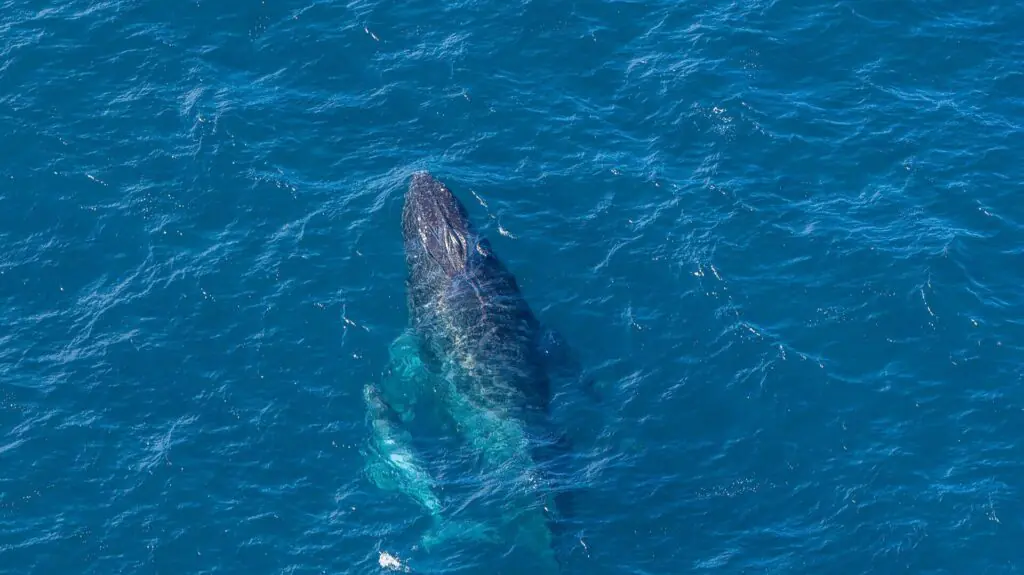
Gray Whales Face Multiple Other Threats
Climate change is not the only danger facing Pacific gray whales.
Researchers and environmental groups have identified a range of additional threats that could be contributing to the population decline.
Ship Strikes
Some stranded whales show evidence of being struck by ships or injured by propellers.
Shipping traffic can pose a particularly serious risk in areas where whales congregate. California has introduced voluntary ship speed reduction zones in areas with higher concentrations of gray whales.
According to Steiner, many vessels participate in the programme, while some also use spotters to look for whales. These measures have reduced whale deaths from ship strikes in the region by approximately 50%.
However, similar programmes have not been introduced in Oregon, Washington or Alaska, where shipping industry opposition has presented a barrier to further action.
Oil Pollution and Offshore Drilling
Oil pollution is another concern for gray whales and the wider marine ecosystem.
Environmental groups have also raised concerns about increased oil drilling in the region and the additional pollution and disturbance associated with these activities.
Oil spills can have widespread effects on marine ecosystems, potentially affecting the food webs on which whales and other marine species depend.
Microplastic Pollution and Algal Blooms
Microplastic pollution and harmful algal blooms are also among the environmental pressures potentially affecting gray whales.
These threats can alter marine ecosystems and food availability, adding further pressure to animals already struggling with changes to their feeding grounds.
Hunting in Russia
Gray whales are also hunted by Indigenous communities in Russia, with up to 40 whales reportedly killed each year.
The groups involved say the hunt is for subsistence purposes. Steiner disputes this justification, arguing that whale meat is subsequently fed to livestock.
Environmental Groups Seek Endangered Species Protection
Environmental organisations have petitioned NOAA to relist the gray whale under the US Endangered Species Act.
Relisting the species could provide additional legal protection and strengthen measures designed to address the threats facing the population.
However, campaigners face a difficult political environment. The Trump administration has pursued significant changes to US environmental and wildlife protections and has taken steps that environmental groups say could weaken the Endangered Species Act.
NOAA is expected to respond to the petition, and Steiner said PEER would pursue legal action if the administration rejects or ignores the request.
Steiner believes the evidence supporting renewed protection is compelling and that the popularity of gray whales could help push the species back onto the endangered list.
“The gray whales are in dire straits, so hopefully they see that and this can be the first one they list,” Steiner said.
Protecting Gray Whales Will Require Action
The decline of the Pacific gray whale demonstrates how multiple environmental pressures can combine to threaten a species that was once brought back from the brink of extinction.
Climate change is placing increasing pressure on Arctic marine ecosystems, while ship strikes, pollution, industrial activity and hunting add further risks.
Steiner believes governments can take practical steps to reduce some of these threats. Ship speed restrictions, for example, have already demonstrated the potential to reduce whale deaths in areas where they have been implemented.
But advocates argue that more action is needed across the whales’ migratory range.
“If you lose thousands of whales in two years – that should concern everyone,” Steiner said.
The gray whale’s previous recovery shows that effective conservation can make a difference. The challenge now is whether governments can respond quickly enough to protect the species from a rapidly changing marine environment.
The decline of the gray whale is another reminder that protecting wildlife requires more than responding to individual threats. Climate change, habitat degradation, pollution and human activity are increasingly interconnected pressures on ecosystems around the world.
Protecting and Restoring the Natural World
At Natural World Fund, we support practical action to protect and restore nature, helping create healthier habitats where wildlife can recover and thrive. From restoring damaged habitats to supporting biodiversity and creating space for native species, conservation and restoration are essential to building a natural world that can withstand increasing environmental pressures.
Image sources
- Ballena_gris_con_ballenato_en_Puerto_Chale by Omar David Sandoval Sida. Cropped and resized from original: Wikipedia Commons
- Eschrichtius_robustus_01 by Merrill Gosho. Cropped and resized from original: Wikipedia Commons