

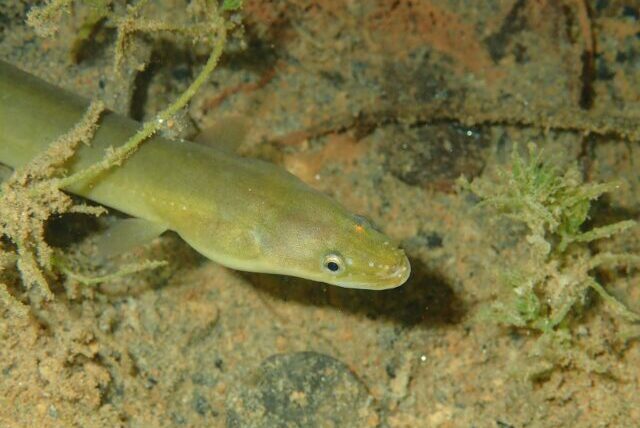
Lough Neagh Eels Face a Growing Wildlife Crisis
The European eel is one of Europe’s most remarkable and mysterious animals.
It can travel thousands of miles across the Atlantic, survive for decades in freshwater and navigate back to the ocean to reproduce. Yet despite its extraordinary resilience, European eel numbers have collapsed over recent decades.
The crisis is now being felt at Lough Neagh in Northern Ireland, one of the species’ important freshwater habitats.
No yellow eels will be caught at Lough Neagh this year or for the next two years following the closure of the yellow eel fishery. Only a minimal amount of 25 tonnes of fully mature silver eels may be caught.
But the closure is about more than fishing.
It highlights the growing environmental pressures facing one of Europe’s most extraordinary freshwater species.
The European Eel Is Critically Endangered
The European eel is classified as critically endangered, with its population having declined dramatically since the 1980s.
Scientists believe a combination of human pressures is responsible.
These include pollution, climate change, barriers to migration, hydropower systems, habitat degradation, parasites and overfishing.
Illegal trafficking of young eels out of Europe has also become an increasing problem.
The species’ complicated life cycle means that it can be affected by environmental changes thousands of miles from the places where it eventually lives.
A Remarkable Life Cycle
The European eel begins its life in the Sargasso Sea, off the east coast of the United States.
Scientists still have much to learn about this part of its life cycle. Although they know where the eels are thought to spawn, they have never witnessed their breeding behaviour in the wild.
Young eels then begin an extraordinary journey across the Atlantic.
They travel with ocean currents for up to three years before reaching the freshwater habitats of Europe.
Along the way, their bodies undergo several transformations.
From Glass Eel to Yellow Eel
As young eels move from coastal estuaries towards freshwater lakes and rivers such as Lough Neagh and Lough Erne, they become glass eels.
They then develop into elvers before eventually becoming yellow eels.
For up to 20 years, they can live and feed in freshwater.
Their diet consists largely of invertebrates, including species such as the Lough Neagh fly.
Eventually, the yellow eel reaches maturity and begins another remarkable transformation.
The Incredible Transformation Into a Silver Eel
Prof Derek Evans from the Agri-Food and Biosciences Institute has spent years studying this “fascinating” species.
“It is only recently we have come to realise that as part of their process of changing from yellow to silver eels, they go through a range of really incredible metamorphic changes,” he explained.
The eel’s body changes dramatically as it prepares to leave freshwater and make its final journey across the Atlantic.
“Their colour changes – they become very dark on top, very white underneath; their eyes get much bigger, their fins become rounded, even their backsides disappear – they become sealed almost like a biological submarine, I guess you could say.”
These changes help prepare the eel for its long migration back to the Sargasso Sea.
Unlike during its freshwater life, the mature eel does not feed during this journey.
Instead, it relies on energy stored in its body while its reproductive organs develop.
How Do Eels Navigate Across the Atlantic?
One of the great mysteries surrounding European eels is how they navigate such enormous distances.
“We now know from work by colleagues in Norway that there seems to be some kind of magnetic superpower, what are called magnetophores in the retinas in the back of their eyes, that can detect the Earth’s magnetic field and help them find their way back to the Sargasso.”
The migration is the final stage of the eel’s life.
“And it’s a one-time journey,” Professor Evans added.
“They go back, they spawn and they die. We never see adults again. The only thing we see are the little, finger-long glass eels coming back sometime within the following year.”
This extraordinary life cycle makes the health of freshwater and marine ecosystems crucial to the survival of the species.
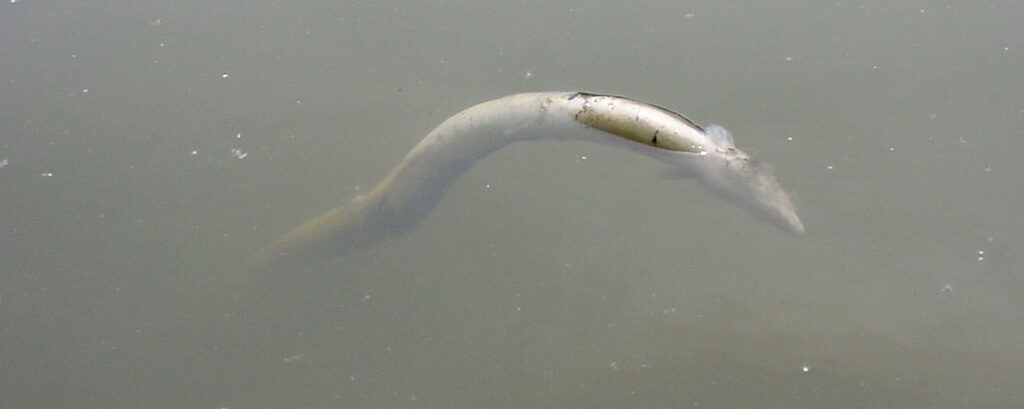
European Eel Numbers Collapsed in the 1980s
The decline in European eel numbers became particularly apparent during the 1980s.
Scientists recorded a dramatic fall in the number of young eels arriving in freshwater habitats across Europe. This process is known as recruitment.
Prof Evans said the number fell from 14-16 million juveniles a year to little more than 200,000.
“1983 was the pain point whenever we first noticed that drop, but it remained.
“It wasn’t just a blip – it was something that continued and has continued right up to the current time.”
The decline has continued for decades, raising serious concerns about the species’ future.
Why Are European Eels Declining?
There is no single explanation for the decline of the European eel.
Scientists believe multiple environmental pressures are affecting the species throughout its life cycle.
Pollution
Poor water quality can damage freshwater habitats and affect the wildlife that eels depend on for food.
Pollution can also place additional stress on aquatic ecosystems already affected by other environmental changes.
Climate Change
Climate change can alter both freshwater and marine environments.
Hotter temperatures, changing rainfall patterns and extreme weather can affect water quality, food supplies and the conditions eels encounter during their migrations.
Barriers to Migration
European eels need to move between the ocean and freshwater habitats.
Dams, hydropower systems and other barriers can make these journeys more difficult or prevent eels from reaching suitable habitats.
Parasites and Invasive Species
The introduction of exotic parasites and changes to freshwater ecosystems can create additional pressures on already vulnerable eel populations.
Overfishing and Illegal Trade
Fishing has historically added pressure to European eel populations.
There has also been increasing concern about the illegal smuggling of young eels outside Europe, particularly because glass eels can command high prices in international markets.
Lough Neagh’s Wider Environmental Problems
The decline of the eel is also part of a much bigger environmental story at Lough Neagh.
The lough has experienced serious concerns about water quality, pollution and algal blooms in recent years.
Gary McErlain, a seventh-generation eel fisherman, has witnessed changes in the ecosystem throughout his lifetime.
“You can point to a whole host of factors such as zebra mussel, climate change, whatever else. We can see very clearly our Lough Neagh fly is down, the pollution is up,” the eel fisherman said.
“You had the algae bloom of 2023, ’24 and ’25, and I would say last year was worse than any.”
He suspected “it’s going to happen again” following two periods of heatwave conditions in Northern Ireland.
These changes matter because eels are part of a much larger freshwater food web.
When populations of aquatic insects, plants and other organisms decline, the effects can spread through the ecosystem.
Why Lough Neagh Matters for Wildlife
Lough Neagh is the largest freshwater lake in the British Isles and supports a wide range of wildlife.
Its ecological health matters not only for European eels but for the many plants, insects, fish, birds and other species that depend on the lough.
The problems facing the eel therefore provide an important warning.
When a species with such a complex life cycle begins to disappear, it can be a sign that something much larger is changing within the ecosystems it depends on.
Protecting the European eel means protecting the wider freshwater environment.
Can European Eels Recover?
There are reasons for cautious optimism.
European eels are remarkably resilient animals. If the environmental pressures affecting them can be reduced, populations may have an opportunity to recover.
New measures to protect migrating eels, improve water quality, restore freshwater habitats and reduce human pressures could all play an important role.
Management plans and fishing restrictions have already been introduced across Europe, while eel fishing has stopped in some countries.
But protecting the species requires action beyond individual fisheries.
The eel needs safe routes between freshwater and the sea, healthy habitats in which to grow and sufficient food throughout its long life.
The European Eel Is a Survivor
Despite the scale of the decline, Prof Evans believes there is still hope for the species.
“The eel is a very resilient species, it’s been here millions of years.
“It’s seen itself through many ice ages. It’s a survivor.
“Given the right chances, it will continue to survive.”
Those “right chances” will depend on the health of the ecosystems that European eels rely on.
For a species that connects rivers, lakes and oceans, protecting it requires us to think about nature as one interconnected system.
Protecting the European Eel Means Protecting Its Habitat
The decline of the European eel is a warning about the pressures facing freshwater wildlife.
For a species that travels thousands of miles between the ocean and freshwater habitats, survival depends on healthy ecosystems across an enormous geographical range.
Pollution, climate change, habitat degradation, barriers to migration and other human pressures can all make that journey more difficult.
Lough Neagh is an important part of this story. Protecting its eels means looking beyond the fishery and addressing the wider health of the lough itself.
Restoring cleaner water, healthier habitats and safer routes for wildlife can give the European eel a better chance of completing its extraordinary life cycle.
The eel has survived for millions of years.
Whether it continues to thrive in the future will depend on whether we give it the healthy ecosystems it needs to survive.
Supporting Healthier Freshwater Ecosystems
At Natural World Fund, we believe nature recovery means restoring the health of the lakes, rivers and wetlands that wildlife depends on. By protecting freshwater habitats, improving water quality and creating healthier ecosystems, we can give threatened species such as the European eel a better chance to survive and recover.
Image sources
- Anguilla_anguillaDead_Deule_citadelle_2002_06_02 by Lamiot. Cropped and resized from original: Wikipedia Commons
- Anguilla_anguilla_Corse by jujurenoult. Cropped and resized from original: Wikipedia Commons