


New Water Pollution Rules to Protect Rivers and Support Sustainable Farming
New, clearer regulations proposed last month aim to improve water quality, reduce river pollution and give farmers greater confidence to produce food sustainably across England.
Currently, 41% of England’s rivers, lakes and streams are affected by agricultural pollution. Under the new proposals, these vital water bodies will receive stronger protection through increased oversight of sewage sludge spreading on farmland.
Stronger Protection for Rivers, Lakes and Streams
A government consultation is proposing tougher controls on the use of sewage sludge in agriculture. Options include bringing sewage sludge spreading under the Environmental Permitting Regulations, helping to better protect human health and the environment from harmful contaminants.
Alongside stronger safeguards, existing agricultural water regulations will be simplified. This will reduce unnecessary duplication and complexity, making it easier for farmers to understand, comply with, and follow the rules while continuing to farm productively.
Delivering the Environmental Improvement Plan
These measures are a key part of delivering the government’s Environmental Improvement Plan, reducing ammonia emissions from farming, and supporting the Water White Paper — a major reform of how England’s water system is regulated and managed.
Government and Stakeholders Working Together
Water Minister Emma Hardy and Farming Minister Angela Eagle set out the proposals at a roundtable with farming, water and environmental stakeholders, reinforcing the government’s commitment to transforming Britain’s water system through collaboration.
Water Minister Emma Hardy said: “By setting clearer guidelines and providing better support, we’re making it simpler for farmers to meet standards, farm sustainably and protect our environment”.
Jennie Donovan, Environment Agency Director, Nature and Place, said:
“We support government’s plans to strengthen the regulation of sludge use, with our preferred option being to move it into Environmental Permitting Regulations. Our aim is to ensure that sewage sludge can be recycled to agricultural land in a safe and sustainable way. “
“These proposed changes will reduce risks to human health and tighten environmental protections. We will continue to work closely with the water industry, farmers and partner organisations to support this regulatory reform.”
Advice-Led Regulation and Increased Inspections
The government’s approach focuses on partnership with the farming sector. Funding has already been introduced to double the number of advice-led inspections, enabling at least 6,000 inspections per year by 2029 to help prevent agricultural water pollution.
Supporting Farmers to Reduce Pollution
Clearer regulation will be supported by practical assistance through:
- Environmental Land Management schemes
- The Catchment Sensitive Farming advice programme
- Targeted infrastructure grants
Together, these initiatives will help farm businesses reduce pollution, protect water resources and strengthen long-term resilience.
Building on the Addressing Pollution from Agriculture Programme
The proposals build on last summer’s ministerial roundtable, which launched the Addressing Pollution from Agriculture programme. This ongoing work brings together farming and environmental stakeholders to drive meaningful reform of agricultural water regulations.
At Natural World Fund, we recognise that poor water quality and agricultural pollution are placing growing pressure on the UK’s rivers, lakes and wetlands. Runoff from farming and the spreading of sewage sludge can damage fragile freshwater ecosystems, threaten wildlife, and undermine the health of communities downstream. Protecting and restoring these vital habitats through stronger regulation, practical support for farmers and nature-based solutions is essential for clean water, thriving biodiversity and a resilient natural environment for future generations.
Image sources
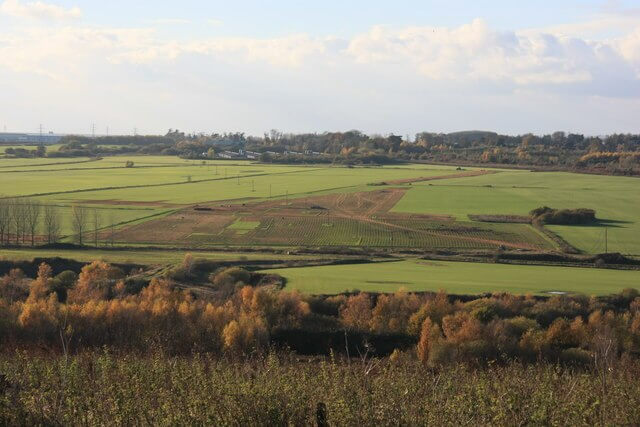
- Farming_the_grass_-_geograph.org.uk_-_613351 (1): Wikipedia Commons
- River_is_dying (1): Wikipedia Commons