

Climate Crisis Could Trigger a Global Financial Crash
Outdated economic models are dramatically underestimating the financial risks of the climate crisis. Experts warn that accelerating global heating could lead to a worldwide economic collapse — one far more severe than the 2008 financial crash. Unlike the banking sector, “we can’t bail out the Earth”.
As the planet moves rapidly towards 2°C of warming, the likelihood of extreme weather events and irreversible climate tipping points is rising. Yet many governments and financial institutions still rely on models that assume the future will mirror the past, ignoring the unprecedented disruption caused by fossil fuel emissions.
Why Current Economic Forecasts Are Failing
Traditional models predict only gradual economic slowdowns linked to rising average temperatures. However, real-world climate impacts are driven by extreme events — heatwaves, floods, droughts and storms — which cause sudden and severe damage to communities, infrastructure and national economies.
By overlooking these shocks, current forecasts produce loss estimates that appear precise but are dangerously optimistic.
The Growing Threat of Climate Tipping Points
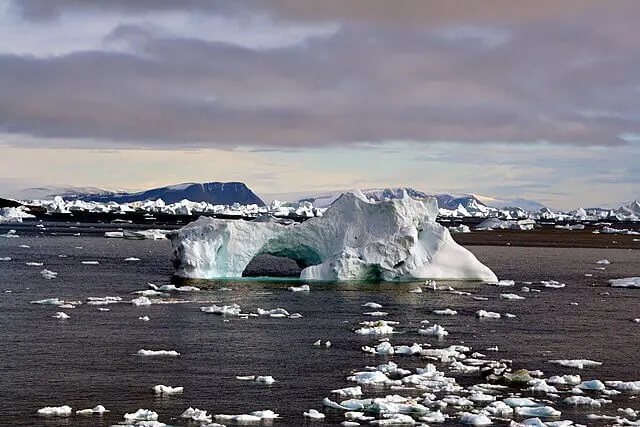
Climate tipping points — such as the collapse of the Greenland ice sheet or major Atlantic ocean currents — would have global and irreversible consequences.
Some systems are already close to critical thresholds, but the timing of their collapse remains uncertain. A series of combined climate disasters could devastate entire economies.
Research from the University of Exeter and the Carbon Tracker Initiative shows that these high-impact risks are not being taken seriously enough by financial decision-makers.
“We’re not dealing with manageable economic adjustments,” said Dr Jesse Abrams, at the University of Exeter. “The climate scientists we surveyed were unambiguous: current economic models can’t capture what matters most – the cascading failures and compounding shocks that define climate risk in a warmer world – and could undermine the very foundations of economic growth.”
“For financial institutions and policymakers, it’s a fundamental misreading of the risks we face,” he said. “We are thinking about something like a 2008 [crash], but one we can’t recover from as well. Once we have ecosystem breakdown or climate breakdown, we can’t bail out the Earth like we did the banks.”
Mark Campanale, CEO of Carbon Tracker, said: “The net result of flawed economic advice is widespread complacency amongst investors and policymakers. There’s a tendency in certain government departments to trivialise the impacts of climate on the economy so as to avoid making difficult choices today. This is a big problem – the consequences of delay are catastrophic.”
Hetal Patel, at Phoenix Group, which manages about £300bn of long-term investments for its customers, said: “Underestimating physical risk doesn’t just distort investment decisions, it underplays the real‑world consequences that will ultimately affect society as a whole.”
The True Cost of Climate Damage Is Hidden
Gross Domestic Product (GDP) is widely used to measure economic health, but it fails to capture the real impacts of climate breakdown, including:
- Loss of life and declining public health
- Social disruption and displacement
- Damage to nature and ecosystems
In some cases, GDP can even rise after disasters due to rebuilding costs — masking long-term harm.
A 50% Global GDP Loss Is Possible
Actuaries warned in 2025 that catastrophic climate shocks could cut global GDP by up to 50% between 2070 and 2090 — far higher than earlier estimates.
This stark projection highlights the urgent need for governments, regulators and investors to factor climate extremes into financial planning.
“Some are saying we’ll have a 10% GDP loss at between 3C and 4C degrees [of global heating], but the physical climate scientists are saying the economy and society will cease to function as we know it. That’s a big mismatch,” Abrams said.
Why Cutting Emissions Is the Safer Economic Choice
The new report, informed by 68 international climate scientists, concludes that:
- Preventing irreversible climate damage is far cheaper than trying to adapt to it
- Financial systems must assess extreme risk scenarios, not just average outcomes
- Moving away from fossil fuels is a fiduciary duty for investors seeking to avoid massive future losses
Waiting for perfect economic models is no longer an option. Acting now reduces both environmental and financial risk.
Rethinking Economics for a Climate-Safe Future
To protect people, nature and the global economy, economic thinking must shift rapidly. That means:
- Prioritising climate resilience
- Accounting for systemic financial risk
- Valuing nature beyond GDP
Laurie Laybourn, at the Strategic Climate Risks Initiative, said: “We are currently living through a paradigm shift in the speed, scale and severity of risks driven by the climate-nature crisis. Yet many regulations and government actions are dangerously out of touch with reality.”
A stable climate is not only an environmental necessity — it is the foundation of long-term economic security.
At Natural World Fund, this research highlights a critical truth: a stable economy depends on a stable climate and thriving natural systems. Just as nature cannot be “bailed out” after collapse, financial recovery becomes far more difficult when ecosystems are pushed beyond their limits. The growing risk of climate tipping points and extreme weather shows why investing in nature, cutting carbon emissions and strengthening ecological resilience is not only an environmental priority but an economic necessity. By supporting science-led climate action, protecting habitats and accelerating the transition away from fossil fuels, we can reduce systemic financial risk while safeguarding the natural world that underpins long-term prosperity.
Image sources
- Iceberg_with_hole_around_Cape_York,_Greenland (1): Wikipedia Commons
- Ladakh,_India_(14687115252) (1): Wikipedia Commons