

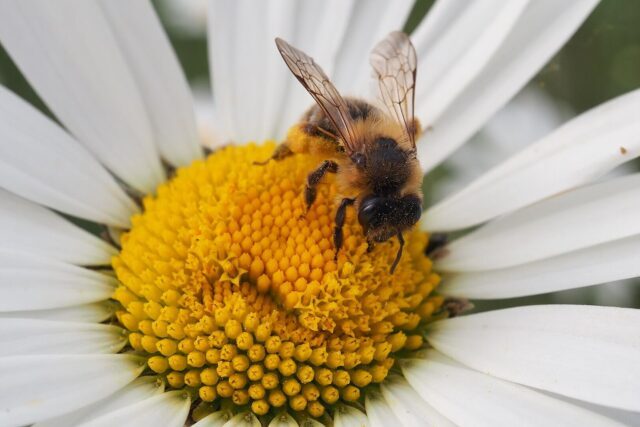
Bee Food Supplements Could Help Honeybees Withstand Climate Stress
Food supplements could help honeybees cope with some of the temperature stresses linked to climate change, early research suggests.
Scientists found that worker bees fed a combination of probiotics and inulin survived prolonged cold exposure better than bees given a standard sugar diet.
However, the supplements provided little protection from extreme heat. In laboratory tests at 40C, all the bees died within days. Bees receiving higher supplement doses survived slightly longer, but the difference was limited.
Climate Change Creates New Risks for Honeybees
Temperature extremes are becoming increasingly common as the burning of fossil fuels drives global warming. The relationship between climate change and unusual cold in some regions is more complex.
Honeybees already face multiple pressures, including food shortages, disease, pesticides and habitat loss. More frequent temperature extremes could add to these challenges.
Dr Najmeh Sahebzadeh, an associate professor at the University of Zabol, Iran, and the lead scientist in the study, said: “As nutritional shortages, pathogens and extreme weather continue to compound one another, the study is relevant not only to pollinator health but also to broader ecosystem stability and the services that food systems depend on.”
The findings suggest better nutrition could give managed honeybees an additional line of defence against some temperature extremes.
Probiotics Helped Bees Survive Cold
The researchers tested different diets to see whether nutritional and microbial supplements could improve the bees’ ability to withstand temperature stress.
Bees receiving probiotics and inulin survived cold exposure for longer than bees fed only sugar. Inulin is a plant-derived prebiotic that can support beneficial microorganisms in the gut.
Peter Graystock, an assistant professor in human and animal health at Imperial College London, who was not involved in the study, said: “It is interesting that this suggests microbes may be important for changes in climate, which isn’t something that has been looked at very much.”
However, the benefits were much less clear under extreme heat.
When bees were exposed to temperatures of 40C, all the bees died within a few days. Higher doses of the supplements appeared to extend survival slightly, but they did not prevent death.
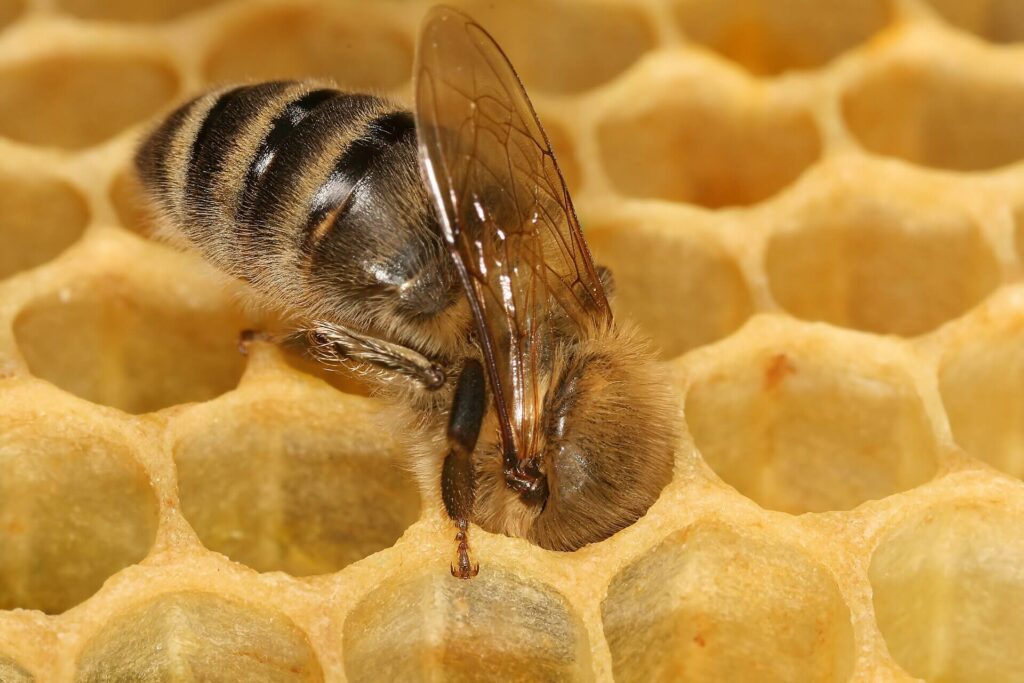
Why Honeybee Colonies May Respond Differently
The researchers and independent experts stressed that the study was conducted on isolated bees kept in cages.
Real honeybee colonies behave differently. A colony can work together to regulate conditions inside the hive, which individual bees cannot do when isolated.
“Colony-level behaviours … wouldn’t necessarily be expressed in a cage study,” said Prof Giles Budge, an independent expert in crop and honeybee health at Newcastle University.
“A good example is that when honeybees fan their wings together, they can move air through the nest and reduce its temperature. That can mean a behaviour intervenes before the thermal stress causes mortality.”
These colony-level behaviours could be particularly important during periods of extreme heat.
Graystock added: “Honeybees will change their behaviour to try to cool down their hive. But there comes a point where there is only so much they can do.”
This means laboratory studies of individual bees cannot fully show how a healthy colony would respond to extreme temperatures.
Honeybees Are Vital to Food Production
Climate change is adding to the pressures facing honeybees as biodiversity continues to decline.
“Honeybees play a vital role in modern agriculture,” said Graystock. “Many crops depend on insect pollination, and managed honeybee colonies can be moved to where and when they are needed to support crop production.”
This makes honeybee health important not only for beekeepers but also for food production.
The study suggests nutritional supplements could have a role in helping colonies through some difficult periods. However, more research is needed to determine whether the benefits seen in laboratory tests also occur in real-world colonies.
Could Supplements Help Bees Through Winter?
Cold weather can be particularly challenging for honeybee colonies.
During winter, bees cannot leave the hive to forage. Instead, they must survive using food stored by the colony.
“Winter is one of the riskiest periods for honeybee colonies because bees can’t leave the hive to forage and must rely on stored resources to survive,” said Graystock. “This study suggests nutritional and microbial supplements might help bees through some of these cold challenging periods, although further research is needed to see whether those benefits occur at the colony level in the real world.”
The findings therefore point to a possible role for supplements during periods when natural food is unavailable.
However, supplements should not be viewed as a solution to the wider environmental problems facing pollinators.
Healthy Habitats Remain Essential
The researchers warned that artificial feeding cannot replace healthy habitats.
“Supplementation deals with the immediate physiological stress, not the underlying causes like shrinking forage, fragmented habitat and pesticide exposure,” said Sahebzadeh. “It really needs to sit alongside broader conservation-minded beekeeping, not replace it.”
This is particularly important as climate change and biodiversity loss put increasing pressure on pollinators.
Honeybees need access to diverse sources of flowers throughout the year. They also need suitable habitats that are free from excessive pesticide exposure and other environmental pressures.
Graystock said improvements in floral diversity and countryside management could reduce the need for artificial feeding.
“I’d like to think nutritional supplements would not become the norm, because it would suggest that we don’t have healthy landscapes where bees can have healthy food,” he said.
Protecting Bees Starts With Protecting Nature
The research suggests that nutritional supplements could provide honeybees with some additional protection from cold stress. Yet they offer little defence against extreme heat and cannot address the environmental causes of declining pollinator health.
Protecting and restoring natural habitats remains essential.
A countryside rich in wildflowers, diverse habitats and healthy ecosystems can provide bees with the food and shelter they need to survive. For long-term pollinator conservation, improving these landscapes may be more important than relying on supplements alone.
Creating Healthier Habitats for Pollinators
At Natural World Fund, we support practical action to restore damaged habitats and create healthier ecosystems where wildlife can recover. Protecting wildflower-rich habitats, improving floral diversity and reducing pressures such as pesticide exposure can help create better conditions for honeybees and other pollinators. Healthy landscapes provide the food and shelter pollinators need, helping support biodiversity and the wider ecosystems that depend on them.
Image sources
- Apis_mellifera_carnica_worker_honeycomb_2 by Richard Bartz. Cropped and resized from original: Wikipedia Commons
- Unidentified_bee,_approx_2025_early_summer_UK_Alconbury_Weald_(img_2) by Isaac The Boy. Cropped and resized from original: Wikipedia Commons