

New Marine Species Discovery: Scientists Find 31 New Ocean Species in Just Two Weeks
A groundbreaking marine biology expedition in international waters off the coast of Brazil has uncovered 31 new marine species in just two weeks, demonstrating how much of the world’s oceans remain unexplored. Using cutting-edge technology and international scientific collaboration, researchers made one of the fastest series of marine species discoveries ever recorded.
The findings highlight the extraordinary biodiversity hidden within the ocean’s midwater zone and reinforce the importance of continued marine research to better understand and protect life beneath the waves.
Scientists Explore One of Earth’s Least-Known Habitats
The expedition took place aboard the research vessel Falkor (too), operated by the Schmidt Ocean Institute, with support from the University of Western Australia and several international research institutions.
A team of two dozen marine experts from the United States, Australia, Brazil and Japan departed from Salvador, Bahia, to investigate the ocean’s midwater zone—the vast region between the seafloor and the sunlit surface waters.
Although this habitat accounts for around 90% of Earth’s living space, it remains one of the least explored ecosystems on the planet.
31 New Marine Species Identified
During the two-week expedition, scientists identified an astonishing variety of previously unknown marine life, including:
- An amphipod, a crustacean related to crabs and lobsters.
- A fast-moving gossamer worm.
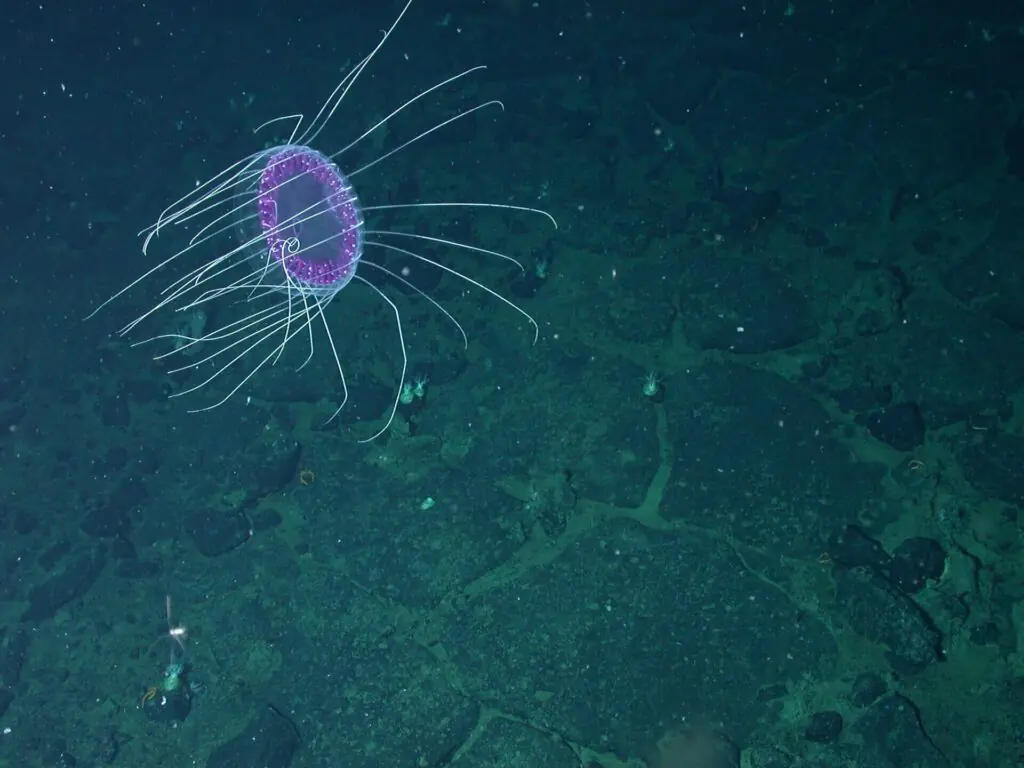
- Nine new jellyfish species.
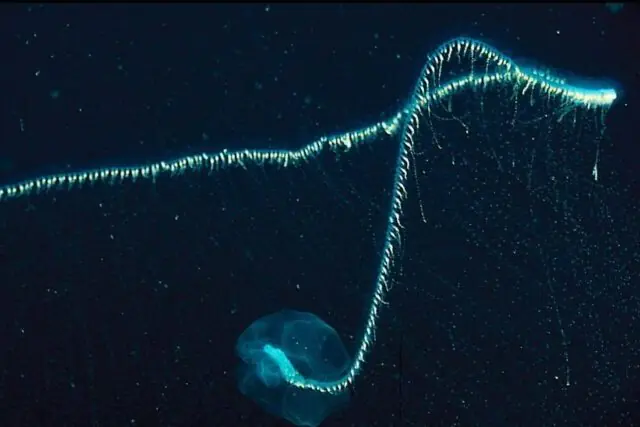
- Seven siphonophores, colonial organisms related to jellyfish and corals.
- Seven comb jellies (ctenophores), known for the shimmering cilia they use for swimming.
- Four larvaceans, tadpole-like animals that build mucus houses and are more closely related to humans than most invertebrates.
- Two giant rhizarians, single-celled organisms large enough to be seen without a microscope.
The pace of discovery surprised even the scientists leading the expedition.
“It was pretty exciting,” said the expedition’s chief scientist, Dr Karen Osborn of the Smithsonian National Museum of Natural History. “The midwater is chock full of incredible animals that we don’t know much about. And this was an area that hadn’t been explored before so there were more opportunities to find new species. This must be close to a record for discoveries of new animals in a short space of time.”
Revolutionary Technology Accelerates Ocean Discovery
One reason for the expedition’s success was the use of advanced scientific equipment, including a new onboard spinning wheel confocal microscope nicknamed the Squid.
For the first time aboard a research vessel, scientists could observe the living three-dimensional cellular structures of microscopic marine organisms while still at sea.
“That opens up a whole new world of exploring. We could see cells interacting with each other, exchanging material and building skeletons. And we could do that live on the ship, when usually it takes a couple of weeks of staining and mounting to see anything,” Osborn said.
Researchers also combined prototype imaging systems, rapid genetic analysis and expert taxonomic identification, dramatically reducing the time needed to confirm new species.
Why Midwater Marine Life Matters
Beyond discovering new species, the expedition has improved scientists’ understanding of how marine life is distributed throughout the world’s oceans.
“I think about it as a layer cake. It is common to find the same thing at similar depths in distance locations such as Japan and California,” Osborn said.
Many midwater species also undertake a massive nightly migration towards the ocean surface to feed before returning to deeper waters by day. This daily movement plays an important role in transporting carbon through the oceans, making these ecosystems significant contributors to Earth’s climate system.
The Importance of Continued Ocean Research
The discoveries come at a time when marine science faces growing challenges. The expedition coincided with plans announced by the Trump administration to dismantle the Ocean Observatories Initiative, one of the world’s largest deep-sea monitoring programmes, which has been collecting vital data on ocean health, biodiversity and climate.
For Osborn, the expedition demonstrates why investment in scientific collaboration and ocean exploration remains essential.
“I think we should be doing this so much more. We need to bring together teams with a common goal to try out new ways of looking at things,” she said.
She added: “What humanity has found so far is just the tip of the iceberg. There is an immense amount of life out there solving life’s challenges in unusual ways. Imagine what we can learn from them as we understand them better.”
Protecting Marine Habitats for Future Generations
At Natural World Fund, we recognise that protecting our oceans begins with understanding the extraordinary diversity of life they contain. Scientific discoveries like these reveal how much of the marine environment remains unexplored and highlight the importance of investing in ocean research, international collaboration and marine conservation. By supporting efforts to study and protect marine ecosystems, we can help safeguard ocean biodiversity and ensure healthy seas for wildlife and future generations.
If you care about restoring native wildlife, support the work of Natural World Fund today.
Image sources
- Solmissus by NOAA Office of Ocean Exploration. Cropped and resized from original: Wikipedia Commons
- Praya_dubia_(Giant_siphonophore) by Catriona Munro, Stefan Siebert, Felipe Zapata, Mark Howison, Alejandro Damian-Serrano, Samuel H. Church, Freya E.Goetz, Philip R. Pugh, Steven H.D.Haddock, Casey W.Dunn. Cropped and resized from original: Wikipedia Commons