

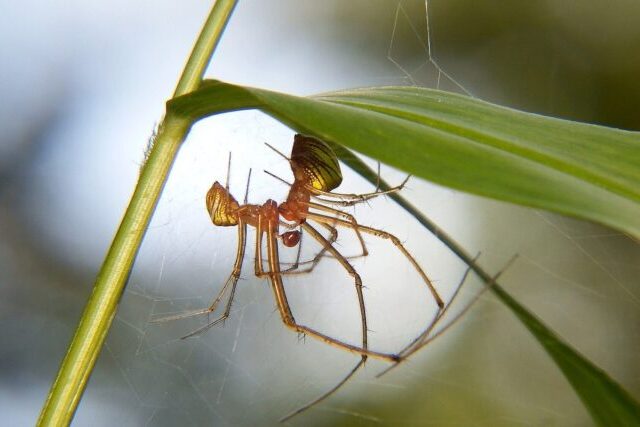
Scientists Discover Extraordinary Spider in Australia’s Rainforest
Researchers have discovered a remarkable new spider species in the remote rainforests of northern Australia that uses a powerful catapult-like silk trap to capture a single species of ant. The unusual hunting strategy is unlike anything previously recorded and demonstrates the incredible diversity of adaptations found in nature.
Scientists believe the tiny nocturnal spider evolved this specialised technique to safely hunt aggressive ants, prey that most spiders avoid because of their powerful defences.
A Spider With a Powerful Catapult Trap
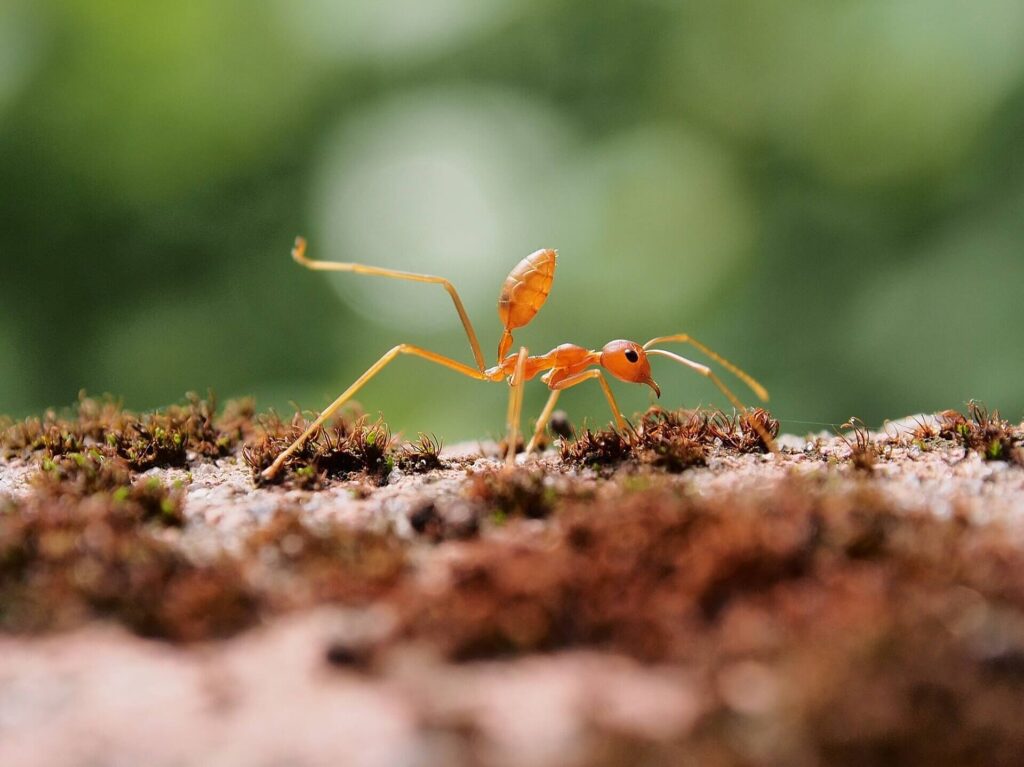
Green tree ant is well known for its aggressive behaviour, strong chemical defences and ability to rapidly recruit other ants to overwhelm predators. To overcome this challenge, the newly discovered spider has developed an extraordinary hunting mechanism.
The snare’s “exceptionally high power” flings the ant into a bigger web at “15 times the most extreme g-forces experienced by jet pilots”, said lead researcher Prof Ajay Narendra.
Although the species has not yet been formally named, researchers have nicknamed it “ballista”, after the ancient weapon used to launch heavy projectiles during warfare.
Researcher Dr Jonas Wolff explained:
“The snare mechanism seems to have evolved as a highly specialised way of allowing the spider to ‘pick off’ potentially hazardous prey one at a time and transport them a safe distance away from ant trails and nests.”
Narendra added that ants present unique challenges because they possess chemical defences, some species can sting, and they can quickly summon large numbers of nestmates when threatened.
How the Spider Builds Its Ingenious Hunting Trap
The discovery was made by researchers from Macquarie University, who spent 10 nights in the tropical rainforests of northern Queensland observing the spider’s behaviour using infrared and high-speed cameras.
Their findings, published in the journal Current Biology, reveal that the spider lives on trees occupied by the territorial green tree ant. During daylight hours it remains hidden beneath leaves inside protective webs.
Once darkness falls, the spider descends around 50 centimetres to a nearby leaf, branch or the forest floor and anchors itself with a silk line.
It then spends several hours constructing an elaborate cone-shaped scaffold made from dozens of tightly stretched silk threads. Once the supporting framework is complete, the spider wraps it in a much finer silk before retreating above the trap to wait.
A Hunting Technique Unlike Any Other
Researchers observed that curious green tree ants quickly approached the silk structure and bit into it. This action triggered the trap, instantly launching the ant into the spider’s waiting web with extraordinary force.
The team found that the spider exclusively captured green tree ants, even when other nocturnal ant species were deliberately placed near the trap. This suggests the spider may coat its silk with pheromones that specifically attract and provoke green tree ants.
According to Narendra, this level of prey specialisation has never previously been documented.
“This seems to be the only case where a spider’s web is designed to catch a single prey species, and where the mechanism is triggered by the prey rather than by the predator.”
A Chance Discovery Leads to New Scientific Insight
The spider belongs to the genus Propostira and was first observed by biomedical researcher, spider specialist and wildlife photographer Greg Anderson.
Its discovery highlights how much remains unknown about rainforest ecosystems and the remarkable evolutionary adaptations that continue to be uncovered in some of the world’s most biodiverse habitats.
Why Rainforest Conservation Matters
At Natural World Fund, we recognise that protecting rainforests safeguards countless species that have yet to be fully understood or even discovered. Every new scientific finding demonstrates the importance of conserving these unique ecosystems, where wildlife continues to evolve extraordinary survival strategies. By supporting habitat protection, biodiversity research and environmental education, we can help ensure that remarkable species like the newly discovered ballista spider continue to thrive for generations to come.
Supporting Climate and Nature Recovery
At Natural World Fund, we recognise that protecting rainforests safeguards countless species that have yet to be fully understood or even discovered. Every new scientific finding demonstrates the importance of conserving these unique ecosystems, where wildlife continues to evolve extraordinary survival strategies. By supporting habitat protection, biodiversity research and environmental education, we can help ensure that remarkable species like the newly discovered ballista spider continue to thrive for generations to come.
If you care about restoring native wildlife, support the work of Natural World Fund today.
Image sources
- WeaverAntKeralaPrd by Pradeep717. Cropped and resized from original: Wikipedia Commons
- Therididae_mating_(35050084393) by Rison Thumboor. Cropped an resized from original: Wikipedia Commons