

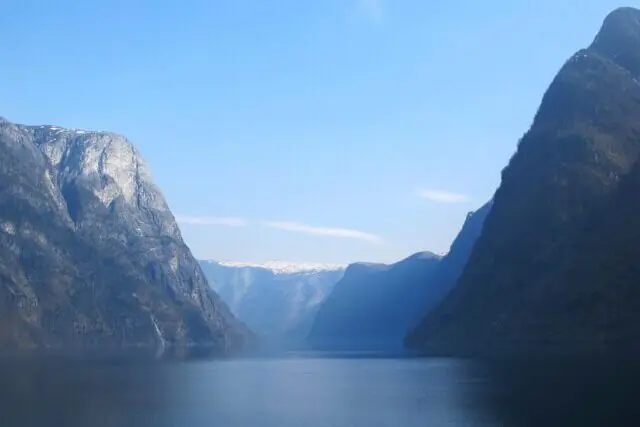
Norwegian Fish Farms Linked to Major Nutrient Pollution in Fjords
A new report has found that Norwegian fish farms are releasing vast amounts of nutrient pollution into fjords and coastal waters, with levels equivalent to the untreated sewage of tens of millions of people each year.
Norway is the world’s largest producer of farmed salmon, and nutrients from fish feed are discharged directly into surrounding marine ecosystems. Analysis by the Sunstone Institute revealed that Norwegian aquaculture released around 75,000 tonnes of nitrogen, 13,000 tonnes of phosphorus and 360,000 tonnes of organic carbon during 2025.
According to the report, these pollution levels are comparable to the untreated sewage generated by 17.2 million people for nitrogen, 20 million people for phosphorus and 30 million people for organic carbon. Researchers warned that such nutrient loads could contribute to damaging algal blooms and worsening oxygen depletion in Norwegian fjords.
Fish Farm Waste Entering Coastal Waters
“Norway is a small country of just 5.5 million people, and the output of aquaculture pollution in terms of these three nutrients is three to five times larger than the population,” said Alexandra Pires Duro, a data scientist at Sunstone and author of the report. “The faeces, the uneaten feed, the urine – everything goes into the water.”
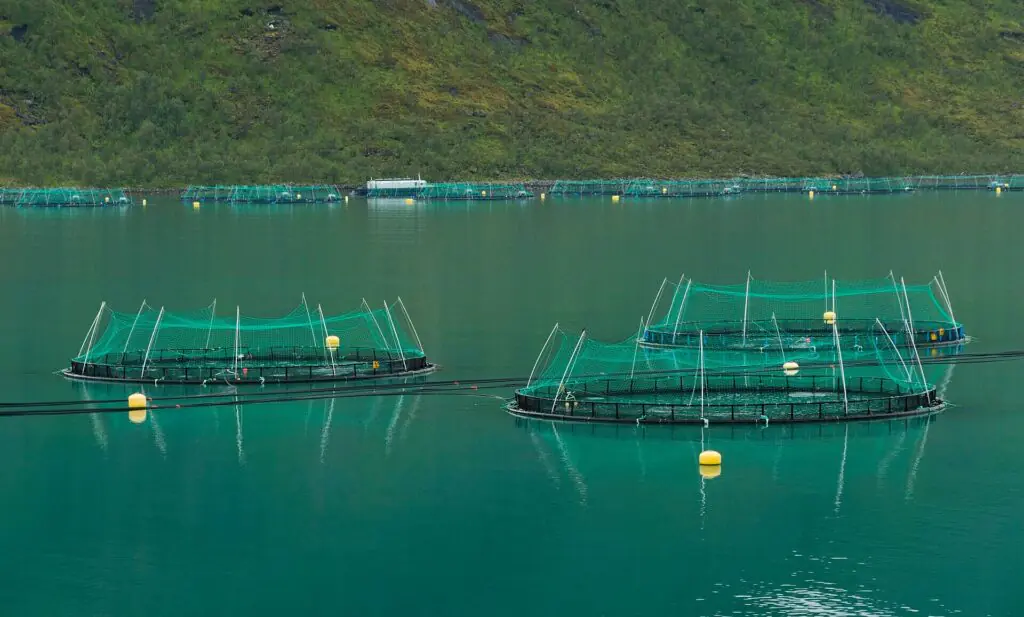
Farmed fish are raised in open-net cages and fed nutrient-rich pellets as they grow for human consumption. Researchers analysed national fisheries and veterinary data to calculate how much of these nutrient inputs remained in surrounding waters.
The findings showed that feed consumption increased by 14.6% over a six-year period as the salmon farming industry expanded. This growth led to nutrient pollution in 2025 reaching levels comparable to the untreated sewage output of a country roughly the size of Australia.
Summer Months Increase Risk of Algal Blooms
Researchers also found that seasonal conditions intensified the environmental pressure. Nutrient loads were highest during summer months, when marine ecosystems are less able to absorb excess nutrients.
Fish farm waste can fertilise phytoplankton growth, increasing the likelihood of harmful algal blooms. These blooms consume oxygen as they decompose, creating low-oxygen conditions that threaten marine life.
Fjords are especially vulnerable because they are semi-enclosed bodies of water where nutrients can accumulate more easily. Scientists warn that global heating is already contributing to declining oxygen levels in these sensitive marine environments.
Oxygen Levels Falling in Norwegian Fjords
In Sognefjord, Norway’s longest fjord, researchers previously found that increased nutrient inflows — including pollution from fish farms — were responsible for roughly two-thirds of observed oxygen depletion. Rising water temperatures linked to climate change accounted for the remaining third.
Declining oxygen levels have also been recorded in Hardangerfjord, Norway’s second-longest fjord, according to the Vestland county governor.
In March, authorities rejected nine applications for new fish farms in Hardangerfjord due to concerns about additional nutrient emissions.
Tom Pedersen, an environmental adviser for the region and expert reviewer on the Sunstone report, said the figures were unsurprising and possibly underestimated.
“The major concern we experienced in the last few years is that all these algae and plankton and whatever die and they sink down to the bottom of the floor and they decompose – and that process uses oxygen,” he said. “The end result is that the oxygen level in the fjord is going down, and has gone down.”
Norwegian Seafood Industry Responds
Norway’s fisheries ministry referred requests for comment to the fisheries directorate, which declined to comment on the findings.
Krister Hoaas, head of public affairs at the Norwegian Seafood Federation, said the scale of emissions reflected the amount of food produced by the country’s aquaculture sector and its importance for national food security.
He added that the seafood industry was continuing efforts to reduce its environmental footprint.
“It is important to distinguish between current operations and questions about future growth,” he said. “The Institute of Marine Research is clear that a significant increase in production in certain fjord systems could increase the risk of eutrophication locally, but that current production is well within nature’s carrying capacity. This provides a basis for strict, site-specific management, but does not document that current operations are destroying the fjords.”
Growing Concerns Over Aquaculture Pollution
Environmental experts say the findings highlight growing concerns over the long-term impacts of intensive salmon farming on marine ecosystems. Excess nutrients, oxygen depletion and warming waters could place increasing pressure on fjords that are already vulnerable to climate change.
As the global demand for farmed salmon continues to rise, scientists and regulators face mounting pressure to balance seafood production with the protection of coastal ecosystems and marine biodiversity.
Support Marine Conservation and Sustainable Aquaculture
At Natural World Fund, we support action to protect marine ecosystems and reduce the environmental pressures caused by intensive industrial activity in our oceans and coastal waters. Nutrient pollution from sectors such as aquaculture can threaten fragile marine habitats, contribute to oxygen depletion and increase the risk of harmful algal blooms in vulnerable ecosystems like fjords. Supporting sustainable food production, stronger environmental protections and science-led conservation is essential for safeguarding marine biodiversity and building a healthier, more resilient future for both people and nature.
If you care about restoring native wildlife, support the work of Natural World Fund today.
Image sources
- Fish_farming_in_Torskefjorden,_Senja,_Troms,_Norway,_2014_August by Simo Räsänen. Cropped and resized from original: Wikipedia Commons
- Sognefjord-Norway-April-2011 by Acediscovery. Cropped and resized from original: Wikipedia Commons