

European Aviation Emissions Rise Above Pre-Pandemic Levels as Low-Cost Flight Growth Expands Carbon Footprint
Carbon emissions from aviation across Europe have now exceeded levels seen before the Covid-19 pandemic, with new analysis showing that rapidly growing low-cost airlines are playing a major role in driving emissions higher.
Despite industry commitments to reduce environmental impacts and investments in more fuel-efficient aircraft, overall aviation emissions continue to increase as passenger demand and flight volumes rise.
Ryanair Carbon Emissions Increase by 50% Since 2019
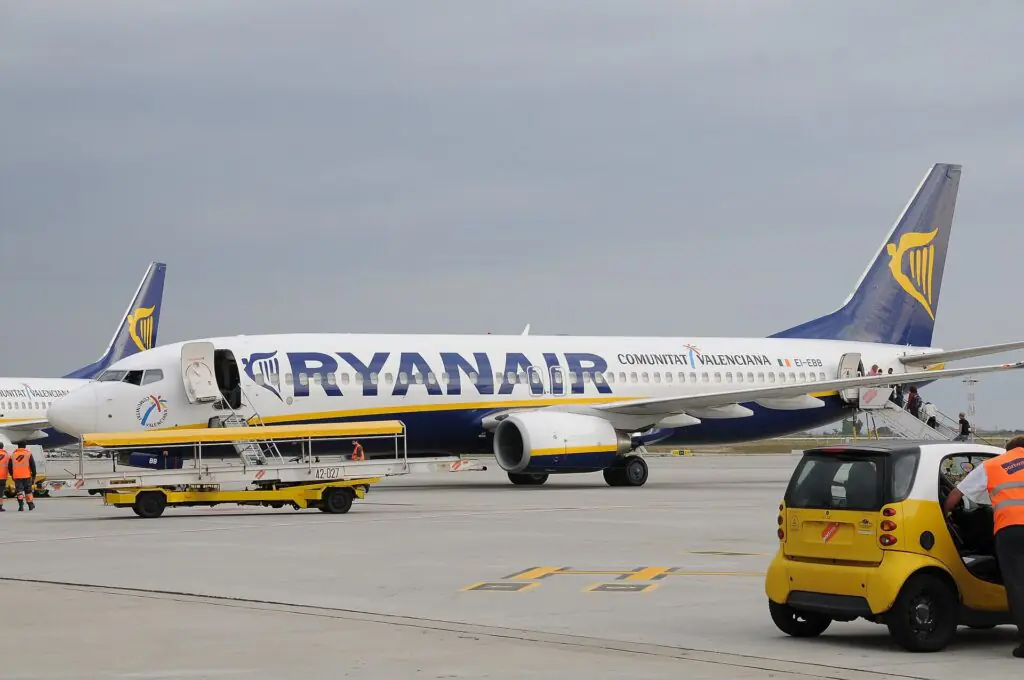
Research from transport think tank Transport & Environment (T&E) found that Ryanair’s carbon footprint has risen sharply since before the pandemic.
According to the analysis, Ryanair produced approximately 16.6 megatonnes (Mt) of CO₂ in 2025, representing an increase of around 50% compared with 2019 levels. The airline carried more than 200 million passengers during 2025, up significantly from around 140 million passengers in 2019.
To put this figure into perspective, Ryanair’s annual emissions alone are roughly equivalent to the total emissions produced by a smaller European nation such as Croatia.
European Aviation Sector Emissions Continue to Grow
Across the wider aviation sector, departing flights from Europe generated approximately 195Mt of CO₂ during 2025.
This represents a 2% increase compared with pre-pandemic levels, highlighting the continuing challenge of reducing emissions within one of the world’s fastest-growing transport sectors.
Although airlines have introduced more efficient aircraft and promoted sustainability strategies, increasing demand for air travel appears to be outweighing these gains.
Emissions Trading System Faces Criticism
Both the EU and UK have attempted to reduce aviation’s environmental impact through the Emissions Trading System (ETS), designed to place a cost on carbon emissions.
However, T&E argues that major gaps remain because the current system only applies to flights operating entirely within Europe.
As a result, long-haul routes — often among the most fuel-intensive flights — largely fall outside the scheme. This means airlines focused primarily on European routes face higher carbon costs.
Current estimates suggest Ryanair pays approximately €50 (£36) per tonne of carbon under the system, compared with around €20 paid by Lufthansa.
One example highlighted in the report is the heavily travelled London to New York route, which generated nearly 1.4Mt of CO₂ during 2025 but remains outside the ETS framework.
Calls to Expand Carbon Pricing Across Aviation
T&E is urging policymakers to extend the carbon market to include all departing flights.
The organisation argues that expanding the system could significantly increase public funding for climate initiatives while helping accelerate aviation decarbonisation efforts.
According to the analysis, wider coverage could potentially increase revenues for EU member states from €4.1 billion to four times that amount by 2030.
The additional funding could support:
- Production of sustainable aviation fuel (SAF)
- Technologies and operational measures to reduce contrails
- Wider investment in low-carbon aviation innovation
Contrails — cloud-like trails formed by aircraft under certain atmospheric conditions — have increasingly been linked to additional warming effects that may worsen climate change.
Fuel Prices May Have Greater Impact Than Climate Measures
The aviation sector has argued that environmental regulations and carbon pricing increase costs for airlines and passengers.
However, T&E’s findings suggest rising fuel costs have a much larger financial impact than climate policies.
The report found that jet fuel prices, which have approximately doubled since before tensions linked to the Iran conflict, can add around €90 per passenger on long-haul routes.
By comparison, complying with sustainable aviation fuel requirements adds only around €3 per passenger.
“Ticket prices are rising because of Europe’s reliance on fossil fuels, not because of the climate measures intended to steer the sector away from them,” Giacomo Miele, author of the T&E analysis, said.
“Aviation emissions hitting a new high is a clear signal that the industry has no intention of cleaning up its act. It is time to stop subsidising fossil fuel dependency and start investing in the future of a sustainable aviation sector.”
Ryanair Responds to Emissions Findings
A spokesperson for Ryanair defended the airline’s environmental performance, arguing that its emissions growth reflects increasing passenger numbers and market expansion.
“All of this growth takes place at lower fares but on new fuel-efficient aircraft, so our GHG per passenger are falling. Ryanair’s growth is also displacing air travel on less-efficient legacy airlines whose GHG per passenger is much higher than Ryanair’s.”
The airline also criticised the emissions calculations used within the report.
Ryanair said the ETS emissions figures were “completely discredited” since they excluded flights operated by airlines who were “indefensibly exempted from their fair share of enviro taxes by Europe’s discriminatory ETS system, which taxes only intra-EU flights while it exempts all flights including the most polluting long-haul flights”.
According to Ryanair, when all flight operations are included in total calculations, it ranks behind Lufthansa, Air France/KLM and British Airways owner IAG for overall emissions, while reporting one of the lowest passenger emissions rates among major European airlines at approximately 64g of CO₂ per passenger kilometre.
Support Environmental Conservation Efforts
At Natural World Fund, we support action to tackle climate change and reduce the environmental impact of activities that place increasing pressure on our planet. Rising emissions from sectors such as aviation contribute to global warming, affecting ecosystems, wildlife and communities around the world. Supporting cleaner technologies, sustainable solutions and stronger environmental policies is essential for protecting biodiversity and creating a healthier, more resilient future for both people and nature.
If you care about restoring native wildlife, support the work of Natural World Fund today.
Image sources
- Ryanair_Aeroplane by Joseolgon. Resized from original: Wikipedia Commons
- An_aeroplane_above_Mehrauli,_Delhi by Slyronit.. Resized from original: Wikipedia Commons