

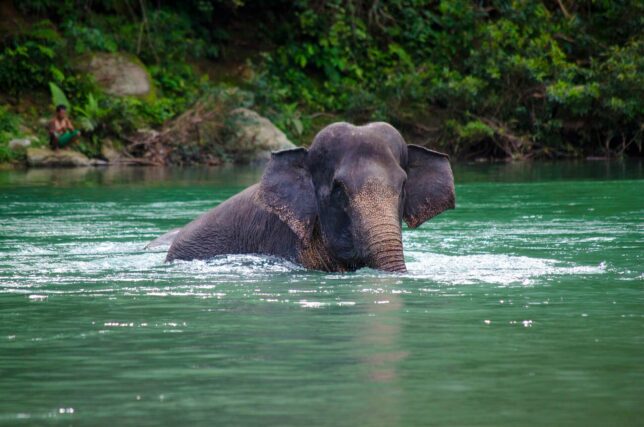
Sumatran Elephant Population in Crisis as Habitat Loss and Human-Wildlife Conflict Intensify
The discovery of a dead Sumatran elephant mother and calf in Indonesia has renewed concerns about the future of one of the world’s most endangered elephant subspecies. Conservationists warn that continued deforestation, habitat fragmentation and increasing human-elephant conflict are pushing the Sumatran elephant closer to extinction in parts of its native range.
The deaths, alongside ongoing habitat destruction across Sumatra, highlight the urgent need for stronger conservation measures to protect these vital ecosystem engineers and preserve the forests they help sustain.
Mother and Calf Found Dead in Bengkulu
The two elephants were found dead in the Indonesian province of Bengkulu in an area classified as “production forest” in southern Sumatra. The mother and her calf were discovered lying side by side, with their tusks still intact.
Authorities are continuing to investigate the cause of death, along with that of a tiger found nearby at the end of April. While poaching is considered unlikely in this case, conservation groups stress that elephant deaths in the region have become an increasing concern.
Wildlife experts estimate that at least seven wild elephants have died in Bengkulu since 2018, raising fears about the long-term survival of the local population.
Sumatran Elephant Numbers Continue to Decline
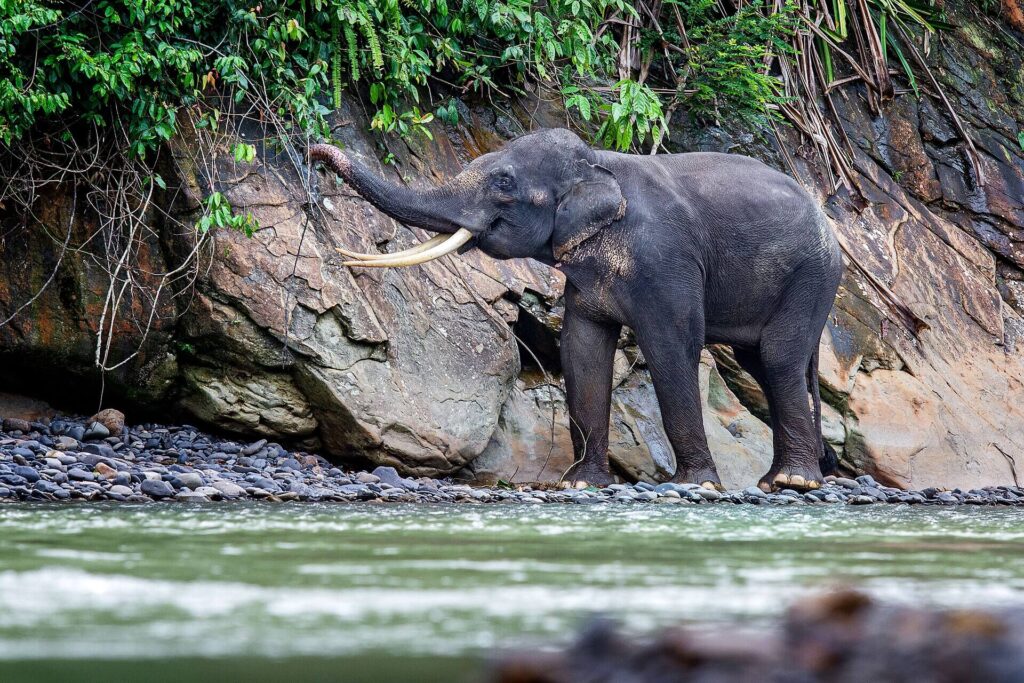
The Sumatran elephant (Elephas maximus sumatranus) once existed in far greater numbers across the Seblat district of Bengkulu. However, decades of poaching, deforestation and agricultural expansion have severely reduced available habitat.
Large areas of forest have been cleared to make way for farming and palm oil plantations, leading the International Union for Conservation of Nature (IUCN) to classify the subspecies as critically endangered in 2011.
According to conservationists working in Bengkulu, the population has declined dramatically over the past decade.
“In 2010, its population was still at an average of 100-150 individuals,” says Ali Akbar, director of the environmental organisation Kanopi Hijau Indonesia. Today, the total population in Seblat Landscape is “not more than 50, making it very critical”.
Habitat Loss Driving Human-Elephant Conflict
As forest habitats continue to shrink, elephants are increasingly forced into areas occupied by people. This has led to a rise in human-elephant conflict, with elephants entering agricultural land and nearby settlements in search of food and space.
Prof Burhanuddin Masyud, of the Bandung Technology Institute, estimates that at at least 1,585 hectares (4,000 acres) of Sumatran elephants’ habitat were lost between January 2024 and October 2025.
The impact extends beyond the loss of forest cover alone.
“What is happening in Bengkulu is not just the loss of forests, but a direct attack on the ecology, reproduction and balance of interaction between elephants and the environment. The impact will be multilayered and long-term,” he wrote in a recent post.
In response to ongoing environmental concerns, local media reports indicate that permits held by two logging companies have since been revoked.
Thermal Imaging Drones Help Monitor Elephant Populations
Following the discovery of the elephant carcasses, the Bengkulu Natural Resources Conservation Agency (BKSDA), which operates under Indonesia’s forestry ministry, began monitoring the Seblat landscape using thermal-imaging drones.
The technology allows conservation teams to locate elephants more efficiently, particularly during the early morning when cooler temperatures make the animals easier to detect.
According to Agung Nugroho, head of the BKSDA, the monitoring programme aims to assess both elephant numbers and habitat conditions.
The information collected will help determine future conservation actions, including “short-term habitat protection through encroachment control and long-term through improved governance”.
Survey Reveals Presence of Calves
The drone surveys focused on areas where recent elephant activity had been detected through dung trails and footprints estimated to be between one and three days old.
One key objective was to determine whether breeding is continuing within the population.
Agung explains that calf numbers provide an important indicator of population health.
“A large number of individuals in a group ensures the long-term genetic sustainability of the population. A small number of individuals in a group and the absence of calves are alarming signs of an unhealthy population, necessitating further strategies such as ensuring corridors between groups for connectivity or translocating elephants from other groups,” Agung says, adding that the agency does not identify where the elephants were seen to protect them from poachers.
The surveys identified a group of 17 elephants, including four calves, offering a small but encouraging sign that reproduction is still occurring in the region.
Monitoring Alone Will Not Save Sumatran Elephants
Conservation experts welcome the use of drone technology but caution that monitoring is only part of the solution.
Wahdi Azmi, from the Indonesia Elephant Conservation Forum and a member of the Asian Elephant Specialist Group-IUCN, says thermal drones provide valuable information about elephant distribution, movement patterns and potential conflict areas.
“However, monitoring alone is certainly not enough if the root of the problem is not addressed,” he says.
Many conservationists argue that meaningful recovery will require large-scale habitat restoration and stronger legal protection for remaining elephant landscapes.
Calls Grow for a Seblat Wildlife Sanctuary
Environmental organisations are increasingly calling for Seblat to receive enhanced protection.
Egi Ade Saputra, director of the conservation organisation Genesis Bengkulu, believes habitat restoration must become a priority.
“It is time to restore the ecosystem of Seblat by revoking logging and palm oil licences and establishing the landscape of Seblat as a wildlife sanctuary,” he says.
The proposal is one of several conservation measures currently under consideration by local authorities.
Earlier this month, forestry minister Raja Juli Antoni reaffirmed Indonesia’s commitment to elephant conservation during a meeting with experts.
“We are serious about saving the Sumatran elephant population, and it’s not easy.”
Among the measures discussed were the development of early warning systems for communities living near elephant habitats and the mapping of wildlife corridors to reconnect fragmented landscapes.
Why Sumatran Elephants Matter to Forest Ecosystems
Conservationists emphasise that protecting elephants is about much more than saving a single species.
Elephants are often described as ecosystem engineers because they shape and maintain forest environments through their movements and feeding behaviour. They create pathways through dense vegetation, disperse seeds across large areas and help maintain habitat diversity for countless other species.
According to Harry Siswoyo, a wildlife conservation campaigner at Lingkar Inisiatif Indonesia, gaining local community support will be critical for long-term success.
“We need to campaign more and more to local communities to change their perspective about the importance of the elephant in the ecosystem,” he says.
Wahdi Azmi agrees that elephant conservation carries broader environmental significance.
“Elephant conservation is not just about saving animals, but also about maintaining the sustainability of ecological systems that support the future of humanity,” Wahdi Azmi says.
Building a Future Where People and Elephants Can Coexist
Experts say future conservation efforts must move beyond simply responding to conflict when it occurs.
Instead, governments, conservation organisations and local communities will need to work together to create landscapes that support both wildlife and human livelihoods.
As Wahdi Azmi explains, “This requires a combination of science, policy, landscape management, technology, cross-sector collaboration and long-term community engagement.”
Without decisive action to halt habitat loss, restore wildlife corridors and improve coexistence between people and elephants, the future of the Sumatran elephant in Bengkulu and beyond remains uncertain.
Support Environmental Conservation Efforts
At Natural World Fund, we support efforts to protect endangered species and restore the habitats they depend upon. The challenges facing Sumatran elephants demonstrate how habitat loss, deforestation and human-wildlife conflict can threaten even the most iconic species. Supporting habitat restoration, wildlife corridors and community-led conservation initiatives can help secure a future where elephants and people coexist while safeguarding the health of vital forest ecosystems for generations to come.
If you care about restoring native wildlife, support the work of Natural World Fund today.
Image sources
- Sofyan_Efendi_Dipinggiran_Sungai_IMG_3249 by Sofyanephoto. Resized from original: Wikipedia Commons
- Elephas_Maximus_sumatranus by kusuma wijaya. Resized from original: Wikipedia Commons