
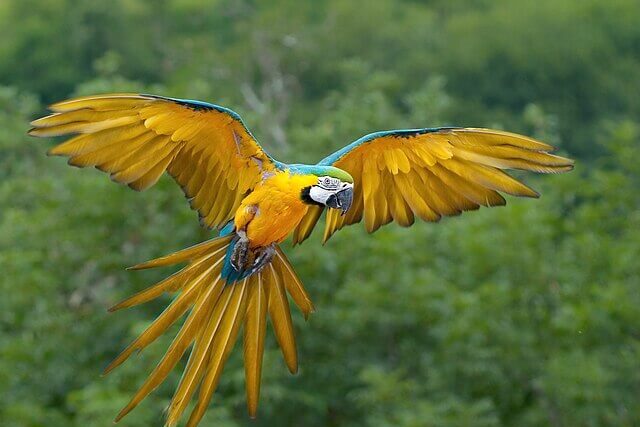
Blue-and-Yellow Macaws Return to Rio de Janeiro after 200 years
Images of the iconic blue-and-yellow macaw are everywhere in Rio de Janeiro—from murals to souvenirs. Yet sightings of the real bird were once so rare that many questioned whether it had ever truly lived there.
Historical records suggest otherwise. In the 16th century, French explorer Jean de Léry first described thriving populations near Indigenous communities. Later, in 1818, Austrian naturalist Johann Natterer documented the species in the region. After that, the trail went silent.
The Impact of Deforestation on Rio’s Wildlife
Deforestation across the Atlantic Forest devastated local biodiversity. Species such as tapirs, jaguars, peccaries—and the blue-and-yellow macaw—disappeared as forests were cleared for coffee and charcoal production.
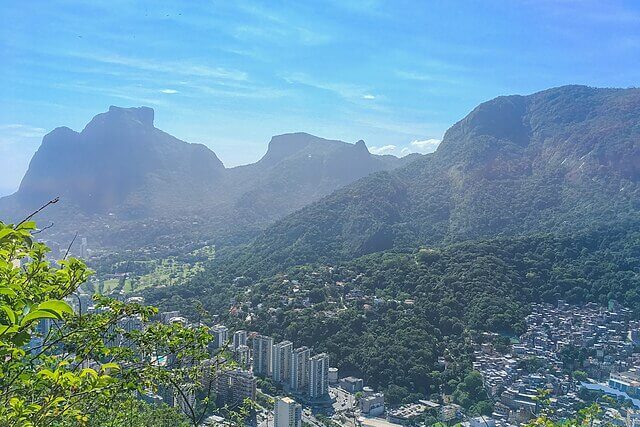
Even within Tijuca National Park, now one of the world’s largest urban forests, much of the original ecosystem was lost. Although Emperor Dom Pedro II initiated a pioneering reforestation effort in the 1860s, many animal species never returned.
“They probably went extinct [in Rio] due to the wildlife trade and deforestation during the European colonisation here,” says Marcelo Rheingantz, executive director of Refauna.
Rewilding Tijuca: Bringing Wildlife Back
Today, conservationists are reversing this loss through innovative rewilding efforts. Organisations like Refauna are reintroducing native species to restore ecological balance.
The process began in 2010 with the return of the red-rumped agouti, a key seed disperser. Since then, species such as the brown howler monkey and yellow-footed tortoise have also been reintroduced—animals absent from the forest for centuries.
These efforts are transforming Tijuca. Once-silent forests now echo with howler monkey calls, and native species are reclaiming their ecological roles.
“They are so magnificent. It’s no surprise that all the visitors are constantly asking how they can see them,” says Viviane Lasmar, director of Tijuca national park. “For me, as the head of the park, it’s special. But even more so as a carioca [someone from Rio]. It’s a dream come true.”
Why Macaws Matter to Forest Restoration
The return of the blue-and-yellow macaw is more than symbolic—it’s ecological. These intelligent parrots play a crucial role in seed dispersal, helping regenerate forests.
Many plant species in the Atlantic Forest depend on animals to spread their seeds. Without them, forests suffer from “empty forest syndrome,” where fruits fall and rot without being dispersed.
Macaws, with their powerful beaks and long flight ranges, can carry seeds across vast distances—something smaller animals cannot achieve. Their reintroduction could significantly accelerate forest recovery.
“They can also help regenerate other forests by taking seeds from Tijuca outside the park,” says Luisa Genes, Refauna’s scientific director.
Reintroducing Macaws to the Wild
So far, a small group of macaws—Fernanda, Selton, Fatima, and Sueli—have been reintroduced into Tijuca. Rescued from captivity, they have undergone extensive rehabilitation, including:
- Flight training to rebuild muscle strength
- Diet adaptation using native fruits
- Behavioural conditioning to reduce human interaction
More birds are expected to join them, with long-term plans to establish a population of around 50 macaws.
“The release scheduled for September is a significant milestone in the process, though not necessarily the final one. All individuals will continue to be monitored, and recapture may take place if required,” says Rheingantz.
Challenges Facing Rewilded Macaws
Despite careful preparation, challenges remain. Tijuca National Park attracts millions of visitors each year, and the macaws’ vibrant colours make them a focal point.
Human interaction poses risks:
- Feeding can disrupt natural foraging behaviour
- Close contact may increase dependency on humans
- Illegal wildlife trafficking remains a concern
Conservation teams are actively educating visitors and discouraging interaction to protect the birds.
“The macaw really is a symbol of our efforts to bring life back to Tijuca,” says Rheingantz. “My dream is that one day they will fly far away from here and we will be able to see them from all over the city.”
A Future Filled with Colour and Life
If these efforts succeed, the skies above Tijuca could once again be filled with flashes of blue and gold—a powerful symbol of ecological restoration.
But the goal goes beyond spectacle. By restoring key species like the blue-and-yellow macaw, conservationists aim to rebuild entire ecosystems—ensuring forests are not just present, but thriving.
“Reintroducing species is not simply about returning animals to the forest. It is about rebuilding ecological relationships and ensuring that these species can once again perform their ecological roles,” says Vanessa Kanaan, director of Instituto Fauna Brasil.
Supporting Global Rewilding Efforts
At Natural World Fund, we champion projects that restore biodiversity and protect fragile ecosystems worldwide. The return of the macaw in Rio is a powerful reminder: when nature is given the chance, it can recover.
If you care about restoring native wildlife in the UK, support the work of Natural World Fund today.
Image sources
- Parque Nacional da Tijuca de nível Federal, localizado (a) em Rio de Janeiro (RJ) by Cesar Vieira. Resized from original: Wikipedia Commons
- Blue-and-yellow Macaw in flight by Luc Viatour (https://Lucnix.be). Resized from original: Wikipedia Commons