

Northern Ireland’s Lost Rainforest: 100-Year Restoration Project Aims to Revive Ancient Woodland
Many people associate rainforests with tropical climates, but Northern Ireland is home to a rare and remarkable habitat of its own: the temperate rainforest.
Also known as the Atlantic rainforest or Celtic rainforest, this ancient woodland ecosystem is among the rarest, most biodiverse and most threatened habitats in the UK and Ireland. Now, an ambitious restoration project led by Ulster Wildlife is working to bring part of this lost landscape back to life through a century-long conservation effort.
What Is a Temperate Rainforest?
Temperate rainforests thrive in regions with high rainfall, mild temperatures and strong oceanic influences. Unlike tropical rainforests, they are dominated by native tree species such as oak, birch, alder and hazel, while supporting rich communities of mosses, lichens, fungi and wildlife.
Ancient woodland now covers just 0.04% of Northern Ireland’s total land area, making these habitats exceptionally rare.
John Martin, Director of the Woodland Trust in Northern Ireland, explained that temperate rainforests are “usually characterised by native tree species such as oak, birch, alder and hazel”.
“They’ve lots of humidity supporting mosses, lichens, and complex woodland structures, including ravines, rivers and rocky outcrops.”
These unique ecosystems provide essential environmental benefits, from supporting biodiversity to storing carbon and regulating water systems.
“They deliver critical environmental services, including biodiversity protection, so essentially nature protection and carbon storage.”
Ulster Wildlife’s 100-Year Rainforest Restoration Programme
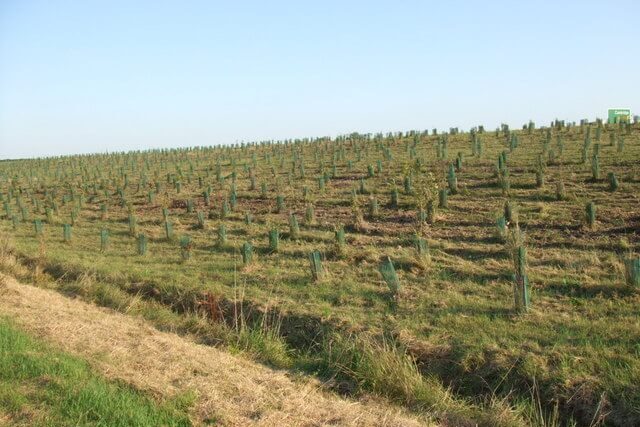
Ulster Wildlife has launched an ambitious long-term project to restore temperate rainforest habitat at Lenamore Wood near Gortin, County Tyrone.
The 41-acre site is being transformed through the planting of almost 30,000 native trees of Irish provenance, including oak, alder and rowan. The first trees were planted during February and March 2026, marking the beginning of what conservationists hope will become a thriving rainforest ecosystem over the next century.
The restoration programme is supported by insurance company Aviva, which has committed approximately £38 million towards restoring lost temperate rainforests across the UK.
While the newly planted trees will begin emerging from their protective tubes within a year, it will take generations before the woodland reaches maturity.
Reflecting on the long timescale involved, Rosemary Mulholland, Head of Nature Recovery at Ulster Wildlife, said:
“It is sad, but in a way it’s a great privilege, isn’t it, to just be able to take this land and turn it into a habitat that is now largely lost.”
The History of Ireland’s Ancient Rainforests
Temperate rainforests once covered large areas of Ireland following the last Ice Age.
Martin explained how forests gradually expanded as the climate warmed thousands of years ago.
“If you go back, following the last ice age, as the climate warmed, trees gradually colonised Ireland and then by around 8,000 to 9,000 years ago, most of the island was probably covered in dense woodland.”
These forests were dominated by species such as oak, hazel, elm, birch and pine, particularly in wetter western regions where rainforest conditions developed.
Over time, however, agricultural expansion, settlement growth and land clearance dramatically reduced forest cover.
“Most likely, the largest scale losses were probably in the 16th to 19th century, which saw the kind of critical collapse phase of Ireland’s rainforest,” he said.
Today, only fragments of these once-extensive woodlands remain.
Rewilding Success in Ireland’s Temperate Rainforests
Beyond large-scale conservation projects, private landowners are also helping to restore lost rainforest habitats.
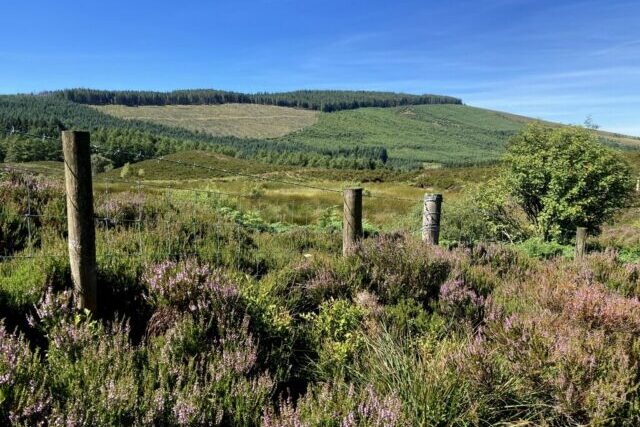
One notable example is Eoghan Daltun, who has spent the last 17 years rewilding his 73-acre farm on the Beara Peninsula in County Cork.
After selling his Dublin home in 2009, Daltun moved west to begin restoring land that had been severely degraded by feral goats, which prevented natural forest regeneration by consuming tree seedlings.
“I just wanted a life that was closer to nature for myself and my two sons,” he said.
His efforts have transformed the landscape and highlighted the importance of allowing natural ecosystems to recover.
Why Temperate Rainforests Matter
Temperate rainforests play a vital role in supporting biodiversity, improving ecosystem resilience and combating climate change.
They provide habitat for countless species while helping to regulate water cycles, reduce flooding risks and store significant amounts of carbon.
Daltun believes their importance extends beyond environmental conservation.
“whether we realise it or not, we depend totally on natural ecosystems for our very survival”.
“By removing them and repressing their return, we’re threatening our own future survival,” he said.
He also warned of the wider implications of global habitat destruction.
“I place this in a context of catastrophic global nature loss and ecosystem erasure, which I think is one of the worst things happening right now globally.
“The worst threat to the biosphere is global nature loss, but also to humanity.”
Monitoring the Future Forest
As the Lenamore Wood restoration project develops, Ulster Wildlife will closely monitor its progress using a range of scientific methods.
Visitors will be able to contribute to the project through fixed-point photography stations, allowing people to capture images of the site over time and help create a long-term visual record of the woodland’s development.
“We’ll have fixed point photography. So you’ll be able to come and put your phone on a little phone cradle, read the QR code and send your photograph off so that we will have an ongoing, photographic record of how it’s changing.”
The organisation also plans to carry out bird and butterfly surveys, moth trapping and bat monitoring using remote sensors to measure the site’s growing biodiversity.
Climate Change Benefits of Rainforest Restoration
Restoring temperate rainforests offers significant climate benefits alongside habitat recovery.
As trees mature, they absorb and store carbon dioxide, helping to reduce greenhouse gas concentrations in the atmosphere. Healthy forests can also improve water management and reduce the risk of flooding during extreme weather events.
Mulholland highlighted the climate value of the project:
“the trees capture carbon, they help with flood risks and they allow our ecosystems to thrive”.
These benefits make rainforest restoration an increasingly important tool in addressing both biodiversity loss and climate change.
A Woodland for Future Generations
Ulster Wildlife hopes the Lenamore Wood project will be the first of many rainforest restoration initiatives across Northern Ireland.
The site is expected to open to the public in the near future, giving visitors the opportunity to experience the developing woodland, connect with nature and witness ecological restoration in action.
Although the rainforest may take centuries to fully mature, the project is being created with future generations in mind—a long-term investment in biodiversity, climate resilience and the natural heritage of Ireland.
Support UK Environmental Conservation Efforts
At Natural World Fund, we support projects that restore native habitats, protect biodiversity and strengthen ecosystems for the future. The restoration of temperate rainforests in Northern Ireland demonstrates how long-term conservation efforts can help reverse centuries of habitat loss while providing benefits for wildlife, climate resilience and local communities. By supporting habitat restoration and rewilding initiatives, we can help ensure these extraordinary ecosystems thrive once again.
If you care about restoring native wildlife, support the work of Natural World Fund today.
Image sources
- Gortin_Townland_-_geograph.org.uk_-_7251037 by Kenneth Allen. Cropped and resized from original: Wikipedia Commons
- Tree_planting_by_the_A428_-_geograph.org.uk_-_546920 by Mark Hurn. Cropped and resized from original: Wikipedia Commons