

UK’s First Heathland Green Bridge Opens in Surrey to Help Wildlife Cross the A3
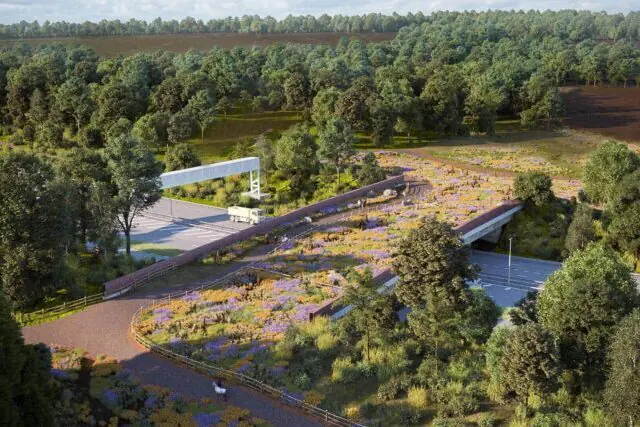
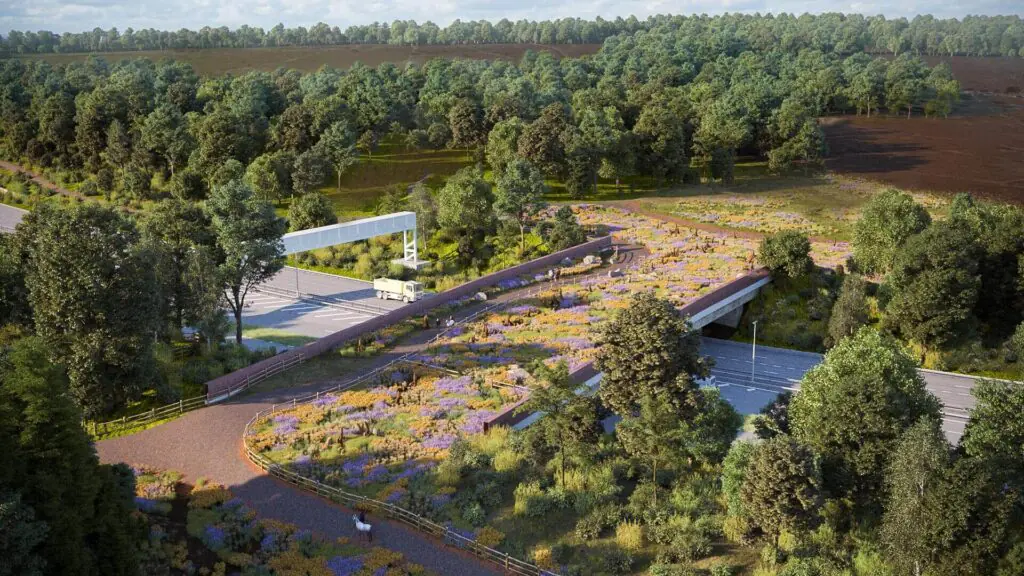
A pioneering new wildlife crossing has opened in Surrey, with National Highways unveiling the UK’s first heathland green bridge designed specifically to reconnect rare lowland heath habitats.
The £3.7 million Cockrow Bridge stretches across the busy A3 near Cobham and is expected to provide a safer route for wildlife including snakes, toads, badgers and other species living on nearby heathland.
Steve Elderkin, director of environmental sustainability at National Highways, said: “While roads have always connected people and places, they are too often a barrier for nature, severing habitats and contributing to the decline in biodiversity.”
He said: “Our green bridges are designed to blend with the landscape and connect habitats, animals and people, leaving a lasting legacy which ensures nature thrives.”
Cockrow Bridge Reconnects Rare Heathland Habitats
The new bridge links Ockham Common and Wisley Common, two important heathland sites that were separated when the A3 was constructed in the 1970s.
Measuring 68 metres (223ft) long and 30 metres (98ft) wide, the bridge has been landscaped with heather and other native vegetation to recreate natural lowland heathland conditions above the road.
National Highways says the project is designed to improve habitat connectivity and allow wildlife populations on both commons to move more freely and breed more successfully.
Lowland heathland is considered one of the UK’s rarest and most threatened habitats, making projects like this increasingly important for biodiversity conservation.
Safe Crossing for Wildlife and People
As well as helping wildlife, the green bridge also includes a route for pedestrians, cyclists and horse riders.
The structure replaces an older pedestrian bridge built during the 1980s, which offered no environmental benefits or wildlife connectivity between the two heathland areas.
By restoring this natural corridor, conservationists hope species that struggle to cross major roads safely will have a far greater chance of survival.
Growing Use of Green Bridges Across the UK
Green bridges were first introduced in France during the 1950s before becoming widely adopted in the Netherlands in the 1990s as part of sustainable transport infrastructure.
They are now increasingly recognised as an effective way to reduce habitat fragmentation caused by major roads and development.
Several wildlife-friendly green bridges already exist in the UK, including crossings over the A556 near Chester, the A30 in Cornwall and the A21 at Scotney Castle in Kent.
However, Cockrow Bridge is the first specifically created to support lowland heathland ecosystems.
Why Wildlife Crossings Matter
Roads can create major barriers for wildlife, isolating animal populations and increasing the risk of road deaths.
Wildlife crossings such as green bridges help reconnect fragmented landscapes, allowing animals to safely move between feeding, breeding and sheltering areas.
Experts say these projects could play an increasingly important role in protecting biodiversity as infrastructure expands and habitats come under growing pressure from development and climate change.
Support UK Rewilding Efforts
At Natural World Fund, we support habitat restoration and nature-friendly infrastructure projects that reconnect fragmented landscapes and protect vulnerable wildlife. Innovative solutions like heathland green bridges can help reduce habitat loss, improve biodiversity and create safer environments for both wildlife and local communities.
If you care about restoring native wildlife in the UK, support the work of Natural World Fund today.
Image sources
- m25-junction-10-cockrow-green-bridge-impression by National Highways. Cropped and resized from original: National Highways