

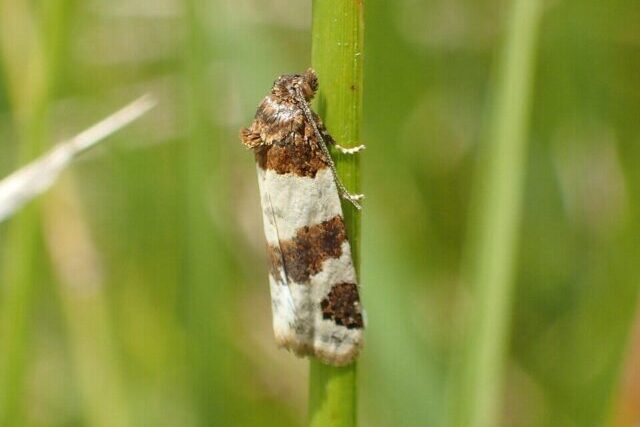
A moth species once believed to be extinct in England has been rediscovered at a Kent nature reserve, giving conservationists renewed hope for its future.
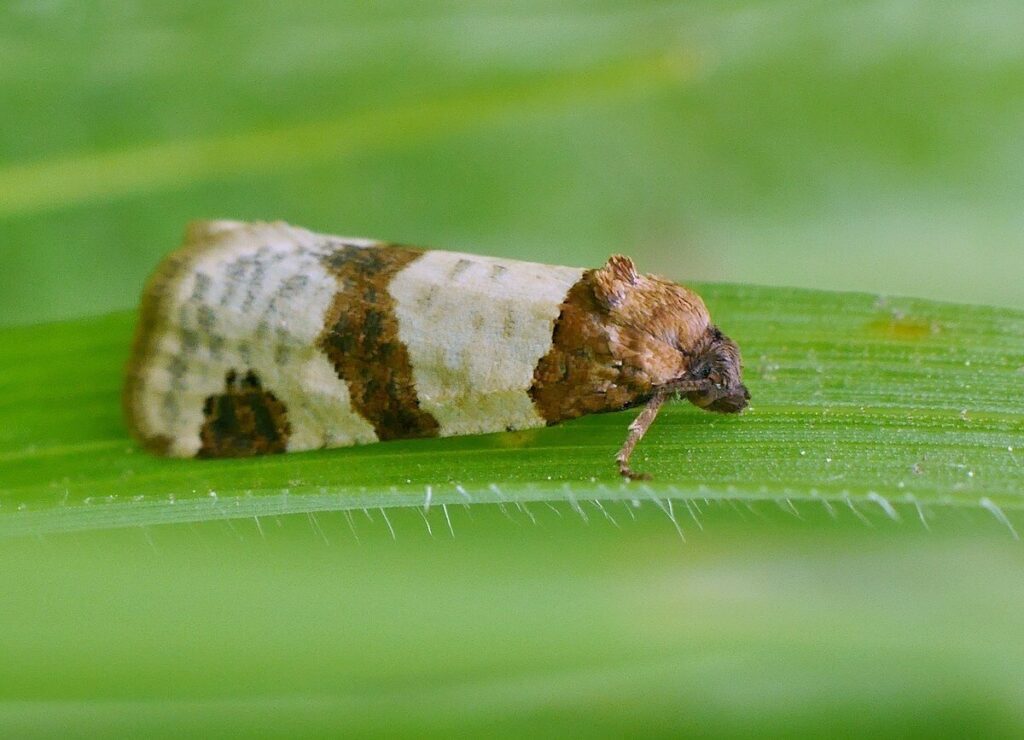
The Tiree Twist moth (Periclepsis cinctana), last recorded in England in 1952, has been found at Kent Wildlife Trust’s Lydden Temple Ewell Reserve near Dover. The remarkable discovery has revealed a previously unknown population of the rare moth, which until now was thought to survive only on the remote Scottish island of Tiree.
Rare Moth Thought Extinct in England Found Near Dover
Periclepsis cinctana, formerly known as the Dover Tortrix, disappeared from England more than seven decades ago. Following its last confirmed sighting in 1952, the species was believed to exist only on Tiree, an island off Scotland’s west coast.
Its unexpected rediscovery in Kent has surprised conservationists and could significantly improve understanding of the species’ distribution and habitat requirements.
Volunteer Survey Leads to Unexpected Discovery
The discovery was made by Rebecca Levey, an ecologist with Butterfly Conservation, while surveying the reserve alongside volunteers searching for Straw Belle caterpillars.
During the survey, she spotted a moth with distinctive orangey-brown markings and immediately recognised it as the long-lost Tiree Twist.
The identification was later confirmed by Dave Shenton, Kent Wildlife Trust’s Local Wildlife Sites Officer and Kent County Moth Recorder.
By the end of the survey, the team had recorded 13 individual moths, confirming the existence of a previously unknown breeding population.
Conservationists Celebrate Remarkable Rediscovery
Dave Shenton described the discovery as extraordinary.
“This is mind-blowing. I couldn’t quite believe what I was seeing. Has it been hiding in plain sight here all these years?”
Rebecca Levey highlighted the importance of the find while looking ahead to the work now required.
“This rediscovery is both emotional and thrilling. Now the real work begins: uncovering the exact habitat this moth needs so we can help secure its future.”
Lydden Temple Ewell Nature Reserve
Lydden Temple Ewell has been managed by Kent Wildlife Trust since 1964, when the organisation purchased the original 70-acre Lydden Temple Down site.
In 1998, the entire reserve was designated as a National Nature Reserve, protecting its internationally important chalk grassland habitats and diverse wildlife.
The discovery of the Tiree Twist moth adds another significant species to the reserve’s conservation importance.
Conservation Plans to Protect the Tiree Twist Moth
Kent Wildlife Trust and Butterfly Conservation will now work together to develop conservation plans aimed at protecting the newly discovered population and identifying the habitat conditions the species requires to thrive.
The rediscovery offers a rare second chance for one of England’s most elusive moths and could mark the beginning of a long-term recovery for the species.
“The UK may account for just 1% of current global emissions, but we’re responsible for 100% of our own emissions, and we have the opportunity to show global leadership by bringing them down.”
Protecting Rare Wildlife for Future Generations
At Natural World Fund, we believe every rediscovery of a rare species is a reminder of why protecting and restoring nature matters. Conserving habitats, supporting scientific research and helping wildlife recover are essential to ensuring threatened species can survive and thrive. By investing in nature today, we can give rare and vulnerable wildlife the best possible chance of a future.
If you care about restoring native wildlife, support the work of Natural World Fund today.
Image sources
- Periclepsis_cinctana_280361764 by Roman. Cropped and resized from original: Wikipedia Commons
- Periclepsis_cinctana_523341653 by Dave Shenton. Cropped and resized from original: Wikipedia Commons