

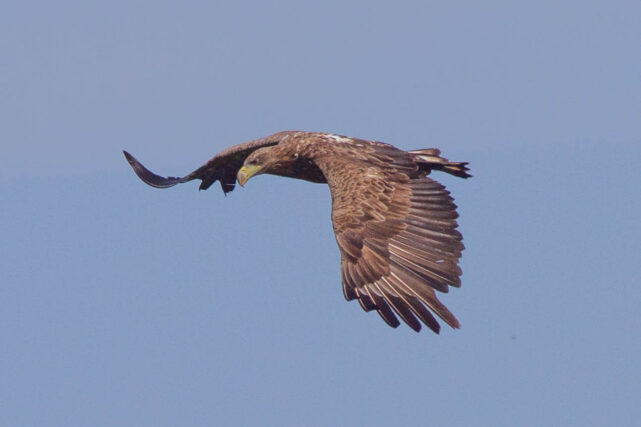
White-Tailed Eagles to Return to Exmoor Under Approved Reintroduction Programme
White-tailed eagles, the UK’s largest bird of prey, are set to return to Exmoor National Park after the government approved the latest stage of a national reintroduction programme. The iconic birds, also known as sea eagles, were once driven to extinction in Britain but are now being reintroduced to parts of the country as conservation efforts continue.
Up to 20 white-tailed eagles will be released across Exmoor over a three-year period beginning this summer, marking another significant milestone in the species’ recovery.
White-Tailed Eagles Returning to Southern England
The birds have already begun naturally expanding their range in southern England following the successful release of white-tailed eagles on the Isle of Wight seven years ago. Since then, they have established territories along much of the south coast and have been regularly sighted on Exmoor.
All birds released as part of the Exmoor project will be fitted with satellite tracking devices. The programme, led by Forestry England and the Roy Dennis Wildlife Foundation, will monitor the eagles’ movements and assess how they adapt to their new environment.
Steve Egerton-Read, white-tailed eagle project manager at Forestry England, said it was hoped their release would help to boost numbers “and continue their spread across southern England”.
Ali Hawkins, senior ecologist with Exmoor National Park Authority, said the project’s supporters were “committed to continuing to work with farmers and other stakeholders, to support them in adapting to this species fledging on Exmoor once again”.
A Species Once Lost from Britain
White-tailed eagles were once widespread across Britain and Ireland. However, habitat loss and sustained persecution led to their disappearance from the UK by 1918.
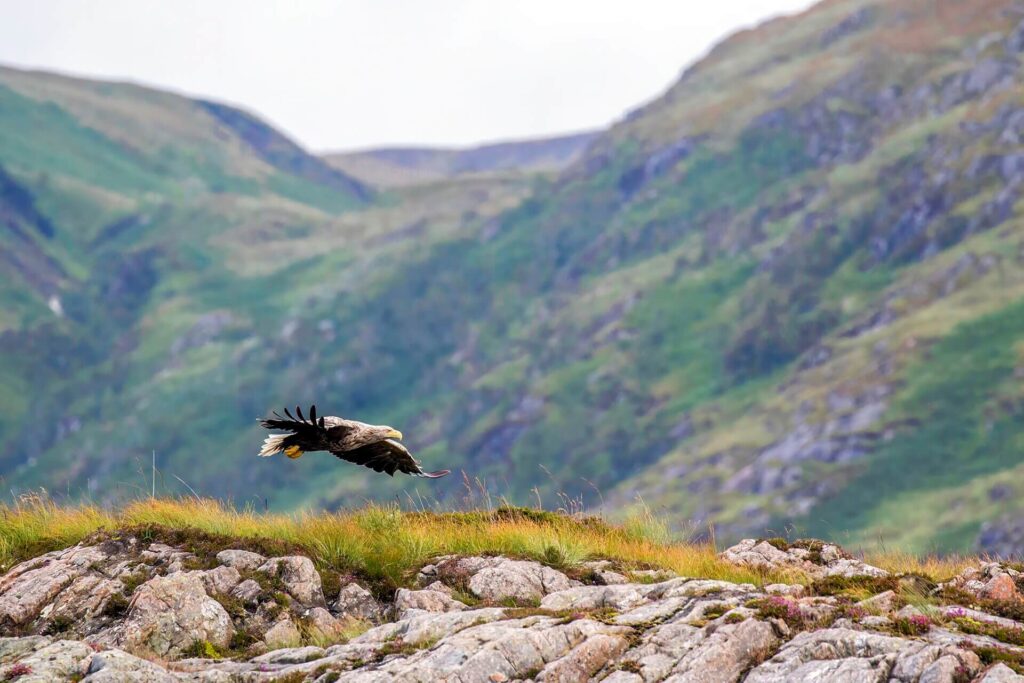
The first successful reintroduction took place in 1975 on the Isle of Rum in Scotland’s Inner Hebrides. Since then, additional projects have helped restore populations in several regions, although the birds’ return has also generated debate in some rural communities.
With wingspans reaching up to 2.4 metres (8 feet), white-tailed eagles are among Europe’s largest birds of prey and are a highly visible presence in the landscapes they inhabit.
Farmers Raise Concerns Over Livestock Losses
Despite the conservation benefits associated with the species’ return, some farmers remain concerned about the potential impact on livestock, particularly lambs.
Scottish farmer Ricky Rennie, who farms near Minard in Argyll, said he had experienced significant losses since white-tailed eagles became established in the area in 2018.
He estimates that in 2024 he lost two-thirds of his lambs to eagle predation and believes annual losses have reached as much as £30,000.
Speaking about the Exmoor plans, he said farmers should “fight” the reintroduction.
“If they’re coming in naturally, there’s not much you can do about it, but if they’re trying to introduce them, I’d be fighting it tooth and nail – because they will eventually put farms out of business,” he said.
Calls for Safeguards and Impact Assessments
Agricultural organisations have urged policymakers to learn from experiences in Scotland before introducing more birds elsewhere.
Andrew Connon, president of the National Farmers’ Union Scotland, said: “Any Exmoor release must learn from Scottish experience and ensure that farmers are supported within their existing farm systems to embed strong safeguards for livestock from the outset.”
The National Sheep Association (NSA) has also expressed concerns about further releases and has called for comprehensive assessments of the impact on farming communities.
A recent survey of farmers and land managers in Cumbria, North Yorkshire and Durham found that 85% of respondents opposed a proposed white-tailed eagle reintroduction in those regions.
The NSA has requested a full impact assessment of future releases, considering both farm viability and mental health impacts.
NSA chairman Peter Delbridge, a sixth-generation farmer on Exmoor, said: “We don’t want to reach the situation where the genie is out of the bottle and we’re experiencing losses but because they are a protected bird we won’t be able to deal with it ourselves.”
Debate Continues Over Lamb Predation
The extent to which white-tailed eagles actively prey on lambs remains a topic of debate between conservationists and farming groups.
While some farmers report substantial losses, others argue that the birds often feed on carcasses of animals that have already died. Monitoring programmes in Scotland continue to investigate the issue, and support schemes have been introduced to help farmers manage any risks associated with eagle populations.
Natural England Approves Exmoor Release
Natural England, which approved the licence for the project, said the programme would be implemented carefully and in collaboration with local landowners and communities.
Matthew Heard, Natural England’s national delivery director, said the licence “supports a carefully planned reintroduction, grounded in strong evidence and built on collaboration with local communities and land managers”.
He added: “This moment has been a long time in the planning and shows what can be achieved when ambitious partnerships, good science and positive engagement come together.”
Natural England has confirmed that it will continue to closely monitor the progress of the Exmoor reintroduction as the project moves forward.
How to Identify a White-Tailed Eagle
White-tailed eagles can be recognised by several distinctive features:
- Brown body with a noticeably pale head and neck, often becoming almost white in older birds.
- Enormous broad wings with fingered tips, significantly broader than those of a golden eagle.
- Large yellow beak and yellow feet, although juveniles have darker beaks.
- Distinctive white tail feathers in adult birds.
- Soaring flight with wings held flat, unlike the V-shaped posture commonly seen in golden eagles.
As white-tailed eagles continue their recovery across Britain, Exmoor could soon become one of the latest landscapes to witness the return of this remarkable bird of prey.
Support UK Environmental Conservation Efforts
At Natural World Fund, we support efforts to protect and restore native wildlife and the habitats they depend on. The return of species such as the white-tailed eagle highlights the importance of long-term conservation, habitat management and collaboration between communities, landowners and environmental organisations. Supporting biodiversity recovery is essential for building healthier, more resilient ecosystems for future generations.
If you care about restoring native wildlife, support the work of Natural World Fund today.
Image sources
- White-tailed_eagle_(Haliaeetus_albicilla)_in_flight_3 by Charles J. Sharp. Resized from original: Wikipedia Commons
- White-tailed_Eagle_(Haliaeetus_albicilla)_(14180465869) by Ron Knight: Wikipedia Commons