

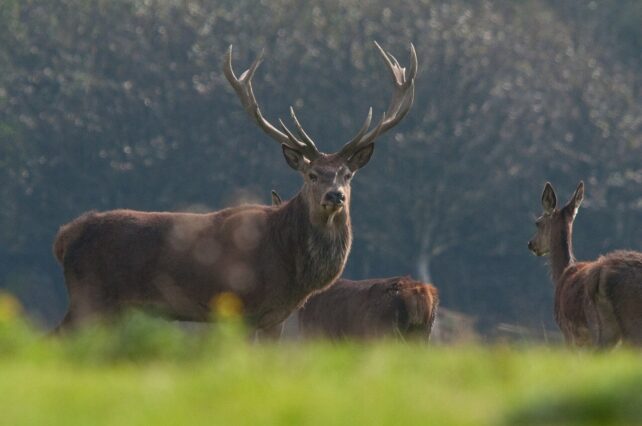
Rising Deer Numbers Threaten Woodlands, Crops and Wildlife Across England
Farmers, foresters and conservationists are raising concerns over the rapid growth of deer populations across England, warning that unchecked numbers are damaging woodlands, destroying crops and threatening biodiversity.
The issue has prompted the UK Government to announce plans to strengthen deer management through increased culling and additional specialist officers, although animal welfare organisations argue that non-lethal approaches should be prioritised.
Deer populations are damaging farms and woodlands
Tenant farmer Alan Hembrow, who farms near Liskeard in Cornwall, says the situation has changed dramatically over the past two decades.
He said:
“Back 20 years ago we’d see the odd deer, now we’re seeing herds of 20 or 30 in a field – it’s just got well out of control.
“It’s not just in farming land, it’s in the woodlands as well – they’re taking out the the young saplings.
“It needs to be a major cull of the deer and it needs to happen soon.
“I know it sounds cruel to the public. It’s now time to control it.”
Mr Hembrow estimates that deer have caused around £5,000 worth of crop damage every year for the past five years, while the cost of repairing damaged fencing has been “astronomical”. Damaged fences can also allow livestock to escape, creating additional challenges for farmers.
Forestry experts warn of long-term woodland damage
The Forestry Commission employs specialist deer officers to advise landowners and woodland managers on reducing the impact of wild deer.
Chris Mason, one of only two deer officers covering the South West, believes growing deer populations are becoming unsustainable.
He said:
“In certain areas woodland decimation is going to happen because the numbers of deer are getting out of control and there are no natural predators.
“We’ve got no lynx, no wolves like we had 800 years ago so we need to be looking at ways of controlling the numbers of deer to stop that damage.”
Without natural predators, browsing deer can prevent young trees from establishing, making woodland regeneration increasingly difficult.
High deer numbers are affecting biodiversity
According to Tony Juniper, chairman of Natural England, the ecological impacts extend well beyond forestry.
He said:
“Across the country we know that very high numbers of deer, including introduced species such as muntjac and fallow, these are now a very material issue in the health of the landscape.
“The browsing out of the understory, removing habitat that’s important for birds like nightingales, so we do know now there’s an ecological issue that we need to deal with because the numbers have become so high.”
Heavy browsing removes woodland undergrowth that provides food and shelter for many native species, reducing habitat quality across entire ecosystems.
Animal welfare groups oppose deer culls
Not everyone agrees that culling is the answer.
People for the Ethical Treatment of Animals (PETA) argues that reducing deer numbers through shooting is unlikely to provide a lasting solution.
Elisa Allen, vice president of programmes, said:
“Removing deer from the landscape doesn’t stop their numbers from rebounding, and, in many cases, a temporary reduction in population leaves more food available per animal, which can increase breeding rates in the survivors.
“We owe it to these gentle animals to pursue humane and sustainable options such as habitat modification, installing appropriate fencing, and limiting access to artificial food sources, because the solution will never be found down the barrel of a gun.”
The organisation advocates alternative measures including habitat modification, improved fencing and limiting access to artificial food sources.
Devon project highlights the scale of the challenge
The Teign Valley Facilitation Fund, a farmer cluster group in Devon led by ecologist Elliot Fairs, has also experienced rising deer numbers across its member farms.
Fairs said:
“There was a very clear challenge all the farmers were facing which was the rising numbers of deer in the Teign Valley.
“It was causing them all sorts of problems, be it damaging their fencing, eating their crops, destroying their woods, any laid hedges, any planted hedges were being affected.”
A herbivore impact assessment found that nine of the 13 landowners surveyed reported high levels of deer browsing.
During the first year of the group’s management programme, 432 deer were culled.
Although not a deer stalker himself, Fairs says witnessing the environmental impacts changed his perspective.
He said:
“I’m an ecologist, I’m not a deer stalker.
“I’m not really somebody who gets the whole stalking, hunting side of things.
“But to suddenly understand and see with my own eyes the links between the clear levels of deer and the impact they’re having on other species of wildlife and the damage they’re causing to habitats.
“It was pretty obvious to me that if I didn’t try and help figure out a way to resolve or at least reduce this problem, the other efforts I was putting in to save dormice and butterflies would be pretty much nullified.”
Defra plans to strengthen deer management
The Department for Environment, Food and Rural Affairs (Defra) plans to increase the number of deer officers and simplify the licensing process for farmers, foresters and landowners who need to manage deer populations.
A Defra spokesperson said:
“Deer damage is one of the biggest negative impacts on our trees and woodlands.”
They added:
“New measures will help restore nature, boost our home-grown timber industry and protect the millions of trees we are planting across the country, including by making it quicker and simpler for farmers, foresters and landowners to get the licences they need to protect their land while ensuring deer management remains safe and humane.”
Defra says evidence suggests that around one-third of English woodlands are now affected by deer, compared with approximately one-quarter in the early 2000s.
Balancing conservation with wildlife management
Managing deer populations remains one of the more challenging issues in UK conservation. While many land managers argue that population control is necessary to protect woodlands, habitats and crops, animal welfare organisations continue to call for non-lethal alternatives.
Supporting UK Woodland Conservation
At Natural World Fund, we recognise the importance of protecting and restoring healthy woodland ecosystems through evidence-based conservation. Sustainable habitat management requires carefully balancing the needs of wildlife, biodiversity and the people who depend on these landscapes, ensuring that long-term environmental health remains the priority.
If you care about restoring native wildlife, support the work of Natural World Fund today.
Image sources
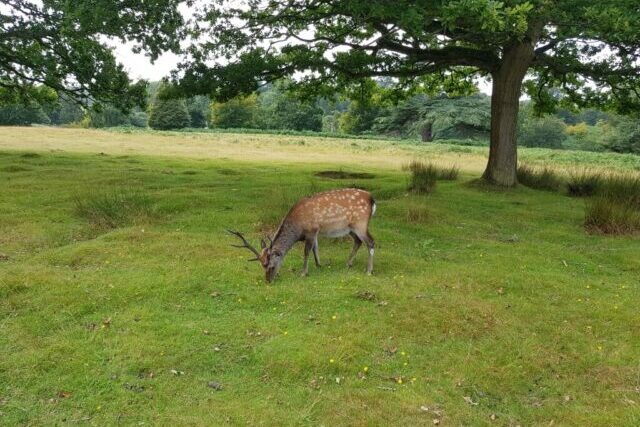
- Deer_in_the_deer_park_-_geograph.org.uk_-_6339557 by DS Pugh. Cropped and resized from original: Wikipedia Commons
- Red_Deer_-_Margam_Deer_Park_-_geograph.org.uk_-_2631554 by Mick Lobb. Cropped and resized from original: Wikipedia Commons