

New Study Warns New Orleans Faces Climate “Point of No Return”
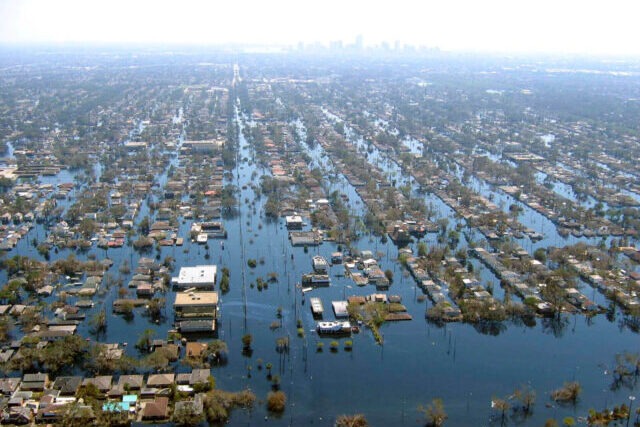
A stark new study has warned that New Orleans could eventually become surrounded by the ocean as climate change, rising sea levels and severe coastal erosion reshape southern Louisiana. Researchers say the region may have already reached a “point of no return”, prompting calls for long-term planning that could include relocating communities away from vulnerable areas.
The findings raise serious concerns about the future of one of America’s most culturally significant cities and underline the escalating impacts of the global climate crisis.
Climate Change Is Accelerating Risks for Southern Louisiana
Southern Louisiana already faces multiple environmental threats, but researchers warn these pressures are increasingly combining to create an unprecedented challenge.
Major threats include:
- Rising sea levels linked to global heating
- Stronger and more frequent hurricanes
- Rapid coastal erosion
- Gradual land subsidence, where land slowly sinks
- Historic environmental damage linked to oil and gas development
According to the study, sea levels in the region could eventually rise by between three and seven metres, while approximately three-quarters of Louisiana’s remaining coastal wetlands could disappear.
Scientists suggest this could shift the coastline as much as 100 kilometres inland, leaving cities such as New Orleans and Baton Rouge increasingly isolated from surrounding land.
“In paleo-climate terms, New Orleans is gone; the question is how long it has,” said Jesse Keenan, an expert in climate adaptation at Tulane University and one of the paper’s five co-authors.
Researchers Warn New Orleans May Become Surrounded by Water
The study, published in Nature Sustainability journal, compared current warming trends with conditions from around 125,000 years ago, when global temperatures were similar and sea levels rose substantially.
Researchers concluded that under long-term climate projections, New Orleans may become surrounded by the Gulf of Mexico before the end of the century.
The authors described coastal Louisiana as potentially becoming the “most physically vulnerable coastal zone in the world.”
They argue that governments should begin preparing for future population movement while prioritising support for the communities most at risk.
Keenan said the timeframe available to plan a retreat isn’t certain but “it’s most likely decades rather than centuries”.
“Even if you stopped climate change today, New Orleans’s days are still numbered,” he added. “It will be surrounded by open water, and you can’t keep an island situated below sea level afloat. There’s no amount of money that can do that.”
Billions Spent on Flood Defences May Not Be Enough
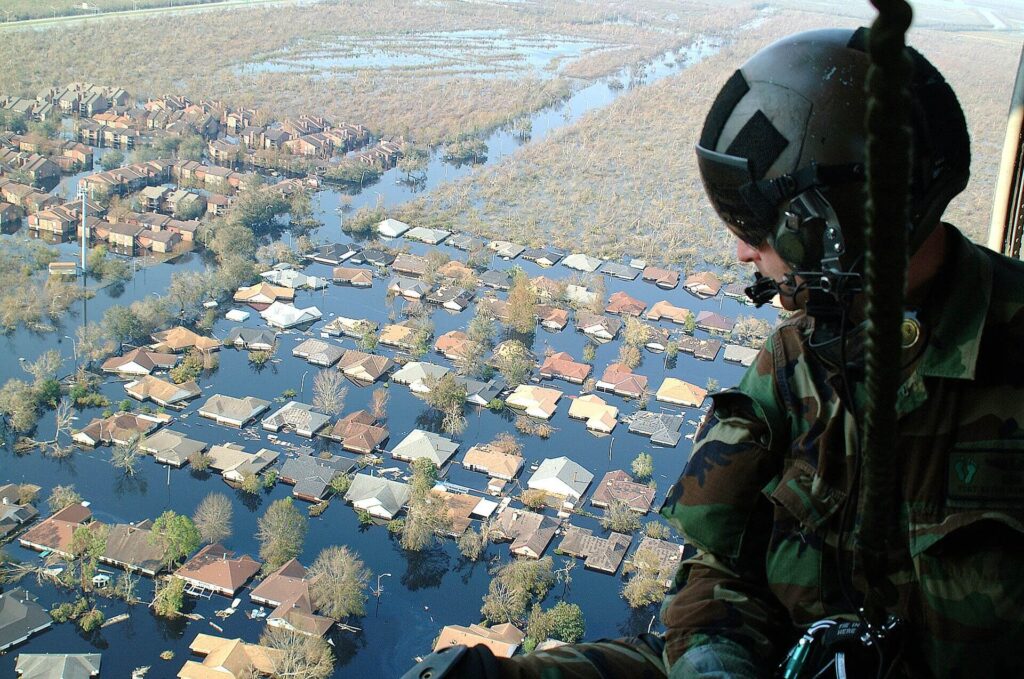
Following the devastation of Hurricane Katrina in 2005, billions of dollars were invested in strengthening New Orleans’ flood protection systems.
Large-scale infrastructure improvements included:
- Expanded levee systems
- Floodgates
- Water pumping stations
- Storm protection barriers
While these measures have improved short-term resilience, researchers warn they may not provide a permanent solution as environmental pressures continue to intensify.
“New Orleans is in a terminal condition, and we need to be clear with the patient that it is terminal,” he said. “There is an opportunity for palliative care, we can transition people and the economy. We can get ahead of this.”
But, he added, “no politician wants to first give this terminal diagnosis. They will speak about it behind closed doors, but never in public.”
Situated in a bowl-shaped basin below sea level, the city already has 99% of its population at major risk of severe flooding, the worst exposure of any US city according to a separate study.
“Even compared to all other US cities, New Orleans really stands out, which is alarming,” said Wanyun Shao, a co-author of this study and a geographer at the University of Alabama.
“There is no specific timeline to how long New Orleans has left but we know it’s in big trouble. They are facing one of the highest sea level rises in the world and I don’t know how long human effort can fight against that tide. It’s like a timebomb.”
Shao said she concurred that relocation of people would have to take place.
“I know it’s a politically and emotionally charged issue, there are people with a deep attachment to New Orleans,” she said. “But managed retreat, no matter how unappealing it may be, is the ultimate solution at some point.”
Coastal Land Is Disappearing at an Alarming Rate
Louisiana has already suffered substantial land loss due to coastal erosion.
Since the 1930s:
- Around 2,000 square miles of land have disappeared
- An additional 3,000 square miles could vanish within the next 50 years
- Land equivalent to the size of a football pitch is reportedly lost every 100 minutes
Wetlands act as important natural barriers against flooding and storms, while also providing habitats for wildlife and storing carbon.
Their disappearance removes a critical line of defence for both people and ecosystems.
Restoration Projects Face Political Challenges
Louisiana previously developed plans aimed at restoring coastal wetlands using the natural movement of sediment carried by the Mississippi River.
One major initiative, the Mid-Barataria Sediment Diversion project, aimed to restore more natural river flows and rebuild disappearing land along the coast.
Project estimates suggested it could have created more than 20 square miles of new land over the next 50 years.
However, the project was later cancelled amid concerns over costs and potential impacts on fisheries, a decision that drew criticism from environmental advocates and coastal experts.
Researchers involved in the latest study argued that abandoning large-scale restoration efforts could significantly weaken long-term prospects for protecting parts of coastal Louisiana.
Climate Adaptation Is Becoming an Increasingly Urgent Challenge
While reducing greenhouse gas emissions remains central to limiting future climate impacts, researchers say adaptation planning is becoming equally important in vulnerable regions.
The United States has not previously undertaken the large-scale relocation of a major city because of climate threats, but some smaller communities are already moving due to environmental pressures.
Timothy Dixon, an expert in coastal environments at the University of South Florida who was not involved in the new paper, said “New Orleans is not going to disappear in 10 years or anything like that, but policymakers really should’ve thought about a relocation plan a century ago,” whose own research has recommended a measured retreat from coastal Louisiana.
“Governments may not have the ability to just command people to leave, but people will volunteer to move and we are seeing that already. I’m not optimistic our political system is capable of dealing with this stuff, it will take leadership and unpopular decisions. Also, many people don’t want to move. They love where they are born.”
The findings highlight the difficult choices many coastal regions worldwide may increasingly face as sea levels continue to rise and climate-related impacts intensify.
Support UK Rewilding Efforts
At Natural World Fund, we support conservation and climate action efforts that protect ecosystems and help communities build resilience to environmental change. Healthy wetlands, coastlines and natural habitats play a critical role in reducing climate impacts, supporting biodiversity and safeguarding the natural systems that both people and wildlife depend upon.
If you care about restoring native wildlife in the UK, support the work of Natural World Fund today.
Image sources
- Flooding_in_New_Orleans_(674) by Master Sgt. Bill Huntington, Cropped and resized from original: Wikipedia Commons
- Katrina-new-orleans-flooding3-2005 by Commander Mark Moran, of the NOAA Aviation Weather Center, and Lt. Phil Eastman and Lt. Dave Demers, of the NOAA Aircraft Operations Center. Cropped and resized from original: Wikipedia Commons